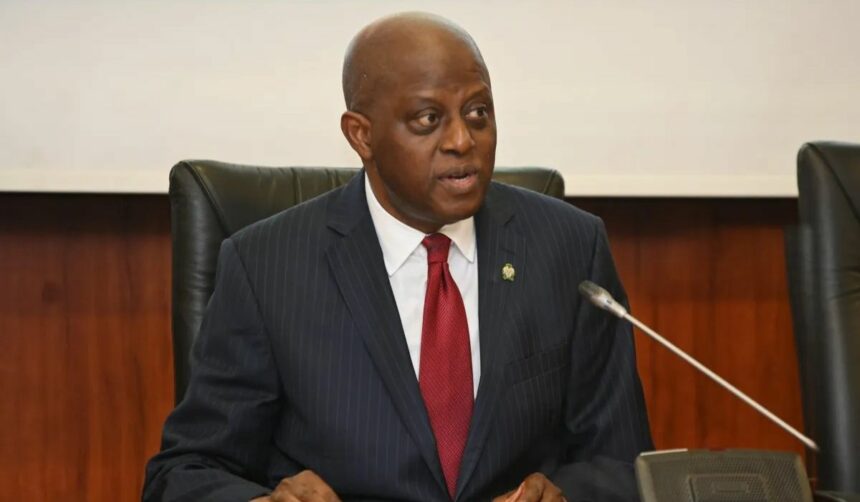
The Central Bank of Nigeria (CBN) under Governor Yemi Cardoso says 33 banks have met new capital thresholds after raising ₦4.65 trillion. The funds came largely from local sources, reflecting renewed investor confidence in Nigeria’s banking sector.
The CBN set higher capital thresholds to strengthen bank resilience and support credit flow to the real economy. The exercise aimed to shore up balance sheets, improve liquidity buffers, and align Nigerian banks with global prudential standards.
CBN data shows 72.55 percent of the ₦4.65 trillion, about ₦3.37 trillion, was sourced locally. The remaining 27.45 percent, roughly ₦1.28 trillion, originated from international markets. Local equity injections and retained earnings dominated the domestic mix, while diaspora and foreign institutional investments accounted for the cross-border portion.
Meeting the CBN thresholds signals stronger capital positions for participating banks. Higher capital buffers reduce systemic risk and improve banks’ ability to absorb shocks. This should encourage lending to critical sectors such as agriculture, manufacturing, and infrastructure.
Role of Governor Yemi Cardoso and the Regulator
Governor Yemi Cardoso’s leadership framed the recapitalization drive as a long-term stability measure. The CBN supervised compliance and provided guidance on acceptable capital instruments. Regulators also emphasized transparency, proper valuation of assets, and clear disclosure of funding sources.
Benefits for Businesses and Consumers
Stronger banks can extend more credit to small and medium enterprises (SMEs) and to priority sectors. Improved capital adequacy may lower the cost of credit over time and boost confidence among depositors. Banks meeting the thresholds are better positioned to support economic recovery and job creation.
Challenges and Next Steps
Despite the successful raise, challenges remain. Some institutions may still face asset-quality issues and liquidity mismatches. Continued regulatory monitoring will be necessary to ensure banks convert capital strength into sustained lending. The CBN may also encourage mergers, strategic partnerships, and improved risk management practices.
Market Confidence and Local Investor Participation
High local participation in the capital raises underscores domestic investor trust in Nigerian banks. This trend can deepen local capital markets and reduce dependence on volatile foreign flows. Authorities may build on this momentum by improving corporate governance and investor protections.
Stakeholders should monitor quarterly reports to see how banks deploy the new capital. Watch for increases in credit to productive sectors, shifts in loan-to-deposit ratios, and any regulatory adjustments from the CBN under Yemi Cardoso. Successful deployment will be key to translating capital strength into real economic gains.
Conclusion – 33 Banks Meet CBN Capital Thresholds
Raising ₦4.65 trillion, with 72.55 percent sourced locally, marks a significant milestone for Nigeria’s banking sector. Under CBN Governor Yemi Cardoso, the recapitalization aims to build resilience and spur lending that supports economic growth. The coming quarters will reveal how effectively banks channel this capital into the wider economy.