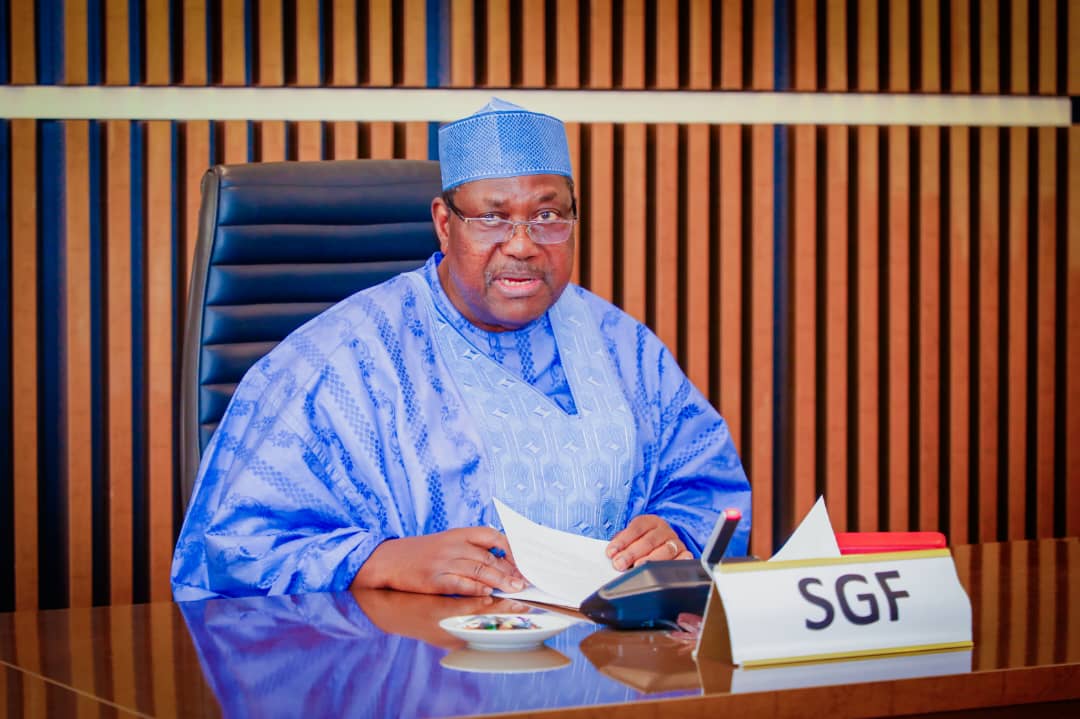
George Akume, Secretary to the Government of the Federation, has reaffirmed the Nigeria’s North Central region’s vast economic potential. He explained that the region could become a strong hub for Nigeria’s non-oil export growth. According to him, the area’s fertile lands, natural resources, and human talent offer unmatched opportunities for sustainable development.
Akume noted that the Federal Government is determined to reduce dependence on oil revenues. He stressed that Nigeria must now focus on harnessing local industries and regional value chains. Through this shift, the North Central can drive inclusive growth and open new export opportunities.
He stated that the region’s strategic location places it at the heart of Nigeria’s trade network. It connects northern producers to southern markets and neighbouring West African countries. This advantage, he added, creates an ideal foundation for expanding agricultural processing, solid minerals, and manufacturing exports.
Furthermore, Akume emphasized that government policies now aim to strengthen these industries. By supporting micro, small, and medium enterprises, Nigeria can increase competitiveness across key sectors. He explained that initiatives by the Nigerian Export Promotion Council and the Bank of Industry already support this effort. These agencies, he said, help local producers process raw materials into finished goods for export.
Transitioning from oil dependence to a diversified economy, Akume continued, will create jobs and empower rural communities. He pointed out that such transformation demands steady investment and strong partnerships. The government, therefore, continues to engage development partners and private investors to expand production capacity.
In addition, Akume highlighted that sustainable growth depends on efficient infrastructure. Better transport systems, stable power supply, and digital connectivity are vital for export competitiveness. He assured that the government is investing in these areas to attract long-term investments and boost industrial output.
Moreover, he called on state governments to align their strategies with federal reforms. He said collaboration between the public and private sectors would fast-track regional progress. Through continuous dialogue and shared vision, the North Central can become a regional powerhouse in agribusiness, mining, and trade.
Akume also urged local entrepreneurs to seize emerging opportunities. He encouraged them to innovate, add value to local products, and target global markets. According to him, the future belongs to economies that create, transform, and export efficiently. He maintained that Nigeria’s youth and business owners must lead this movement.
The SGF expressed optimism that ongoing reforms will produce measurable results soon. As new industries rise, he believes communities will benefit from better jobs and income stability. He reaffirmed that inclusive prosperity remains central to President Bola Tinubu’s Renewed Hope Agenda.
In closing, Akume described the North Central as more than a geographic region. He called it a catalyst for national transformation and regional leadership. With continued investment, collaboration, and innovation, the zone could redefine Nigeria’s place in global trade.
Every effort, he concluded, must focus on turning potential into progress. Through determination and shared purpose, the North Central can lead Nigeria’s next phase of economic evolution.