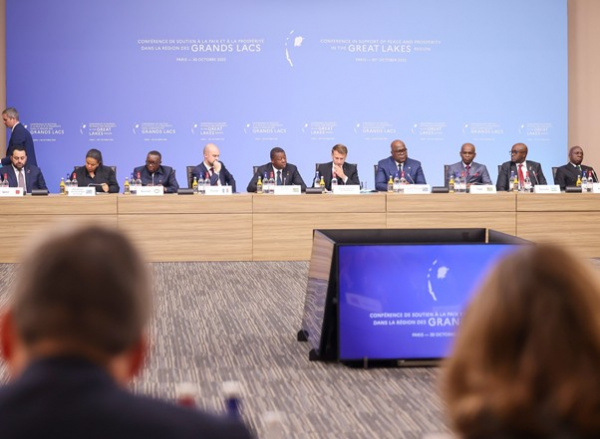
Paris became a hub of global diplomacy on Thursday, October 30, as France and Togo jointly hosted an international conference dedicated to restoring peace and stability in Africa’s Great Lakes region. The high-level gathering brought together world leaders, regional heads of state, and representatives of major international organizations, including the United Nations, to forge a collective roadmap toward lasting peace.
Co-chaired by Togolese President Faure Gnassingbé and French President Emmanuel Macron, the conference marked a renewed international effort to stabilize one of Africa’s most volatile regions. The presence of UN Secretary-General António Guterres and Democratic Republic of Congo’s President Félix-Antoine Tshisekedi added weight to the discussions, reflecting growing international concern over security and humanitarian crises in the region.
Nearly 70 senior delegates representing countries such as the United States, Qatar, Rwanda, Angola, Uganda, Burundi, and Tanzania, along with several European and Asian nations, attended the event. Their participation underscored the global recognition that peace in the Great Lakes region is essential not only for Africa’s stability but also for broader global security.
Throughout the conference, leaders explored strategies for resolving ongoing conflicts, strengthening regional cooperation, and supporting post-conflict reconstruction. They also emphasized the importance of dialogue and mutual trust among neighboring states. Moreover, discussions focused on how to enhance humanitarian aid, promote democratic governance, and empower regional institutions to prevent future crises.
The event served as a platform for Togo to demonstrate its growing diplomatic influence on the international stage. Under President Gnassingbé’s leadership, Togo has positioned itself as a trusted mediator in regional peacebuilding efforts. By co-hosting the summit, Togo reaffirmed its commitment to advancing African-led solutions that prioritize stability, reconciliation, and inclusive development.
For France, the conference represented a continued commitment to supporting African nations in addressing their most pressing challenges. President Macron highlighted the need for partnerships built on mutual respect and shared responsibility, urging nations to move beyond military interventions toward long-term investments in governance, education, and local development.
In his remarks, President Gnassingbé stressed that peace cannot be sustained without addressing the root causes of instability — poverty, inequality, and weak institutions. He called for a coordinated regional framework that empowers African governments to take ownership of their security and development priorities.
By the end of the meeting, participants agreed on a set of guiding principles to strengthen peace efforts in the Great Lakes region. They reaffirmed their collective resolve to promote cooperation, prevent conflicts, and support inclusive dialogue among all stakeholders.
As the conference concluded, Paris once again stood as a bridge between Africa and the international community — a space where collaboration replaces division, and diplomacy lays the foundation for a more peaceful and united continent.