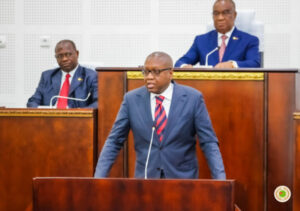
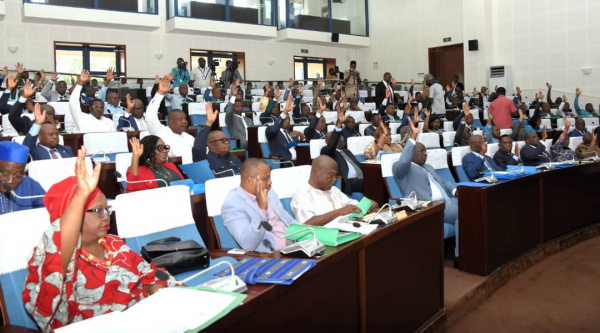
Togo has completed the legislative process for its 2026 fiscal year budget, signaling policy continuity and fiscal discipline. On Monday, December 29, 2025, the National Assembly definitively adopted the draft budget law after a second reading. Earlier, the Senate reviewed and validated the text, clearing the final hurdle before enactment.
At the core of the law sits a balanced budget of 2,751.5 billion CFA francs. Lawmakers aligned revenues and expenditures at the same level, reinforcing the government’s commitment to budgetary equilibrium. Importantly, the final figure mirrors the amount approved during the first reading by the National Assembly and the second reading by the Senate. As a result, Parliament closed deliberations without further numerical changes.
However, Togo final budget still reflects a modest increase compared with the executive’s initial proposal. When the government first submitted the draft, it stood at 2,740.5 billion CFA francs. Through parliamentary scrutiny and technical adjustments, lawmakers raised the envelope by roughly 11 billion CFA francs. Officials say the increase responds to refined sectoral needs identified during committee reviews.
Throughout the process, lawmakers emphasized stability. First, parliamentary committees examined revenue assumptions and spending priorities. Next, they assessed alignment with national development goals. Then, they weighed fiscal risks against growth prospects. This step-by-step approach, legislators argued, helped preserve discipline while allowing targeted adjustments.
Moreover, the budget debates highlighted the importance of predictable public finance management in togo. Several lawmakers stressed that maintaining the same figure across readings sends a clear signal to investors and development partners. In their view, consistency strengthens confidence and supports medium-term planning. Consequently, Parliament opted to retain the revised total through final passage.
In addition, officials underscored the role of the Senate in refining the text. Senators reviewed sectoral allocations and compliance with fiscal rules. They also validated the adjustments agreed upon during earlier deliberations. By doing so, the upper chamber ensured coherence between policy objectives and available resources.
Meanwhile, government representatives framed the budget as a tool for execution rather than experimentation. They argued that the 2026 framework builds on prior reforms and focuses on implementation. Therefore, the emphasis falls on effective spending, revenue mobilization, and monitoring. According to parliamentary sources, this orientation influenced the decision to avoid late-stage changes.
Looking ahead, the approved budget sets the parameters for public action in 2026. Ministries and agencies will now translate allocations into operational plans. At the same time, the finance authorities will move to strengthen revenue collection to meet projections. Officials say improved compliance and administrative efficiency remain priorities.
Furthermore, the balanced structure reflects a broader policy choice. By matching revenues and expenditures, the government aims to limit financing gaps and manage debt prudently. Lawmakers repeatedly pointed to fiscal balance as essential for macroeconomic stability. As such, the final law reinforces a cautious stance amid regional and global uncertainties.
As implementation approaches, attention will shift to delivery. Oversight committees plan to track execution closely. They intend to monitor disbursements, assess outcomes, and ensure value for money. In parallel, the executive branch has pledged to publish regular updates to enhance transparency.
In summary, Togo 2026 budget emerges from a thorough parliamentary process marked by continuity and careful adjustment. The final figure of CFA 2,751.5 billion reflects both legislative input and executive planning. With approval secured, the focus now turns to execution—where timely delivery, accountability, and results will define success.