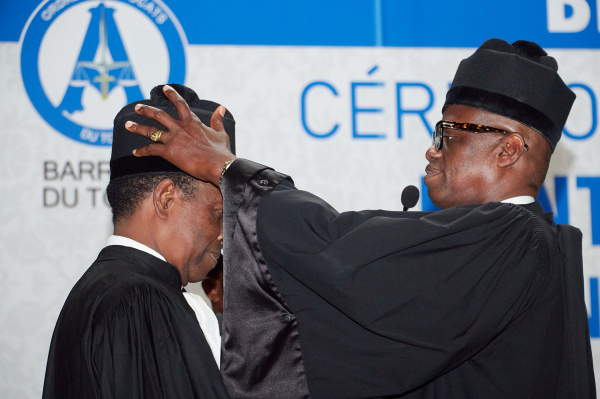
Togo’s legal community has entered a new chapter with the appointment of Sambiani Yobé as the new President of the Togolese Bar. He officially assumed office at the end of last week, marking a leadership transition that signals continuity, renewal, and strengthened commitment to the rule of law. With this development, Yobé becomes the 15th president in the history of the Togolese Bar, succeeding Claude Folly Adama, whose tenure has formally come to an end.
This transition reflects the Bar Association’s established tradition of orderly succession and institutional stability. Over the years, the Togolese Bar has played a central role in defending professional ethics, promoting access to justice, and safeguarding the independence of the legal profession. Consequently, the emergence of a new president carries both symbolic and practical importance for lawyers, litigants, and the wider justice system.
Sambiani Yobé assumes leadership at a time when the legal profession faces evolving expectations. Across Togo, citizens increasingly demand faster justice delivery, stronger protection of fundamental rights, and greater transparency within public institutions. Therefore, the new president’s mandate comes with heightened responsibility to strengthen professional standards while also responding to social and institutional realities.
During the handover, attention focused on the continuity of reforms initiated under the outgoing leadership. Claude Folly Adama’s tenure contributed to professional cohesion and reinforced the Bar’s voice on national legal issues. Building on this foundation, Yobé is expected to consolidate gains while also introducing fresh perspectives that reflect changing legal and societal dynamics.
Moreover, the Togolese Bar occupies a strategic position within the justice ecosystem. Beyond courtroom advocacy, it serves as a moral compass on constitutionalism, human rights, and democratic governance. As a result, the Bar’s leadership often engages with public debates on legal reforms, judicial independence, and citizens’ access to justice. Under Yobé’s presidency, many observers anticipate a renewed emphasis on dialogue, professional development, and institutional credibility.
Equally important, the new president inherits the responsibility of strengthening internal cohesion among lawyers. The profession continues to grow in diversity, experience, and specialisation. Therefore, fostering unity, mentoring young practitioners, and ensuring fair representation across the Bar remain critical priorities. Through inclusive leadership, the new administration can reinforce solidarity while encouraging excellence across all levels of practice.
In addition, digital transformation and legal modernisation now shape the future of legal practice worldwide. Consequently, the Togolese Bar faces increasing pressure to adapt to technological change, improve legal research capacity, and modernise professional training. Under Sambiani Yobé’s leadership, the Bar may deepen engagement on these issues, ensuring that Togolese lawyers remain competitive, ethical, and responsive in a rapidly changing environment.
Furthermore, the Bar’s relationship with judicial institutions, government bodies, and civil society remains central to its effectiveness. By promoting constructive engagement while preserving independence, the new president can strengthen trust in the justice system. This balance remains essential for maintaining public confidence and ensuring that the law serves society fairly and consistently.
As the 15th president, Sambiani Yobé also carries the weight of history. Each past leadership phase has shaped the identity and influence of the Togolese Bar. Therefore, his tenure will likely be assessed by how effectively it protects professional integrity, advances reform, and responds to national challenges.
In conclusion, Sambiani Yobé’s assumption of office represents both continuity and opportunity for the Togolese Bar. At a time of rising expectations for justice, accountability, and professional excellence, his leadership will play a defining role in shaping the Bar’s direction. With experience, vision, and collective support, the new president stands positioned to strengthen the legal profession’s contribution to Togo’s democratic and institutional development.