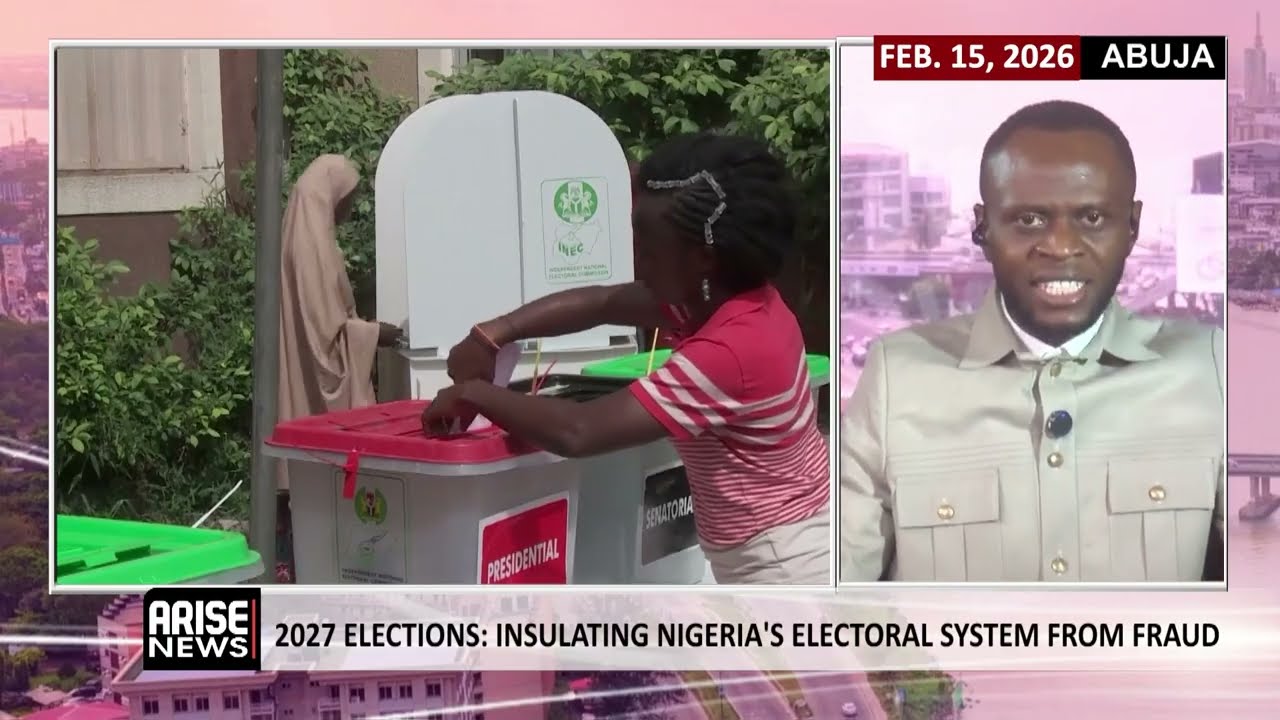

Associate Professor of Political Criminology, Dr Suleiman Barnabas, has warned that allowing manual collation as a fallback option in the proposed Electoral Act amendment could undermine efforts to strengthen Nigeria’s electoral integrity.
Speaking during an interview on ARISE News on Sunday, Barnabas said Nigerians across political and social divides are united in their desire to improve the country’s democratic process.
“I think that Nigerians, of all persuasions, politicians, scholars, you know, the ordinary people, everyone agrees that we need to advance our democracy. And if we are going to advance our democracy, then they like our frameworks that will ensure that the people have confidence in our democratic processes and our elections are in place.”
Barnabas criticised the Senate’s decision to include a proviso allowing manual collation where electronic transmission fails, arguing that such discretion could be abused.
“Yes, it’s true that there are some places in Nigeria that you have some, you know, challenges with network. But again, that is not the major reason for the decision of the Senate to, you know, insert that proviso, you know, that is intended to create room, give allowance for their tricks, their manipulation of election results.”
He stressed that making electronic transmission mandatory would change political behaviour.
“So let it be put in the law that it is mandatory. What that will do is that first it will inform the politicians that their usual game has changed.”
Warning of potential abuse, he added: “If you allow that discretion in the administration and management of election results, what will happen is that exception will become the norm. Politicians will ensure they will give the excuse of network, including Abuja and Lagos.”
He linked the current push for reform to controversies surrounding the 2023 general elections.
“Remember, the 2023 results showed that there were lots of manipulations. Results were altered, mutilated, you know, in favor of certain political parties or individuals.”
According to him, real time electronic transmission of results is critical to closing loopholes exploited in previous elections.
“Well, the real-time, you know, transmission of results, each transmission of results will totally block the opportunity for manipulation of the results.”
Barnabas insisted that electronic transmission must not only be compulsory but also take precedence over manually collated results.
“So let us allow the results to be compulsorily, mandatorily transmitted electronically.”
“Secondly, I want a situation where it is clearly stated that the electronically transmitted result takes precedence over other forms of result that will be collated.”
Beyond transmission, he also raised concerns about the broader conduct of democratic institutions.
“It’s unfortunate that the democratic institutions in our country have been the problem with advancing democracy in this country.”
On sanctions for electoral offences, Barnabas called for tougher penalties to deter fraud.
“I think that the punishment should be harsher than what they currently have.”
Clarifying an earlier remark, he said: “I wasn’t saying it should be capital punishment. I was only saying that there needs to be, you know, deterrence.”
He suggested stricter consequences, including long term disqualification from public office.
“So I’m not saying that it should be capital punishment, but we should look at things like maybe, you know, stopping the person, the sponsors from holding political offices, you know, 20-year jail term for those who engage in election fraud.”
Barnabas concluded by urging the National Assembly to adopt the House of Representatives’ version of the amendment and to strengthen the legal framework to safeguard electoral credibility.
“The National Assembly must now act by, one, ensuring that there is electronic transmission of results, that it is mandatory and it should be done. Secondly, that the result that is electronically transmitted will take precedence over any other form of results, and that those who ensure, I mean, who try to undermine our democracy, those who engage in election frauds are sanctioned, and that the sanctions must ensure deterrence.”
Faridah Abdulkadiri