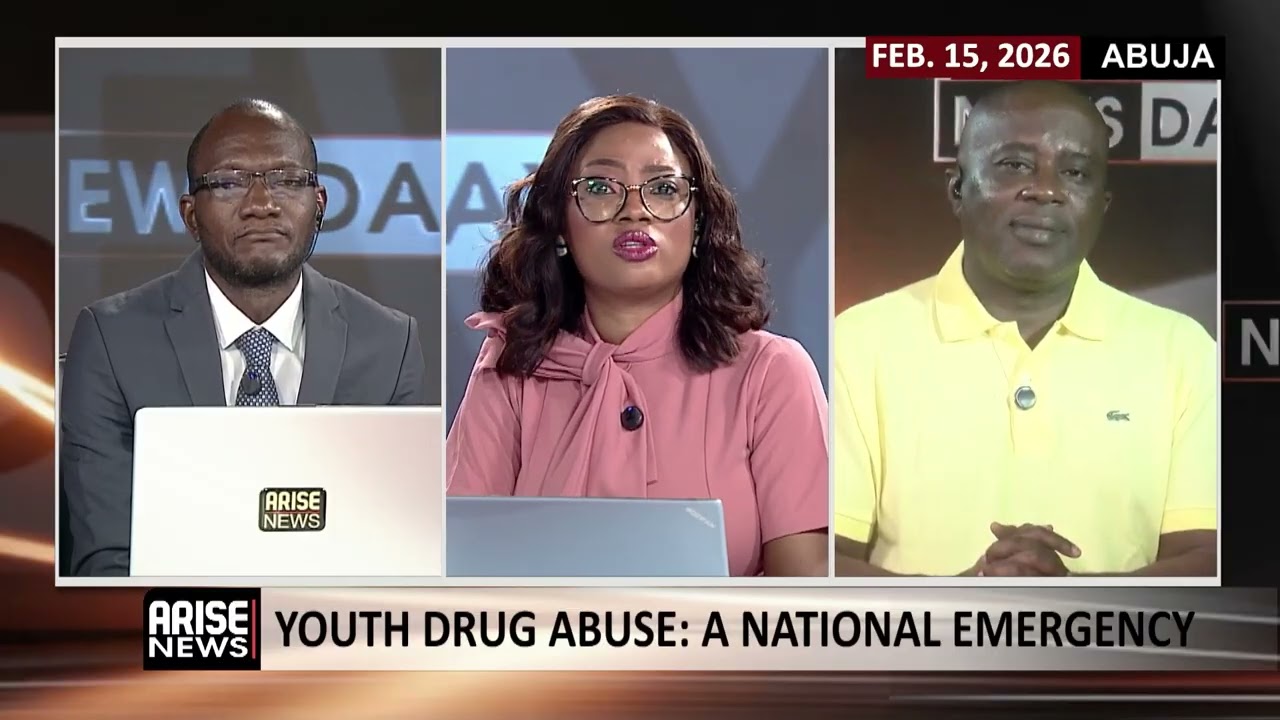
Nigeria’s worsening drug abuse crisis requires a coordinated, whole-of-society response involving federal, state and community stakeholders, Director of Media and Advocacy at the National Drug Law Enforcement Agency, Femi Babafemi, has said.
Speaking in an interview with ARISE News on Sunday, Babafemi acknowledged the severity of substance abuse in the country, warning that denial would only worsen the situation.
“Absolutely, there is no need to live in denial that we have a problem or a challenge of substance abuse in the country,” he said, referencing findings from the 2018 Drug Use Survey Report.
His comments followed a disturbing report of a decomposing body of a young man retrieved from the Opalindi underbridge canal in Lagos Island, days after he was declared missing. The victim was reportedly suspected to have been under the influence of illicit drugs before the incident.
Babafemi described the incident as one of the tragic consequences of unchecked substance abuse. “If one goes deep into it, one of the consequences is likely death, which was very unfortunate in the case of the young man you reported earlier,” he said.
Citing data from the 2025 World Drug Report by the United Nations Office on Drugs and Crime, he noted that Nigeria’s drug use rate stands at 14.4 per cent nearly three times the global average with millions struggling with drug use disorders.

He explained that the agency is tackling the crisis from two major fronts: drug demand reduction and drug supply reduction. “When I talk of drug demand reduction, that is where we lead advocacy to sensitise the public, to raise awareness through our War Against Drug Abuse social advocacy initiative,” he said.
According to him, the initiative involves outreach to schools, markets, motor parks, worship centres and local communities, working alongside faith-based groups and civil society organisations. “We are mobilising everybody. The approach is a whole-of-society approach,” he stated.
Babafemi added that rehabilitation remains a critical pillar of the agency’s strategy. “We have 30 treatment and counselling centres across the country today, and by the grace of God, we will be having an additional seven this budget year,” he said, noting that support is available for those willing to seek help.
He also commended efforts by the Lagos State Government to combat substance abuse, particularly drug integrity tests for commercial drivers. “That was an awesome initiative by the state. That is getting people to buy in and take ownership of this effort,” he said.
On the effectiveness of such programmes, Babafemi argued that awareness and deterrence are immediate gains. “The fact that drivers know they will be tested and, if positive, discouraged from going on the road that alone is a deterrent,” he said.
He concluded by stressing that sustained collaboration across all levels of government and society remains the only viable path to reversing Nigeria’s rising drug abuse statistics. “We cannot rest on our oars. Everybody has a role to play if we are to cut down the demand for illicit substances, especially among our young people,” Babafemi said.
Triumph Ojo