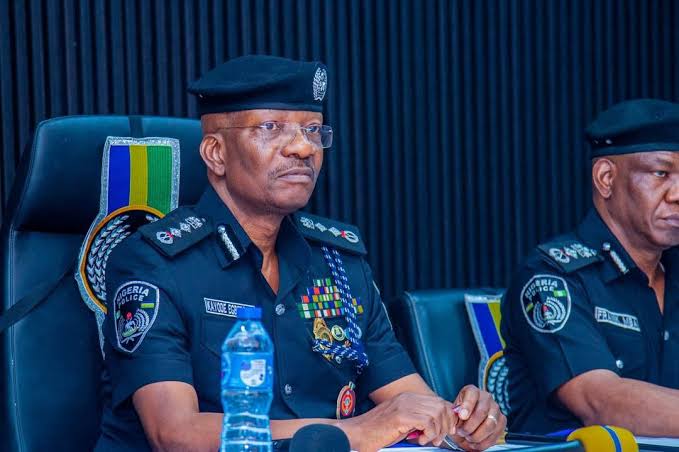
Most people who know me through my late boss, Solomon E. Arase (CFR), former Chairman of the Police Service Commission, often react with genuine surprise when I share a personal detail from my professional journey. They assume, understandably, that my path into policing circles began under his towering influence. Yet the truth unfolds differently. I first encountered the current Inspector-General of Police, Kayode Egbetokun (PhD), long before I ever met the revered former IGP, Solomon Arase (rtd.).
That sequence, while simple on the surface, has always carried deeper meaning for me. It reflects how careers and relationships in public service often develop through unexpected intersections rather than linear hierarchies. Many assume mentorship or proximity follows institutional rank. However, real-life trajectories rarely follow such predictable lines.
An Early Professional Intersection
My first meeting with Kayode Egbetokun occurred at a stage when I had not yet entered the orbit of Solomon Arase. At the time, I viewed him not through the lens of future leadership but as a disciplined officer defined by professional clarity and composure. His presence conveyed quiet authority rather than performative command.
That early interaction left a subtle yet lasting impression. He listened carefully, spoke deliberately, and demonstrated a structured approach to issues before him. Even then, one sensed a leadership temperament grounded in order and reflection. There was no aura of impending office, only the unmistakable bearing of institutional discipline.
Years later, when I eventually came under the mentorship of Solomon Arase, the contrast and continuity between the two men became clearer.
Encountering a Policing Icon
Meeting Solomon Arase marked a defining shift in my professional exposure. By then, he had already emerged as one of Nigeria’s most respected policing reform figures. His intellect, strategic vision, and humane leadership style drew many into his sphere of influence.
Working around him offered lessons beyond operational policing. He embodied administrative reform, ethical leadership, and institutional renewal. Conversations with him often moved from policy to philosophy, from law enforcement mechanics to national development ideals.
Therefore, many who associated me with his legacy naturally assumed he was my first gateway into the upper ranks of Nigerian policing. That assumption persists today.
Two Leaders, Two Pathways
Yet my earlier meeting with Egbetokun remained a quiet personal reference point. It reminded me that leadership journeys intersect long before public recognition crystallises them. When he later rose to become Inspector-General, I recalled that earlier encounter with renewed appreciation.
The progression revealed a continuity of professional character. The same restraint, discipline, and measured engagement I observed years before now appeared amplified by institutional responsibility. Leadership had not altered the core disposition. Instead, office had magnified it.
This parallel between early impression and later prominence illustrates how authentic leadership often precedes formal authority. Titles confirm influence; they rarely create it.
Reframing Assumptions About Influence
People often construct narratives around visible mentorship. They connect individuals solely through the most prominent association. In my case, that association remains Solomon Arase. His mentorship shaped perspectives, networks, and professional philosophy.
However, acknowledging my earlier meeting with Egbetokun does not diminish that legacy. Rather, it broadens the story. It shows that professional lives rarely unfold through single gateways. They evolve through multiple encounters, each shaping perception in distinct ways.
Recognising this complexity matters. It reminds us that institutions consist of interconnected personalities whose paths cross long before public roles define them.
Personal Reflection on Continuity
Today, when I reflect on both men, I see complementary strands within Nigerian policing leadership. Arase represented reformist intellect and ethical transformation. Egbetokun represents disciplined continuity and institutional steadiness.
My unique experience—meeting one before the other—offers a vantage point across leadership generations. It underscores how influence travels through time, relationships, and shared institutional culture.
Therefore, when people express surprise at the sequence of my encounters, I simply smile. Their assumption reflects respect for Solomon Arase’s towering legacy. Yet my earlier meeting with Kayode Egbetokun reminds me that leadership recognition often follows, rather than precedes, the quiet formation of character.
In that sense, my journey mirrors a broader truth about public service: the leaders we later revere often pass through our lives long before history assigns them their rightful stature.