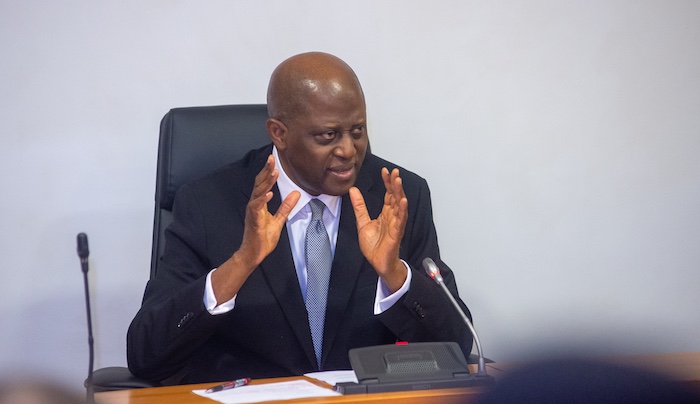
Governor of Central Bank of Nigeria (CBN), Mr. Olayemi Cardoso, said Africa must grow, industrialise, create jobs, expand opportunities, and lift millions out of poverty, while building climate resilience. Cardoso said this in his keynote speech at the Egypt 30by30 Programme, recently organised by Central Bank of Egypt and International Finance Corporation (IFC).
He said the collaborative ambition behind the 30by30 initiative embodied a shared continental vision that Africa’s future must be resilient, climate-aware, and economically sustainable.
Cardoso stated that through closer collaboration with Central Bank of Egypt and partners across World Bank Group, CBN was dedicated to building a resilient, risk-aware financial framework, advancing green finance, strengthening cross-border cooperation, and positioning Africa, not just to withstand shocks, but also to thrive in a changing global economy.
In a statement, Cardoso also emphasised that resilience began with credibility.
He said, “In Nigeria, disciplined and transparent reforms are strengthening macroeconomic fundamentals and boosting confidence in the financial system, laying the groundwork for sustainable growth.
“To build resilient financial systems, we must anchor our economies on trustworthy institutions, credible policies, transparent markets, and risk-aware innovation.”
Cardoso added, “Climate risk is financial risk. It affects sovereign ratings, cost of capital, inflation dynamics, food security, insurance markets, and fiscal sustainability.”
The CBN governor stated that Africa contributed the least to climate change, yet bore some of its highest costs.
He stated that Africa also offered some of the world’s greatest opportunities in renewable energy capacity, biodiversity, a young population, and rapidly evolving financial markets.
Cardoso said, “To seize these opportunities, we must innovate for resilience, not as isolated nations, but as a continent.
“By working together deliberately, transparently, and with unwavering commitment, we can build the resilient, sustainable, and inclusive financial systems that Africa needs not only to withstand future shocks but also to thrive in the decades ahead.”
The engagement underscored a defining imperative for the continent: Africa’s financial future depends on a dual commitment to stability and sustainability, the statement added.
James Emejo and Nume Ekeghe