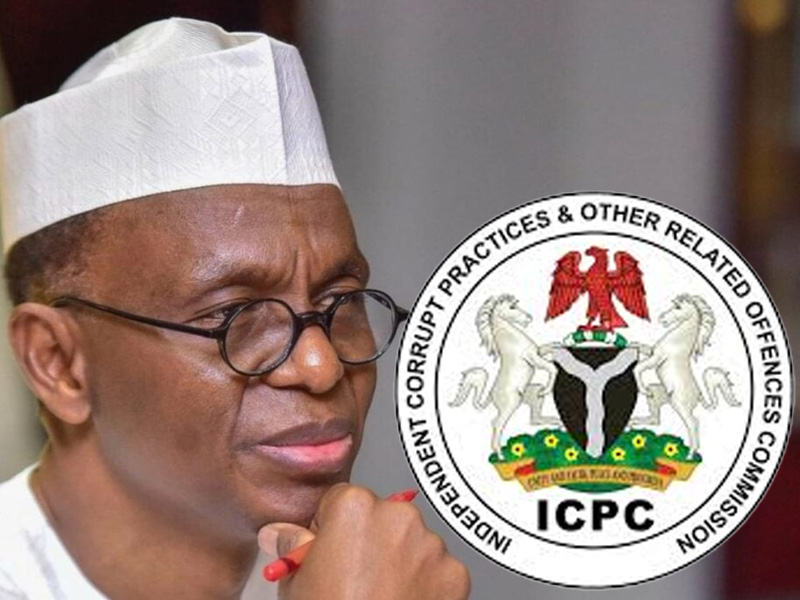
Court documents tendered by Independent Corrupt Practices and Other Related Offences Commission (ICPC) have revealed that wiretapping equipment as well as some sensitive security documents were in the house of detained former Kaduna State governor, Mallam Nasir El-Rufai.
The court documents included various exhibits attached with the counter affidavit of ICPC in opposition to the alleged human rights abuse claimed by the former governor and chieftain of the opposition African Democratic Congress (ADC), who had been in the custody of the anti-corruption agencies for about two weeks.
El-Rufai had on February 16 honoured an invitation by Economic and Financial Crimes Commission (EFCC), and was detained and interrogated for three days. He was arrested by Department of State Services (DSS) upon his release on February 18 by EFCC, before he was handed to ICPC.
The former governor had since remained in ICPC’s custody, with the agency accusing him of not cooperating with their investigation.
Miffed by his arrest and continued detention by the agencies of the federal government, El-Rufai, through his team of lawyers led by Oluwole Iyamu, SAN, filed a fundamental rights suit at a High Court of the Federal Capital Territory (FCT), alleging that his trial is political.
EFCC, Attorney-General of the Federation (AGF), DSS, and ICPC were first to fourth respondents in the suit marked: FCT/HA/CV/658/2026.
In its counter affidavit to El-Rufai’s affidavit in support of the originating summons, ICPC submitted that contrary to the applicant’s claim, he was being held legally, following the order of a magistrate court obtained on February 19, 2026.
Besides, ICPC in the court process, alleged that it recovered from El-Rufai’s Abuja residence equipment, allegedly, used for wiretapping conversations of National Security Adviser (NSA), Mallam Nuhu Ribadu.
Beyond the corruption and abuse of office allegations, DSS was seeking to prosecute El-Rufai on a three-count charge bordering on alleged cybercrime offences.
El-Rufai’s arraignment could not go on as planned last week since he was still in the custody of ICPC.
In the counter affidavit filed on February 26 by ICPC’s lawyer, OsuobeniAkponimisingha, the commission stated the former governor was formally invited to answer to various corruption allegations as governor of Kaduna State between 2015 and 2023.
In a five-paragraph affidavit deposed to in support of ICPC’s counter affidavit, the commission lamented that the former governor, who became very popular as Minister of the Federal Capital Territory (FCT) during the administration of former President Olusegun Obasanjo, refused to volunteer any statement when confronted with documents and exhibits of ICPC’s preliminary investigation against him.
According to the deponent, David Efuk, the commission, in its bid to investigate corruption allegations against El-Rufai, obtained several documents from banks and other institutions, but efforts to confront the applicant with their findings from investigation were unsuccessful.
In one of the petitions, the former governor was being called upon to explain the whereabouts of €1.4 million; 180 suspicious payments totallingN2,158,799,199 from a Consolidated Revenue Account linked to Kaduna State’s IGR account; and transfers to undisclosed accounts amounting to N428,122,180.18, among others.
Efuk recalled that while efforts to arrest the former governor at Nnamdi Azikiwe International Airport, Abuja, by DSS failed, El-Rufai later agreed to visit the commission on February 18, and was subsequently arrested for interrogation.
On February 18, 2026, about 7pm, the applicant was released to DSS by EFCC to be handed over to the commission.
On February 19, 2026, the commission obtained a remand order to keep the applicant in its custody for 14 days, which will lapse on March 5, 2026.
Efuk disclosed that ICPC on the same February 19 executed a duly signed search warrant on the premises of El-Rufai at No. 12 Mambila Street, AsoDrive, Asokoro District, Abuja. He stated that the search was witnessed by the applicant’s wife, Hadiza Isma el-Rufai, and his son, Hon. Mohammed Bello el-Rufai.
According to Efuk, “The commission retrieved sensitive security documents capable of compromising national security.”
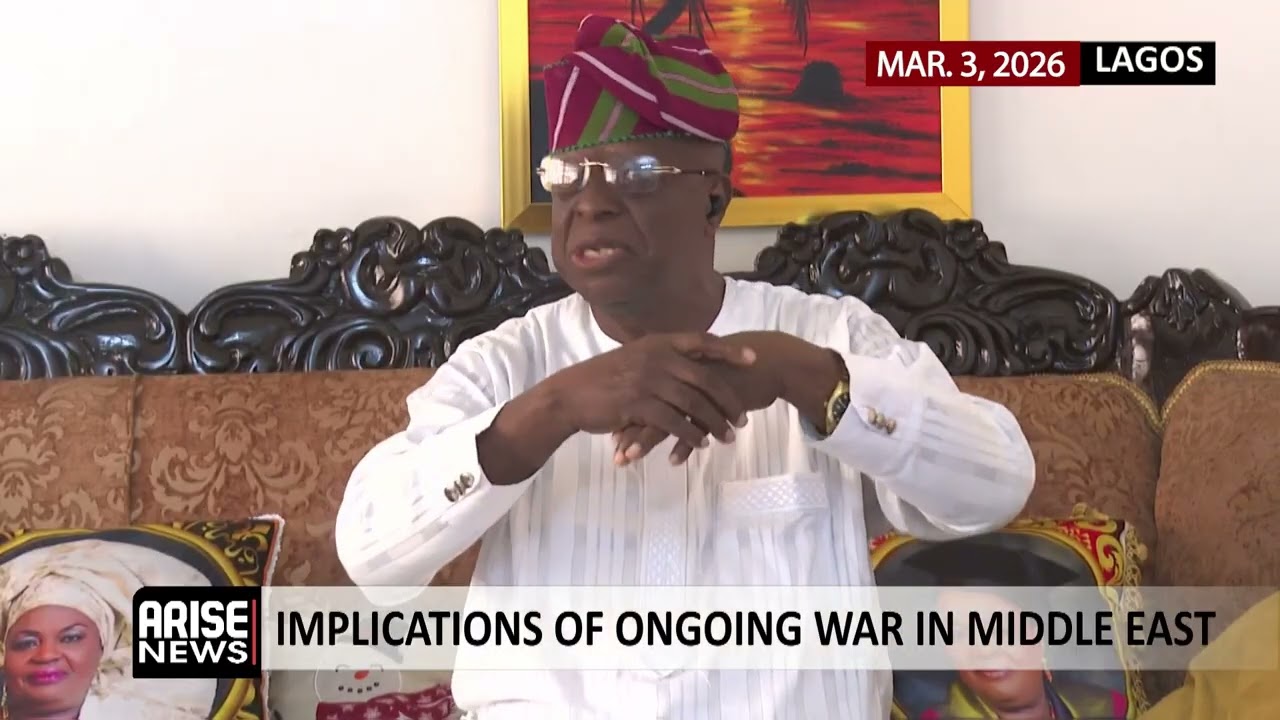
He recalled how the former governor had while speaking on a national television station (Arise Television) admitted to tapping telephone conversations of Ribadu.
“During the search operations, the commission retrieved electronic magnetic equipment allegedly capable of tapping conversations,” the deponent stated.
He claimed that El-Rufai had refused to give consent to enable the commission access the equipment.
While claiming that, “The search also retrieved sensitive security documents of various security agencies of the government,” the commission accused the detained ADC chieftain of threatening likely prosecution witnesses, observing that one of such witnesses has written to the commission seeking protection.
ICPC accordingly urged the court to dismiss the applicant’s suit on grounds that his detention was backed by an order of court.
The commission claimed, “ICPC does not arbitrarily arrest or detain suspects unlawfully, nor pose any physical danger to them.
“ICPC’s mandate is to investigate cases of corruption, abuse of office and related offences, and where there is prima facie evidence, prosecute alleged offenders.
“ICPC can only charge a person to court when investigations are concluded.
“Where investigation is ongoing, ICPC may request an alleged offender to report to its office daily until investigations are concluded or, where necessary, remand the alleged offender pending conclusion of investigations.”
It promised to draw up charges against the applicant before March 5, when the detention order will lapse.
Among documents attached to ICPC’s counter affidavit were petitions alleging corruption and abuse of office, remand order for 14 days, search warrant, and a statement made by El-Rufai to ICPC.
The former governor had in his statements on oath dated February 19 and 20 declined to respond to questionings by ICPC, promising to do so only before the court.
He stated, “I am a leading member of the African Democratic Congress (ADC), which I consider the only surviving opposition party in Nigeria, and that is the real reason I am being investigated.
“Regarding this question and any other questions, I have, on the advice of counsel, decided to exercise my right to silence.
“I believe that after nearly two years of intensive investigation, the ICPC should present its findings before a judicial tribunal and not to me.
“I will respond to any allegations only in a court of law. I do not believe these investigations amount to law enforcement.
“This is political persecution which only a judge can decide upon.”
The family of the detained former governor also countered claims by the commission that wiretapping equipment were recovered from El-Rufai’s residence during a search recently.
The family, in a statement, described the claims as falsehoods, theatrical posturing “apparently designed to prosecute a media war rather than adhere to the rule of law”.
Hon. Mohammed Bello El-Rufai, who signed the statement on behalf of the family, said they were compelled to set the record straight and expose what they claimed to be a “malicious intent behind this orchestrated smear campaign”.
Mohammed Bello El-Rufai, who currently represents Kaduna North Federal Constituency, and is Chairman, House of Representatives Committee on Banking Regulations, stated, “I had tried to stay off social media to focus on Ramadan, my family and my work on behalf of the excellent people of Kaduna North. But I have chosen to break my silence to put an end to a blatant lie.”
Speaking on the right to silence and non-cooperation, the federal lawmaker accused ICPC of attempting to weaponise the ex-governor’s silence with the claim that he refused to cooperate.
Mohammed stated, “We must educate the commission on the most basic tenet of Nigerian jurisprudence: The Constitution of the Federal Republic of Nigeria guarantees every citizen the right to remain silent. This is not an act of non-cooperation; it is a fundamental human right. No law enforcement agency, regardless of its frustration at a failed operation, is entitled to draw any negative inference from a citizen’s decision to exercise this constitutional hermetic seal.
“That the ICPC believes silence implies guilt is a confession of their own inquisitorial mind-set and their disregard for the very laws they are sworn to uphold.
“Our father, Mallam Nasir El-Rufai, has said in all interactions with law enforcement: ‘CHARGE ME, IF YOU HAVE ANYTHING AGAINST ME. YOU HAVE HAD MORE THAN 2 YEARS TO INVESTIGATE ME. TAKE ME TO COURT PLEASE.”
“This challenge cannot be met. It is the reason for these lies and obfuscation by ICPC”.
On the issue of wiretapping, the family described the claim as fictitious, adding that the reasons behind the allegations will soon become public.
The family stated that the list of seized equipment “designed to conjure images of espionage and criminality” had not been endorsed by Mallam el-Rufai or his legal representatives.
While stating that they were present when the said items were seized, El-Rufai’s son submitted that no equipment other than old discarded personal mobile phones, some dating back as much as 20 years, storage devices, like flash drives and laptops, which were standard possessions of any 21st-century citizen, were seized from the property.
“The alleged sophisticated tapping equipment and sensitive security documents exist only in the fevered imagination of the ICPC and its press team,” he said.
Besides, the family said the search that purportedly uncovered the alleged phantom items originated from a legally defective warrant”. They added that there was credible evidence that the warrant was a forgery, fraudulently procured and presented by a Magistrate “who was, bizarrely, purporting to sit in the High Court of the Federal Capital Territory”.
El-Rufai’s family said, in the statement, “An illegality of this magnitude—a forgery at the very inception of a state-sponsored search—renders everything that follows it inadmissible and void.
“Our lawyers have challenged this illegitimate warrant in a court of competent jurisdiction. The ICPC is welcome to explain in court how a Magistrate conjured the jurisdiction of a High Court to sign a warrant based on false premises.”
While maintaining that they would not be tried in the court of public opinion by an agency acting on behalf of some political masters, the family disclosed that they had instructed their legal team “to pursue all available legal remedies to challenge the illegal search, the forged warrant, and the defamatory statements made by the ICPC”.
The statement added, “We have absolute faith that the Nigerian judiciary will see through this shameful charade and uphold the rights of our family against this executive overreach.
“It would not surprise us if the ICPC were to produce something of that nature in furtherance of its descent into infamy. After all a court of law has already lampooned ICPC in another matter, of procuring fake search warrants.”
Alex Enumah