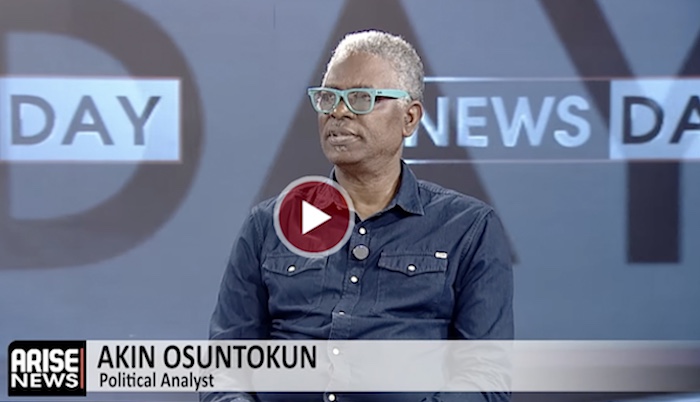
Political analyst Akin Osuntokun has dismissed threats by some political parties to boycott forthcoming elections, arguing that such actions may have little impact on the credibility or conduct of the polls unless major and influential parties participate in the boycott.
Speaking during an interview with ARISE News on Friday, Osuntokun said the relevance of the boycott threat raised by the Inter-Party Advisory Council (IPAC) depends largely on the strength and significance of the parties involved.
He stressed that determining the seriousness of the threat requires identifying which parties are actually under the IPAC umbrella.
“You have to find out those parties that are under the aegis or auspices of the IPAC. That is when we will be able to determine whether what they are saying is of consequence,” he said.
Osuntokun noted that some of the more recognisable political parties in Nigeria are not necessarily members of the group making the threat, raising doubts about the potential influence of the proposed boycott.
“For instance, better recognised parties are not members. So we need to know how many parties are under its umbrella,” he added.
He further argued that even if some parties refuse to participate in elections, the government could still proceed with the electoral process because of the large number of registered political parties in the country.
“There are so many parties now to sponsor parties to come and contest elections, and that will be the end of the matter,” he said.
According to him, while the absence of major political actors could raise questions about the credibility of election outcomes, history suggests that boycotting elections is rarely a strategic decision for political parties.
“There is no doubt it will cast credibility issues if parties of consequence do not take part,” Osuntokun noted. “But historically, Nigeria has always had this debate about whether to boycott or not to boycott, and the verdict is that it is not so wise to boycott the election.”
The analyst also pointed out that the objections to the electoral legislation appear to have emerged late in the process, noting that political actors had earlier opportunities to raise concerns.
“All along, it wasn’t as if it was a sneak event. The act was passed and people knew about it,” he said.
Osuntokun added that while grievances raised by political parties may still be valid, the effectiveness of such protests depends on the political strength behind them.
“If I have an ideal that I want to put into practice and I don’t have the means of translating that ideal into reality, it becomes futile,” he explained.
He concluded by emphasising that Nigerian politics often reflects the realities of power dynamics rather than purely ideal democratic principles.
“There is something called real politics,” Osuntokun said. “Real politics is power politics, and the practical purpose is the attainment of power.”
Triumph Ojo