The United Nations Entity for Gender Equality and the Empowerment of Women (UN Women) has warned that Nigeria’s democratic progress and development could remain constrained unless urgent steps are taken to close the country’s widening gender inequality gap.
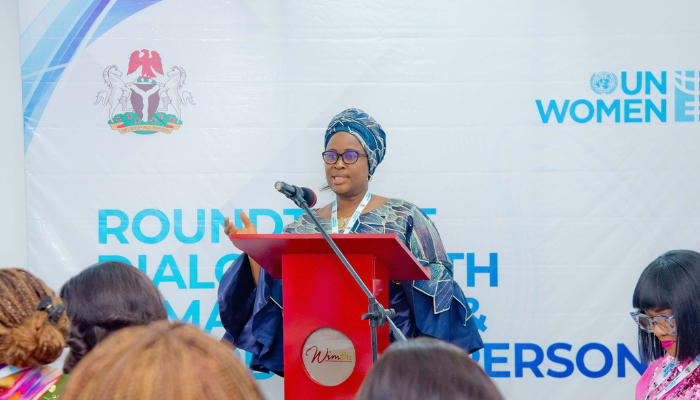
The Country Representative of UN Women to Nigeria and the Economic Community of West African States (ECOWAS), Beatrice Eyong, issued the warning during a media briefing in Abuja ahead of the 2026 commemoration of International Women’s Day (IWD).
The global observance this year is themed “Rights. Justice. Action.”
Eyong said the theme reflects growing global concern that while women’s rights are recognised in laws and policies, millions of women still struggle to experience those rights in their daily lives.
She highlighted Nigeria’s extremely low level of female political representation, noting that women currently occupy just 3.9 per cent of parliamentary seats, one of the lowest rates globally.
According to her, the imbalance undermines democratic inclusion and weakens the country’s ability to make policies that reflect the needs of half of its population.
“Gender equality is fundamentally a question of power, and the power gap in Nigeria remains stark,” Eyong said.
“When women are missing from decision-making tables, the consequences are visible in the policies we adopt, the priorities we fund, and the voices that remain unheard.”
Beyond political representation, Eyong noted that Nigeria continues to grapple with persistently high levels of gender-based violence, with many survivors facing significant barriers in seeking justice.
She warned that violence against women is increasingly extending into digital spaces, where technology-facilitated abuse is becoming more widespread.
“Rights mean little without justice,” she said. “Justice must be experienced in women’s safety, in their freedom from fear, and in their ability to seek protection and accountability wherever abuse occurs.”
To address these challenges, Eyong said UN Women is intensifying advocacy for the Special Seats for Women Bill, a constitutional reform proposal designed to guarantee stronger representation for women in Nigeria’s legislative institutions.
She disclosed that the organisation is also collaborating with the Federal Ministry of Women Affairs to strengthen the National Sexual Offender Database, a mechanism aimed at preventing convicted offenders from evading detection by relocating between states.
Eyong added that UN Women has expanded engagement with traditional and religious leaders across Nigeria to challenge cultural norms and social practices that perpetuate discrimination and violence against women.
The agency is also supporting the institutionalisation of Gender-Responsive Budgeting at federal and state levels to ensure public spending prioritises issues affecting women and girls, including maternal health, girl-child education, economic empowerment and community safety.
She further noted that UN Women is building partnerships with financial institutions and the private sector to improve access to funding for women-led businesses and grassroots initiatives.
Eyong also highlighted efforts to strengthen women’s participation in peacebuilding and conflict prevention through Nigeria’s Third National Action Plan on Women, Peace and Security.
However, she stressed that meaningful progress requires more than policy declarations.
According to her, Nigeria’s challenge lies not in the absence of gender policies but in weak implementation, inadequate financing and inconsistent enforcement.
“We must move from commitments to implementation and from plans to measurable impact,” she said.
Eyong also urged the media to intensify its role in exposing injustice, amplifying the voices of survivors of violence and promoting women’s leadership across sectors.
She described journalists as critical partners in shaping national conversations capable of influencing policy reforms and public attitudes toward gender equality.
“When we secure justice and rights for women, we secure Nigeria’s stability, prosperity and future,” she said.
Eyong reaffirmed UN Women’s commitment to working with government, civil society organisations, development partners and communities to ensure that the ideals of Rights, Justice and Action translate into tangible improvements for women and girls across Nigeria.
Michael Olugbode in Abuja