The Lagos State Government on Friday warned residents to brace for heavy rainfall and potential flooding as the 2026 rainy season approaches.
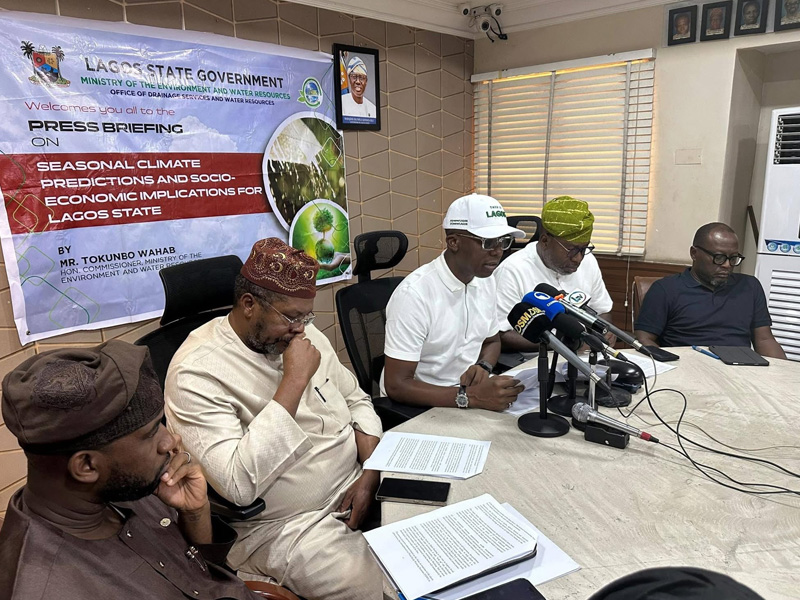
The warning was issued by the state Commissioner for Environment and Water Resources, Tokunbo Wahab, during a press briefing on the 2026 Seasonal Climate Prediction and its socio-economic implications. The briefing was held at the ministry’s conference room in Alausa.
Wahab said the Nigerian Meteorological Agency (NiMet) released the 2026 seasonal climate outlook on February 10, forecasting rainfall patterns, temperatures, and other weather parameters across the country. The state government organises the annual briefing to keep residents informed and prepared for the possible impacts of the rainy season.
According to the forecast, Lagos was expected to experience an early to normal onset of the rainy season, a normal to late cessation, and normal to above-normal rainfall, with temperatures likely to be above average between March and May.
“The year 2026 will begin with a weak La Niña in January, while the neutral phase of ENSO is expected to persist during the first six to eight months,” Wahab said. “This implies an early onset, longer duration, and delayed end of the rainy season in Lagos.”
The commissioner provided a breakdown of rainfall by divisions: Ikeja Division: March 31 – December 2, 1,932mm; Badagry Division: March 28 – December 3, 2,010mm; Ikorodu Division: March 31 – December 2, 1,935mm; Lagos Island Division: March 30 – December 2, 1,968mm, and Epe Division: March 29 – December 3, 1,984mm
Across all 20 local government areas, Lagos was expected to record an average annual rainfall of about 1,965mm.
Wahab cautioned that above-normal rainfall could trigger flooding, while strong winds at the start and end of the rainy season may endanger lives, damage property, and disrupt commercial activities.
“High rainfall amounts could lead to flooding in parts of the state. Strong winds during the onset and end of the rainy season may also disrupt commercial activities, cause flight delays, and result in revenue loss,” he said.
He added that Lagos has a network of weather stations and river gauges to monitor rainfall and river levels, improving preparedness for flood-related incidents.