
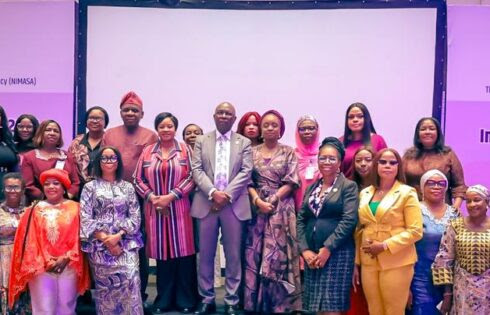
The Nigerian Maritime Administration and Safety Agency (NIMASA) has renewed its commitment to gender inclusion as the maritime sector accelerates digital transformation across ports, shipping, and logistics. The agency’s policy direction aims to ensure women gain access to training, leadership roles, and tech-driven jobs created by modernised maritime operations.
NIMASA Gender Inclusion: policy, targets, and capacity building
NIMASA’s gender inclusion agenda links workforce access with skills development. The agency plans targeted training for women in maritime technology, port operations, and digital logistics. Training will include courses on port management software, cargo tracking systems, and basic cybersecurity. These programs aim to prepare women for roles created by automation and digital platforms used across the sector.
The agency also seeks to increase female representation in leadership and technical positions. NIMASA will promote mentorship schemes, scholarship opportunities, and affirmative recruitment for women in engineering, maritime law, and ship operations. Partnerships with maritime academies and private firms aim to open internship pathways that lead to permanent employment.
Gender-sensitive procurement and financing are part of the policy mix. NIMASA encourages shipping companies and port operators to adopt supplier-diversity policies that favour women-owned enterprises. The agency will work with development partners and banks to design finance products that address the credit constraints faced by female maritime entrepreneurs.
To measure progress, NIMASA will set clear targets and reporting mechanisms. Annual gender-disaggregated workforce data will track hiring, promotions, and retention. Performance indicators will include the number of women trained in digital maritime skills, women-led businesses contracted for port services, and the share of women in senior technical roles.
NIMASA Gender Inclusion: digital transformation and opportunities for women
Digitalisation of ports and maritime services creates many new roles that are well suited to women. Automation of cargo handling and the shift to electronic documentation increase demand for IT-savvy operators, data analysts, and compliance officers. NIMASA’s programs emphasise digital literacy to allow women to occupy these positions.
E-navigation, port community systems, and blockchain-based documentation reduce manual tasks and create higher-value jobs in systems administration and analytics. Women trained in these areas can manage electronic manifests, handle digital customs clearance, and ensure regulatory compliance. These roles often require continuous learning and offer pathways into managerial positions.
The agency also promotes entrepreneurship linked to the digital ecosystem. Women can launch businesses offering fintech solutions for maritime payments, digital logistics platforms, and remote-monitoring services for coastal fisheries. NIMASA’s support includes incubator access and technical assistance to build scalable maritime tech startups.
Social inclusion measures address barriers outside the workplace. NIMASA advocates for family-friendly workplace policies at ports and maritime firms, such as flexible hours and childcare support. These policies help retain skilled women who might otherwise leave the sector due to caregiving responsibilities.
Regional and international collaboration strengthens the push for inclusion. NIMASA will share best practices with regional maritime authorities and engage with international agencies to adapt proven gender-mainstreaming models. Exchange programs and joint training initiatives will expose Nigerian women to global standards and career pathways.
Implementation challenges and mitigation
Achieving meaningful gender inclusion faces structural challenges. Stereotypes about women in technical roles, limited female enrolment in STEM, and constrained access to finance can slow progress. To mitigate these barriers, NIMASA plans early outreach to schools and universities to promote maritime careers among girls. Scholarships and targeted recruitment at maritime academies aim to increase the pipeline of qualified women.
Capacity building for employers is also necessary. NIMASA will run workshops for port operators and shipping companies on gender-sensitive hiring practices and workplace policies. Change management support will help organisations adapt recruitment, promotion, and retention systems.
Infrastructure gaps such as unreliable connectivity and limited training facilities in certain coastal areas may hinder digital skills rollout. NIMASA intends to collaborate with state governments and the private sector to expand training hubs and improve broadband access at key maritime locations.
Expected economic and social impact
Greater inclusion of women in the maritime sector can drive productivity and innovation. Diverse teams improve problem solving and raise operational standards. By tapping a wider talent pool, ports and shipping firms can fill skills gaps created by digital transformation.
Economic dividends include increased household incomes when women secure formal, higher-paying maritime jobs. Women-led maritime businesses also create jobs and expand service offerings. Social gains include enhanced gender equity and improved social mobility for coastal communities.
Conclusion
NIMASA’s gender inclusion initiative positions women to benefit from the maritime sector’s digital transformation. By combining skills training, leadership development, financing support, and policy reforms, the agency aims to create sustainable pathways into tech-driven maritime careers. Success will depend on persistent outreach, strong public–private collaboration, and measurable accountability. If implemented effectively, NIMASA Gender Inclusion efforts can make Nigeria’s maritime sector more competitive, inclusive, and resilient.