In Togo, the health sector has experienced significant changes in recent years, characterized by initiatives aimed at improving access to healthcare, upgrading infrastructure, and combating endemic diseases. Nevertheless, challenges remain, particularly concerning the allocation of human and financial resources, as well as the management of non-communicable diseases.
Demographic Context
As of 2022, Togo’s population is estimated at 8.1 million, with an annual growth rate of 2.3%. This growth, combined with an uneven population distribution—57.1% in rural areas and 42.9% in urban areas—creates substantial challenges for health coverage. Notably, the Greater Lomé region accounts for 27% of the population, while the more rural Savanes and Kara regions are less adequately served.
Human Resources
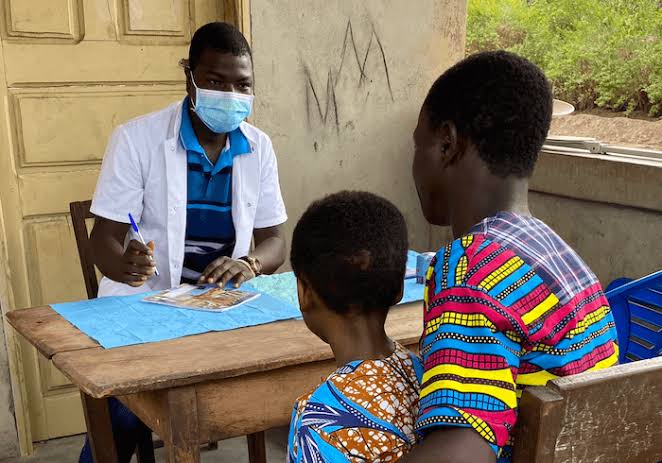
The health system in Togo is organized into three tiers: six health regions, 39 health districts, and 117 health communes. The country is grappling with a shortage of healthcare professionals, with only 7 per 10,000 inhabitants. In 2015, just 44% of villages had access to preventive health services through community health workers. This underscores the need to enhance the capabilities of health personnel and expand health coverage, especially in rural areas.
By 2021, Togo had 1,320 health facilities, reflecting an increase due to substantial investments in infrastructure. However, the distribution of healthcare personnel remains imbalanced, with 36% of public health workers located in Greater Lomé, while rural areas like Savanes have only 10% of the workforce.
At the conclusion of 2023, Togo’s public sector employed nearly 13,000 health professionals, specifically 12,945. Notably, the Greater Lomé area, which includes the 13 municipalities surrounding Lomé, represented 36% of this workforce, totaling 4,634 health workers. The maritime region followed with 1,679 workers, accounting for 13%. The Plateaux region had 2,145 workers, making up 17%, while Kara employed 1,803 workers (13.9%). The Centrale region had 1,379 workers (11%), and the Savanes region comprised 1,305 workers (10%).
In terms of healthcare access, significant advancements have been made. By 2023, the accessibility rate for healthcare services reached 90.7%, a notable increase from 71% in 2020. This improvement can be attributed to various initiatives, particularly the Wezou program, which was designed to assist pregnant women and newborns. From 2021 to 2024, over 600,000 beneficiaries were registered, resulting in 3.2 million services rendered, including prenatal consultations and assisted deliveries.
Additionally, the government has made substantial investments in health infrastructure. The Quality Essential Health Services for Universal Health Coverage (SSEQCU) project has facilitated the construction of 86 new health facilities and the renovation of 60 existing ones, with a total expenditure of 40 billion FCFA. Furthermore, six mother-child hospitals have been established across different regions, three of which are already operational.
In 2023, Togo launched Dogta-Lafiè, its inaugural referral hospital located in Agoè-Nyivé. This facility, which has a capacity of 160 beds and is equipped with a state-of-the-art technical platform, enhances healthcare delivery and supports universal health coverage. It is projected to serve 80,000 patients in its first year and has also opened an extension in Kara this year.
Addressing Endemic Diseases
From an epidemiological perspective, the West African nation continues to confront significant challenges. Malaria is the primary cause of hospitalization for children under five, representing 8.9% of cases in 2021. The impacts of climate change, including rising temperatures and altered rainfall patterns, may exacerbate this issue by facilitating the spread of mosquitoes.
In terms of HIV/AIDS, the prevalence has decreased from 2.5% in 2014 to 1.7% in 2022. However, disparities remain based on gender and geographic location. Women are affected at twice the rate of men, with prevalence rates ranging from 0.3% in Savanes to 3.4% in Greater Lomé.
Tuberculosis also continues to pose a public health challenge, with 2,418 cases reported in 2021. Although the incidence has dropped from 41 to 33 cases per 100,000 inhabitants between 2017 and 2021, the co-infection of tuberculosis and HIV remains a significant concern.
The country has achieved significant milestones. In 2022, it was acknowledged by the World Health Organization as the first nation in the world to eradicate four neglected tropical diseases: lymphatic filariasis, human African trypanosomiasis (HAT), dracunculiasis, and trachoma. Following this achievement, it has set a goal of eradicating four additional diseases by 2030: onchocerciasis (river blindness), leprosy, yaws, and schistosomiasis.
Non-communicable diseases (NCDs) are gaining prominence in the health sector of Togo. There is an increase in cardiovascular diseases, diabetes, cancers, and chronic respiratory conditions. According to the 2021 STEPS survey, the incidence of hypertension rose from 19.6% in 2010 to 27.4% in 2021, while diabetes prevalence nearly doubled to 4.9%.
Cancer also poses a significant threat. In 2020, Togo reported 5,208 new cancer cases, resulting in 3,468 deaths. Breast cancer emerged as the most prevalent type, constituting 16.3% of cases. In response to this issue, the government initiated the construction of a national cancer treatment center in Lomé in November 2024, which will feature advanced technologies.
The financing of the health system in Togo heavily relies on technical and financial partners (TFPs). From 2017 to 2021, a total of 444.698 billion FCFA was mobilized, of which 40.72% originated from the government’s resources. Although the health budget increased from 28.464 billion FCFA in 2017 to 40.471 billion FCFA in 2021, it still falls short of the 11% target of the national budget set for 2021. According to the 2025 Finance Law, the Ministry of Health is projected to receive a total budget of 114 billion FCFA this year, representing a 3.6% increase from 110 billion FCFA in 2024.
Regarding external funding, Togo was granted 74 billion FCFA by the Global Fund in 2024 to combat HIV, tuberculosis, and malaria.
In 2024, Togo marked a significant development in healthcare, with the implementation of Universal Health Insurance (AMU), which is seen as a move toward achieving universal health coverage. This system, introduced in stages and facing challenges, aims to provide care access for all residents, regardless of their socio-economic status.
Furthermore, the government has supplied medical equipment to 160 hospitals, including 7,000 hospital beds, laboratory tools, and medical ambulances. These investments, totaling 15 billion FCFA, are intended to upgrade infrastructure and enhance care quality.
Togo has formulated several strategic plans to enhance its healthcare system. The National Health Development Plan (PNDS) 2017-2022 focused on reinforcing the health system by prioritizing service quality and accessibility for all. Most recently, the PNDS 2023-2027 was approved, outlining the current health situation, challenges to be confronted, and strategic directions for the future. These plans form a programmatic framework for all health sector interventions in Togo.
Overall, while there has been progress in the Togolese health sector in recent years, there is still a considerable journey ahead to realize its full potential and better support its population. Key projects include managing non-communicable diseases, ensuring equitable distribution of human and financial resources, and adapting to climate change impacts.
Through initiatives like the AMU, the Wezou program, and new infrastructure projects, the country is working to address these challenges. However, the long-term success of these efforts will hinge on its capacity to generate internal resources and enhance health system governance. This challenge is compounded by rapid population growth, epidemiological transition, and restricted access to external resources amid a backdrop of increasing protectionism and isolationism globally, including from pivotal partners such as the United States.