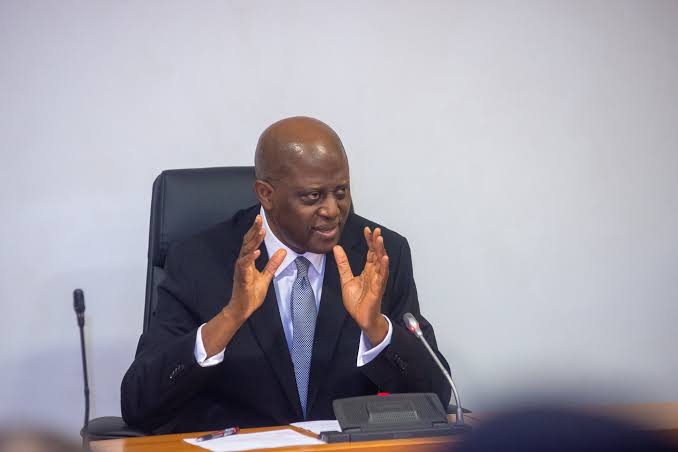
In a world where global finance is increasingly shaped by uncertainty and geopolitical tension, Central Bank of Nigeria (CBN) Governor Olayemi Cardoso is taking a bold step that may redefine Nigeria’s economic future. The apex bank, under his leadership, has unveiled a strategic plan to diversify Nigeria’s external reserves, moving away from its traditional overdependence on the U.S. dollar.
For decades, the dollar has dominated Nigeria’s reserve structure—trusted, liquid, and deeply embedded in global trade. But in a quiet act of economic courage, Cardoso is steering the country toward a multi-currency reserve model, incorporating the Euro, Chinese Yuan, Japanese Yen, Gold, and Special Drawing Rights (SDRs) from the International Monetary Fund (IMF).
This shift is far more than a currency play—it’s a recalibration of Nigeria’s monetary compass in response to the growing risks of dollar dominance. From U.S. Federal Reserve rate hikes that ripple through global markets to sanctions and geopolitical risks that can choke off dollar access, Nigeria’s economic stability has often been left exposed to forces beyond its control.
“The Naira has too often become collateral damage in global battles it didn’t choose,” analysts note. Cardoso’s move is an attempt to rewrite that narrative.
Rather than abandoning the dollar altogether, the diversification strategy aims to hedge against external shocks and protect the country from being overly reliant on a single currency. It also signals Nigeria’s willingness to align with a more pragmatic, multipolar economic world order, where no one currency holds all the cards.
The decision may seem counterintuitive given the dollar’s global dominance, but it reflects growing momentum among emerging economies to reclaim monetary autonomy. By building a more balanced reserve portfolio, Nigeria positions itself not only to withstand volatility, but to signal confidence and independence to global investors.
While challenges remain—such as liquidity depth and convertibility concerns with alternative currencies—the underlying message is clear: Nigeria is ready to chart its own path in an evolving financial landscape.
Governor Cardoso’s vision for reform is methodical, cautious, but forward-thinking. And in an era where faith in monetary leadership is increasingly rare, his reserve diversification plan stands out as a measured act of economic statesmanship.