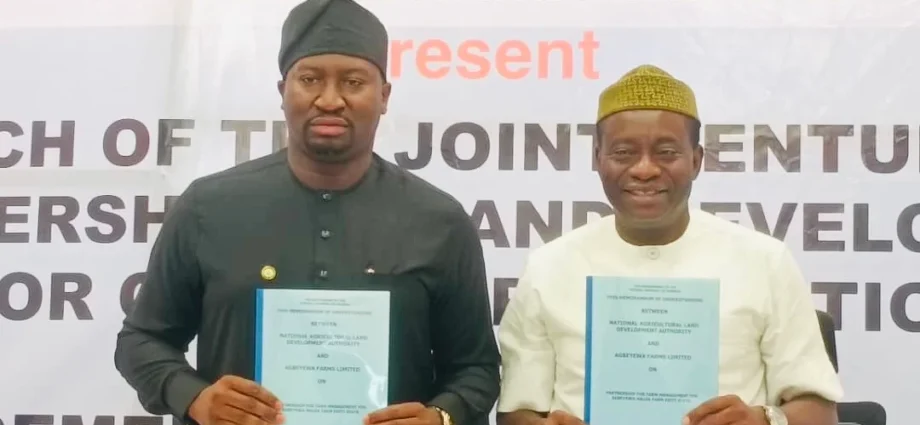
The Executive Secretary of the National Agricultural Land Development Authority (NALDA), Engr Cornelius Adebayo, has issued a high-level mandate to all state coordinators. During a strategic review session, Adebayo charged the officials to key into the agency’s 2031 Strategic Vision fully. This roadmap is designed to transform Nigeria’s vast land resources into productive hubs for sustainable food production. By aligning state-level operations with federal goals, NALDA aims to eliminate food scarcity and boost rural economies across the federation.
Driving NALDA’s 2031 Strategic Vision
The 2031 Strategic Vision serves as a long-term blueprint for achieving total food sovereignty in Nigeria. Engr. Cornelius Adebayo emphasized that the success of this vision depends on the proactive engagement of state coordinators. These officials are expected to identify and prepare expansive land for “Integrated Farm Estates” in their respective regions. This localized approach ensures that NALDA’s interventions are tailored to the specific soil types and climatic conditions of each state.
Furthermore, the vision prioritizes the mechanization of smallholder farms to increase overall yield. NALDA is deploying modern tractors and irrigation systems to ensure that farming becomes an all-year-round activity. By integrating technology into traditional practices, the authority is making agriculture more attractive to the younger generation. State coordinators have been tasked with overseeing the “National Young Farmers Scheme” to ensure transparent beneficiary selection.
Enhancing Food Security and Sovereignty
A key pillar of the charge given by Engr. Cornelius Adebayo is the transition from food security to “Food Sovereignty.” This involves empowering local communities to control their own food systems through the NALDA support framework. The Executive Secretary noted that the 2031 goal includes the cultivation of at least 2.5 million hectares of land across the 36 states. This massive land reclamation project is intended to stabilize the prices of essential commodities like rice, maize, and wheat.
To achieve this, state coordinators must work closely with traditional rulers and local government chairmen to resolve land tenure issues. NALDA provides the technical expertise and inputs, while the communities provide the labor and land. This “Collaborative Farming Model” is essential for the sustainable management of resources and the reduction of rural-urban migration.
Capacity Building for State Leadership
The directive from Engr. Cornelius Adebayo also includes a rigorous capacity-building program for the NALDA state leadership. Coordinators are being trained in the use of Geographic Information Systems (GIS) for land mapping and soil analysis. This data-driven approach allows the authority to predict harvest outcomes and plan for logistics and storage. By professionalizing the workforce, the Executive Secretary is ensuring that the “Moving Agriculture Forward” agenda is built on a solid technical foundation.
Adebayo stressed that “Accountability and Transparency” must be the watchwords for every state office. Regular audits of distributed seeds, fertilizers, and equipment will be conducted to prevent diversions. This strict oversight is intended to ensure that federal government investments directly benefit the actual farmers in the rural areas.
A Backstory of Agricultural Reform
The National Agricultural Land Development Authority (NALDA) was originally established in 1992 but suffered years of inactivity before its robust resuscitation. Since its revival, the agency has focused on reclaiming abandoned farm settlements that were once the pride of Nigeria’s first republic. Engr. Cornelius Adebayo took over the leadership with a mission to move the agency from “pilot projects” to “industrial-scale” production. His 2031 vision is a response to the global food crisis and the need for Nigeria to become a net exporter of agricultural products.
His administration has successfully launched the “Home Grown Food” initiative, which encourages backyard farming and urban agriculture. The 2031 roadmap is the climax of these efforts, seeking to institutionalize land development as a permanent feature of Nigeria’s economic planning. This backstory highlights the strategic shift from short-term interventions to a decadal plan for national self-sufficiency.
Conclusion – Adebayo Charges Coordinators on NALDA 2031 Vision
As state coordinators begin to implement the NALDA 2031 Strategic Vision, the results are expected to manifest in increased market supply by the 2026 harvest season. The authority plans to establish a “Commodity Marketing Board” to help farmers get fair prices for their produce. This will eliminate the influence of middlemen who often exploit rural farmers.
With the continued support of President Bola Ahmed Tinubu, NALDA is poised to become the engine of Nigeria’s “Green Revolution.” The commitment of Engr. Cornelius Adebayo to this long-term vision offers a clear path toward a future where no Nigerian goes hungry. For the state coordinators, the charge is simple: turn every available hectare into a source of national wealth.