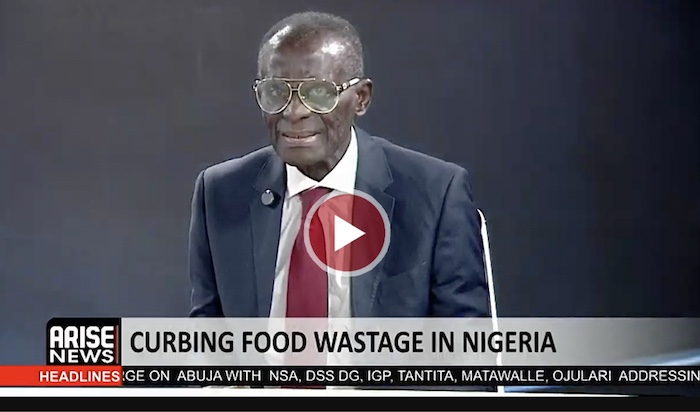
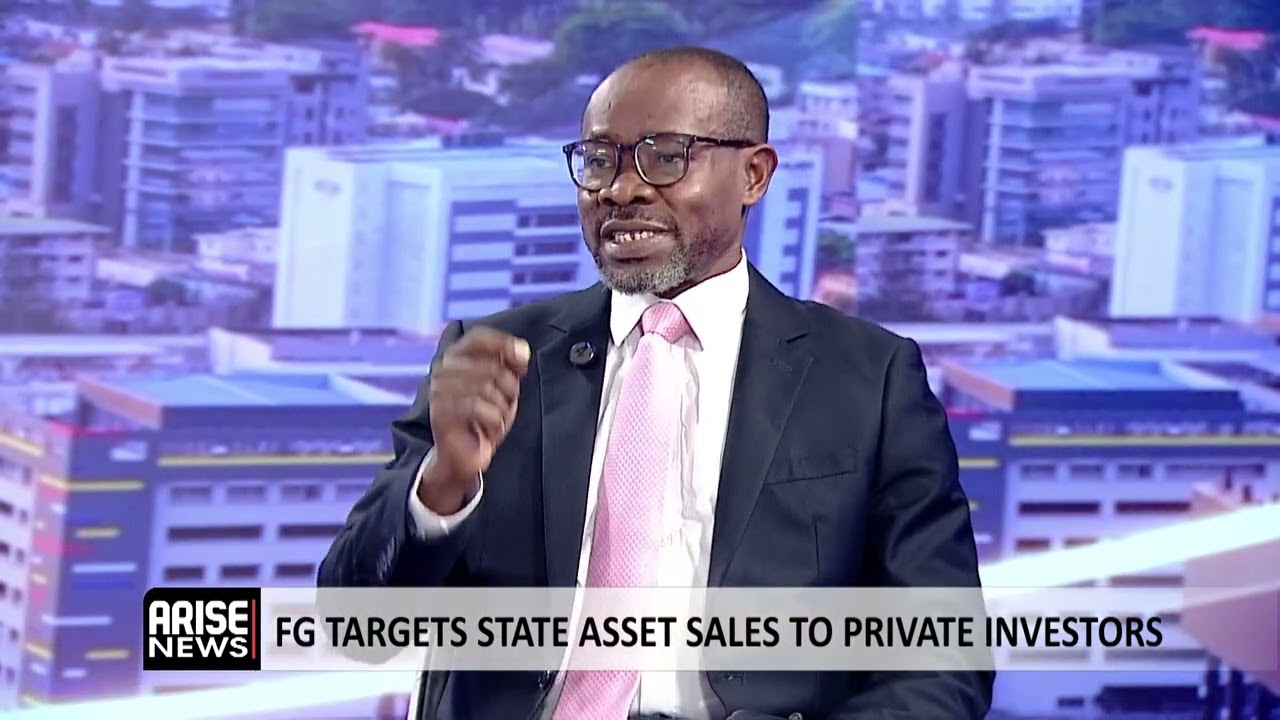
Economist, Professor Adi Bongo asserted that Nigeria’s plans to borrow heavily and sell government assets to cover budget deficits may face serious challenges unless the government strengthens institutional frameworks and accountability mechanisms, highlighting concerns over transparency, enforcement, and the effectiveness of fiscal reforms in addressing the country’s persistent budgetary issues.
Speaking In an interview with ARISE NEWS on Friday Bongo explained that while borrowing and asset sales are legitimate tools for funding government expenditure, their success depends on robust legal frameworks and effective oversight, emphasising that foreign reserves, often cited as available government funds, are largely symbolic indicators of the country’s external economic position rather than liquid assets the government can freely spend.
“First, on the foreign reserve, the foreign reserve is not really money available to government. I mean, it’s kind of a signal to the external performance of an economy, in the sense that you are no longer in their deficit when it comes to your interaction with the rest of the world, But it is not really money available to government to use as it pleases. So, I think we need to rest that.”
Bongo criticised selective policy implementation and overreliance on current expenditure. “So, we have a government that is still overbloated, in the sense that the current expenditure is still a huge chunk of the national budget. And now, we are running a deficit. Deficits, fiscal deficit was dropping considerably in 2024, 2025. But now, it started to climb again. And I think that is what is pushing them into this frenzy of looking for money from left, right, and center.”
He also highlighted the challenges of public-private partnerships (PPPs) and asset privatisation. “So, for instance, we’re talking about how do we establish the true valuation of these assets to make sure that the right prices, even when they pay the right prices for the assets, who is there to supervise the utilisation of, we’ve seen these things before.

So, I think we have a serious challenge here, that we are reforming the system of collecting money, but we are not reforming the system of expending those resources. I think that is a very huge problem.”
Professor Bongo criticised past government sell-offs, noting they often benefited cronies rather than the public. “In the past, I don’t want to use the word government sell-off, hiving of assets by government has been to cronies. We saw what happened in the power sector. I mean, once they sold to their cronies, they had no capacity. Most of the banks that borrowed them the money have taken most of the asset back in the power sector. So as regards that, it’s a joke. It’s shambolic.”
He further questioned the credibility of fiscal data and warned against relying solely on government reports. “budget, a budget that is also shambolic, a budget that can be cashed back, a budget that the performance is very low. But at the same time, the government is running a casino economy. Pure and simple. Over-financialization. Big, high-voluting-sounding headlines. We have $50 billion in reserves. At the same time, we can’t fund a budget.”
On institutional reform, Bongo stressed that creating offices alone is insufficient without building capacity and independence. “See, this is the problem that I have in this system, you know, this lack of capability of our institutions. We create institutions, but then eventually those institutions will be repurposed for selfish and self-serving interests. We’ve seen that happen many times. The police was not working. We felt that the police was inefficient. We created the EFCC. And then we created the ICPC. These were roles in other crimes really served by the police system. But then we now created separate agencies. Now what have they achieved? They’ve been turned into self-serving, you know, selective justice systems, which really worsened the situation.”
Bongo concluded that for Nigeria to implement meaningful fiscal reforms, the government must prioritize strengthening institutions. “Yes, it’s one thing to pursue reforms across all sectors, fiscal reforms. But then if we do not have that citizenship mechanism to really hold the government account, even to interrogate this data that we are talking about, then I don’t think that we are going to make any progress in the right direction. So that is my real worry, you know. It’s not about duplication of roles, but we need to really begin to look at how we can make our institutions do the right thing and protect the citizens interests.”
Erizia Rubyjeana