In a bold move toward sustainable growth, the Education and Development Agency (AED) and the Synergy of Renewable Energy Stakeholders (SAER) have joined forces to accelerate renewable energy access across Africa.
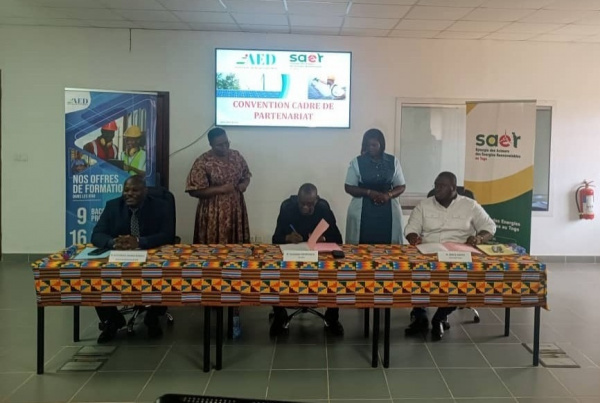
The two institutions signed a landmark agreement on Friday, November 7, in Lomé, reaffirming their shared commitment to a cleaner, more resilient future. The heads of both agencies led the signing, emphasizing that collaboration remains essential for meaningful progress in energy and development.
Through this new alliance, AED — the body managing the Integrated Funding Agencies for Agricultural Development (IFADs) — will work closely with SAER to integrate renewable energy into agricultural and rural development programs. Together, they plan to strengthen local economies, create sustainable jobs, and drive inclusive growth across the region.
Importantly, this partnership goes beyond paperwork. It creates a clear framework for action. Both institutions will combine financial tools, technical expertise, and innovative ideas to power communities sustainably. By doing so, they aim to transform energy access from a challenge into an opportunity for empowerment.
Dr. Nkeiruka Ajayi, representing AED at the ceremony, noted that renewable energy remains a key driver of rural transformation. She explained that reliable energy boosts agricultural productivity, supports food processing, and enhances community resilience. With this partnership, she said, “We are lighting up the path to shared prosperity.”
Likewise, SAER’s leadership expressed optimism that this agreement would fast-track clean energy deployment in West Africa. Their team highlighted that effective collaboration shortens project timelines, improves implementation quality, and increases impact at the grassroots level.
Moreover, both organizations stressed that renewable energy is not just about technology; it is about people. It brings electricity to schools, powers irrigation systems, and supports small businesses. Each project, therefore, represents a step toward self-reliance, inclusion, and environmental protection.
The signing event also drew attention from development partners and private investors who applauded the collaboration. Many agreed that linking agricultural financing with renewable energy initiatives can significantly enhance productivity while cutting emissions. This, they said, reflects a practical way to meet Africa’s green transition goals.
Furthermore, the AED–SAER partnership aligns perfectly with the African Union’s Agenda 2063 and the UN Sustainable Development Goals, particularly those on clean energy, climate action, and economic growth. By aligning local action with global priorities, both organizations are ensuring that every effort counts toward a sustainable future.
As implementation begins, AED and SAER have already mapped out the next steps. They will launch pilot projects focused on solar-powered irrigation, renewable-based agro-processing, and clean energy training hubs. These initiatives aim to demonstrate how innovation and finance can work together to change lives.
Ultimately, this collaboration reflects Africa’s growing determination to take ownership of its clean energy journey. With strong leadership, bold action, and united purpose, AED and SAER are not only advancing renewable energy — they are building a continent where progress, inclusion, and sustainability move hand in hand.