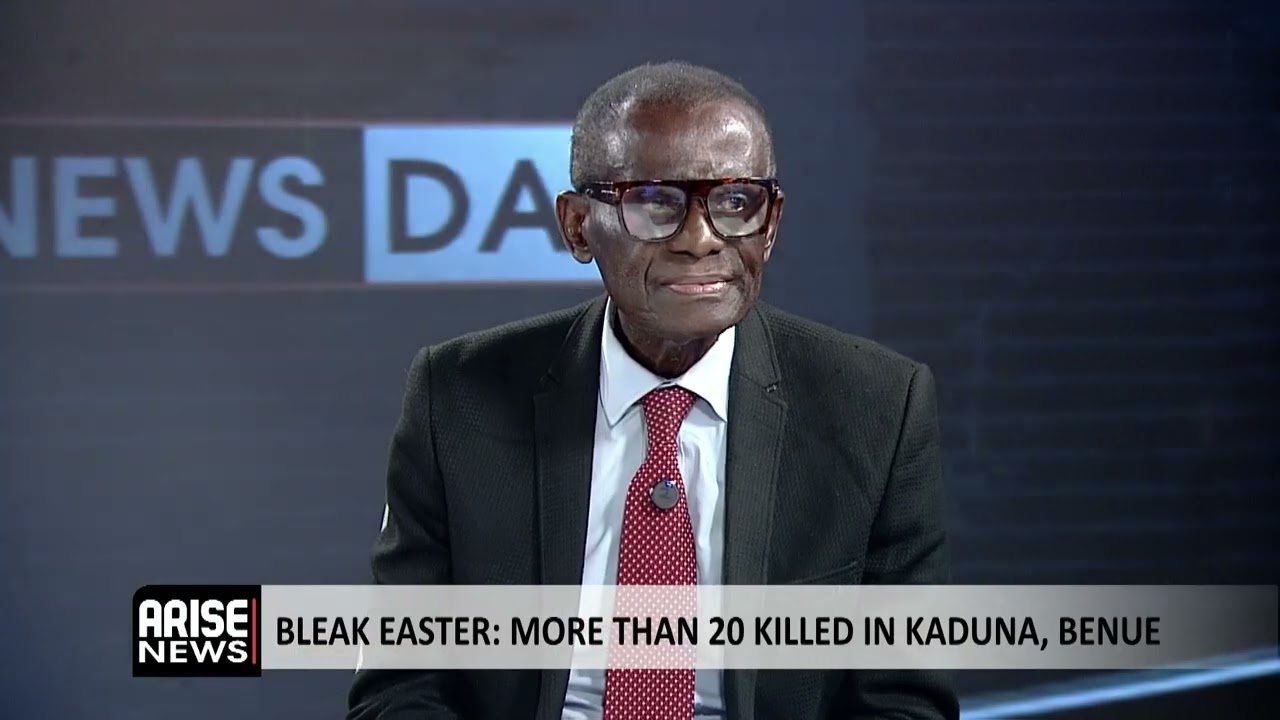
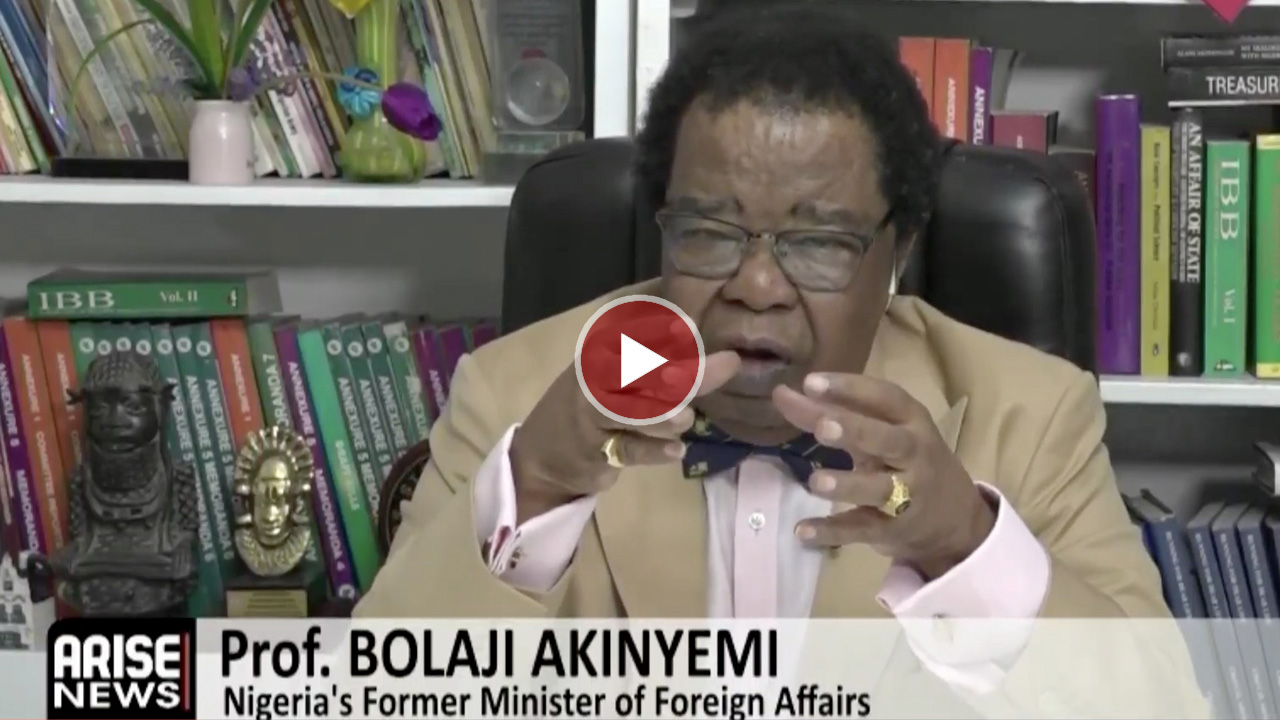
Nigeria’s former Minister of Foreign Affairs, Professor Bolaji Akinyemi, has criticised the state of opposition politics in the country, warning that it has degenerated into “a democracy of negativity” in which parties oppose government policies regardless of merit.
Speaking in an interview with Arise News on Wednesday, Akinyemi said the current political climate is driven more by partisan rivalry than national vision, pointing to former Kaduna State governor Nasir El-Rufai as emblematic of the confrontational tone shaping opposition discourse.
“These days, you fight the government of today. We don’t even know why the opposition is fighting the government of today,” he said.
According to him, Nigeria’s democratic culture has become defined by reflex opposition rather than constructive engagement.
“The democracy that we are practising is a democracy of negativity. You must just oppose for opposition’s sake,” Akinyemi stated.
The elder statesman also decried what he described as a lack of seriousness in governance and national security management.
“Somebody will claim that he bugged the phone of a National Security Adviser and the agency will give him administrative bail. In the United States, even before the trial, the man will be locked up. It may take years before the trial. Immediately, he’ll be given administrative bail. This is not a serious country,” he said.
He added: “The people who are running the agencies, they don’t seem to have a clue as to what to do.”
While recalling his time in public service under military rule, Akinyemi clarified that he was not advocating a return to that era but was highlighting the difference in focus and cohesion.
“Under the military, that would not have happened. But please, don’t get me wrong. I’m not advocating a military regime. I’m just saying that we served in the military and we had a focus.”
He noted that the security challenges confronting Nigeria today — including insurgency and kidnapping — were not present during his time in office.
“In Nigeria of today, you are confronting Boko Haram. You are confronting ISWAP. You are confronting people who are busy kidnapping people. It didn’t take place in our own time.”
Akinyemi argued that the absence of a sustained national vision has undermined progress since the return to civilian rule.
“The only government that I can think of since June 12 that had a vision and ran with that vision was the Obasanjo government of 1999,” he said, referring to the administration of former President Olusegun Obasanjo.
He warned that Nigeria’s constitutional two-term limit, while democratic in principle, has unintended consequences when successive governments dismantle their predecessors’ policies.
“Often, we don’t know what we pray for. Because if you have only two terms, but when you finish that, the next government coming in reverses all the things that you have done — we don’t realise that that is the consequence of having two terms.”
Questioning whether Western-style democracy is delivering results in Nigeria, Akinyemi suggested the country may need to reassess its political foundations.
“Frankly, if people like me are to talk about the way forward, I think the problem will close down your station, because it’s not that easy with the kind of constitution that we are running,” he said.
“China, that has moved forward, is not running a Western-type democracy. And in any case, with somebody like Trump that democracy has brought forward in the United States, I’m not sure that I will be preaching Western democracy as a panacea for the problems we have in this country.”
He called for a return to foundational debates about Nigeria’s political structure.
“I think we must go back to basics. We tried it when we had the National Conference. I was the deputy chairman. But it was limited in the objectives that we pursued.”
While the interview began with reflections on civil rights icon Reverend Jesse Jackson and his longstanding interest in Nigeria’s global role, Akinyemi’s most pointed remarks were reserved for contemporary politics — particularly what he sees as a combative opposition culture that prioritises rivalry over national development.
“We’ve got to be careful that we develop a vision for our country,” he said.
Boluwatife Enome