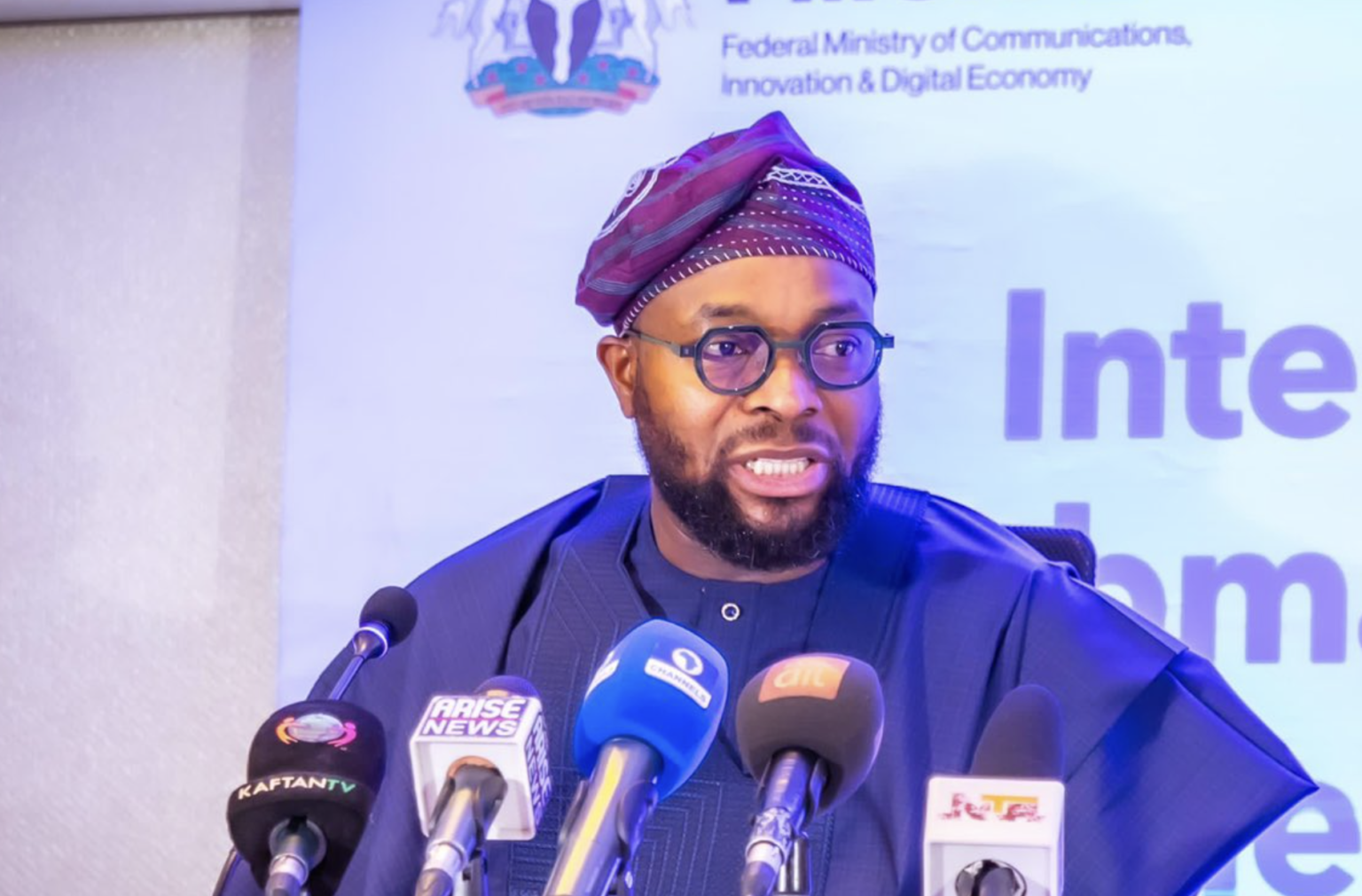
Minister of Communications, Innovation, and Digital Economy, Dr. Bosun Tijani, has said the crisis generated from Artificial Intelligence (AI) skills, if proactively managed, could turn out to be an opportunity for organisationalrenewal that would boost economic development in Nigeria. Tijani said this in Lagos Wednesday during his keynote address at the Crisis Management Advocacy Month Flagship Conference, organised by CMC Connect, a perception consulting firm, with the theme, “Crisis Management in the AI Milieu: New Threats, Smarter Responses.”
According to him, AI can escalate crisis, but organisations must be ready to manage such crisis because AI has come to stay.
Tijani added that organisations must leverage the use of data and digital technology in managing crisis.
He stated, “It’s important that people understand that what separates organisations, entities, and individuals that are able to do well with crisis is simply preparedness. Organisations must be prepared to deal with any AI generated crisis, and turn it into an opportunity for economic development.
“Crisis don’t have to be a disaster. Our ability to prepare is what helps us to be able to see how we deal with crisis. The role of information and institutions in managing crisis is key because information shapes behaviour. The way that a crisis is communicated is important because information will shape how people behave and react to the crisis. So it is important that organisations see the crisis as an opportunity for renewal and economic development.”
Tijani said organisations must move from just reacting to situations, in order to predict what was coming next. He said Nigeria must move from fragmented responses to more coordinated responses when addressing issues.
In his welcome address, Lead Partner, CMC Connect, Yomi Badejo-Okusanya, said the agency developed a crisis management platform called CrisisX, which gives organisations the power to act in the moment that matters the most.
According to him, the platform is built for speed and intelligence, and it protects reputation before it is damaged, preserves trust before it is broken, and stops misinformation before it spreads.
Badejo-Okusanya stated, “False information spreads six times faster than the truth. And nearly 70 per cent of leaders are not prepared. These are not just statistics, they are more than that. The real crisis is not just technology, it is the gap between how fast threats are evolving and how slow they are being addressed. The industry and government officials are still too slow in handling crisis management. We are reactive and we are still too hesitant. But the truth is that no one can outpace an algorithm with hesitation.”
He said trust was vital in crisis, and trust was earned through moments of clarity, moments of courage, and moments when people learn to act.
The speed of crisis using AI skills will increase, and the pressure will intensify, as people will continue to turn peoples’ voices on their own images, Badejo-Okusanya stated.
Highlight of the conference included a panel session that discussed the implications of AI-generated crisis for organisations and the economy and how organisations could nip it in the bud.
Emma Okonji