In a powerful push to improve healthcare in Kaduna State, the Kowa Namu Ne Foundation has launched a Free Health Insurance Programme for residents of Kaduna North Local Government Area. The programme directly supports Governor Uba Sani’s ongoing healthcare reforms and aims to remove barriers preventing underserved families from accessing medical care.
The insurance initiative operates under the Kaduna State Contributory Health Scheme (KADCHMA) and is fully funded by philanthropist Abdulazeez Kaka through his non-profit, the Kowa Namu Ne Foundation. With this effort, thousands of people living in Kaduna North now have access to essential health services without worrying about the cost.
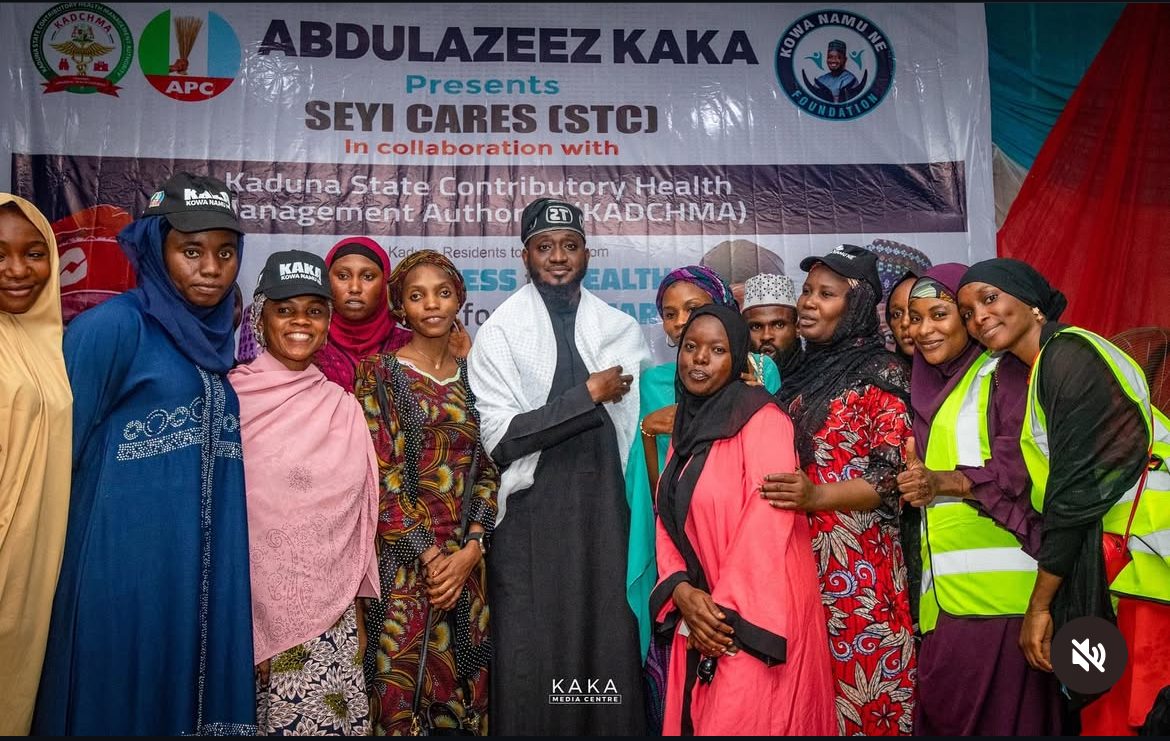
At the official launch, community members, health officials, and local leaders gathered to celebrate the milestone. Many described the programme as life-changing and praised the foundation for providing immediate help where it matters most. For many families in the area, medical costs have been a long-standing obstacle. This new programme offers a practical solution.
Covered under the scheme are treatments for common illnesses, maternal and child healthcare, diagnostic services, and emergency care. Local health centres and accredited hospitals across the area are already receiving enrollees. Beneficiaries can now walk into a facility, get treated, and walk out without paying a naira.
Abdulazeez Kaka, the visionary behind the programme, said his motivation came from a deep belief that everyone deserves access to healthcare—no matter their income or status. “I’ve seen too many families suffer because they couldn’t afford a hospital visit,” he said. “This programme is for them. It’s about dignity. It’s about fairness.”
Officials from KADCHMA also hailed the launch, calling it a model for successful public–private collaboration. They said the insurance scheme complements the state’s goal to deliver healthcare that is affordable, reliable, and available to all citizens. The support from private donors like Kaka, they noted, makes it possible to move faster and reach more people.
The impact is already visible. Residents who once avoided hospitals due to cost are now showing up for checkups and early treatment. Parents are bringing children in for vaccinations and care. Women are receiving antenatal services. Clinics are reporting higher attendance and better health outcomes in just weeks since the programme began.
Kaka and his team say this is only the beginning. If resources allow, the foundation plans to expand the initiative to other local governments in Kaduna. Talks with more partners and donors are already underway.
This bold step is more than a gesture—it’s a real, sustainable change in people’s lives. It proves that when individuals and institutions work together, even long-standing problems like healthcare inequality can be tackled. As the programme grows, it offers hope and healing to families who’ve waited far too long.