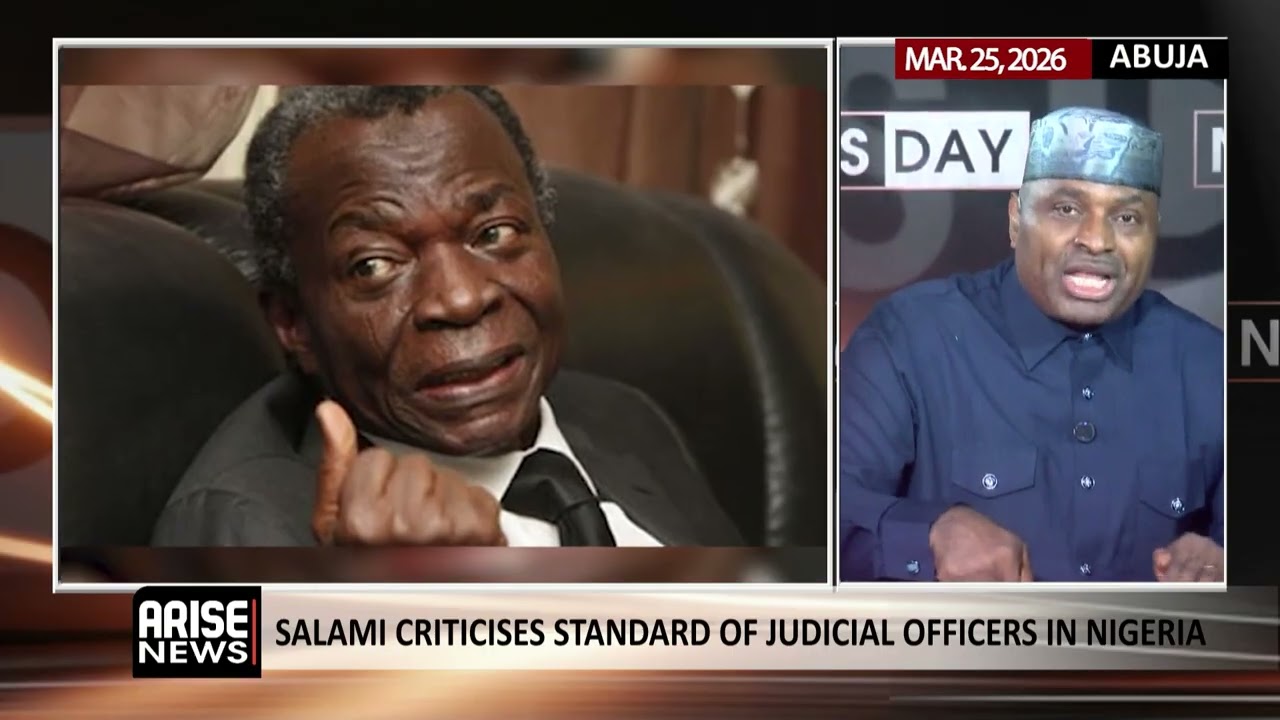

A lawyer and politician, Kenneth Okonkwo has raised concerns about the state of Nigeria’s judiciary, insisting that the deeper problem facing the system is not incompetence, but complicity among judicial officers, particularly in sensitive cases such as electoral disputes.
Speaking during an interview on ARISE News on Wednesday, Okonkwo reacted to remarks by a former President of the Court of Appeal regarding the 2023 presidential election, arguing that some judicial interpretations do not align with the provisions of the Electoral Act 2022.
He explained that the law only required political parties to submit their membership register within a specified timeframe, and did not restrict individuals from joining a party beyond that period or qualifying to contest elections.
“Once you’re a member of a political party, you are qualified to contest election,” he said, stressing that the legal position does not support the claim that certain candidates were ineligible based on timing.
Okonkwo also referenced the principle of locus standi, noting that only those with a direct legal interest in a matter can challenge it in court, particularly in internal party affairs such as nominations.
“Somebody who is not a member of a political party does not have the locus standi to question its nomination,” he explained.
However, shifting focus from the legal argument to a broader concern, Okonkwo said the recurring inconsistencies in judicial decisions point to a more troubling issue within the system.
“I am rather worried more about complicity than even the competence which I think many of them have,” he said.
According to him, many judges are intellectually capable, but the problem lies in decisions that appear to reflect influences beyond strict legal interpretation, especially in politically sensitive cases.
He added that concerns about judicial conduct have existed for years, even when some of the same individuals now criticizing the system were still serving on the bench.
Okonkwo called for a comprehensive approach to addressing these issues, urging stronger oversight and accountability mechanisms within the judiciary.
He stressed that the appointment process for judges must be transparent and free from conflict of interest, noting that integrity must be prioritized over personal or institutional connections.
“The mode of appointment has to be rigid… transparent, very accountable and conflict of interest should be avoided,” he said.
He also emphasized the importance of continuous training for judges, particularly in specialized areas such as electoral law, to ensure proper understanding of evolving legal frameworks.
“The judges need to be trained regularly… it’s a continuous thing so that they will be updated,” he noted.
Okonkwo further warned that without proper sanctions, unethical practices within the judiciary could persist and become normalized over time.
“There is a need for punishment… if you do not deter any evil practice… it must repeat itself,” he said.
He urged relevant institutions, especially the National Judicial Council, to intensify efforts toward maintaining discipline, accountability, and independence within the judiciary.
Triumph Ojo