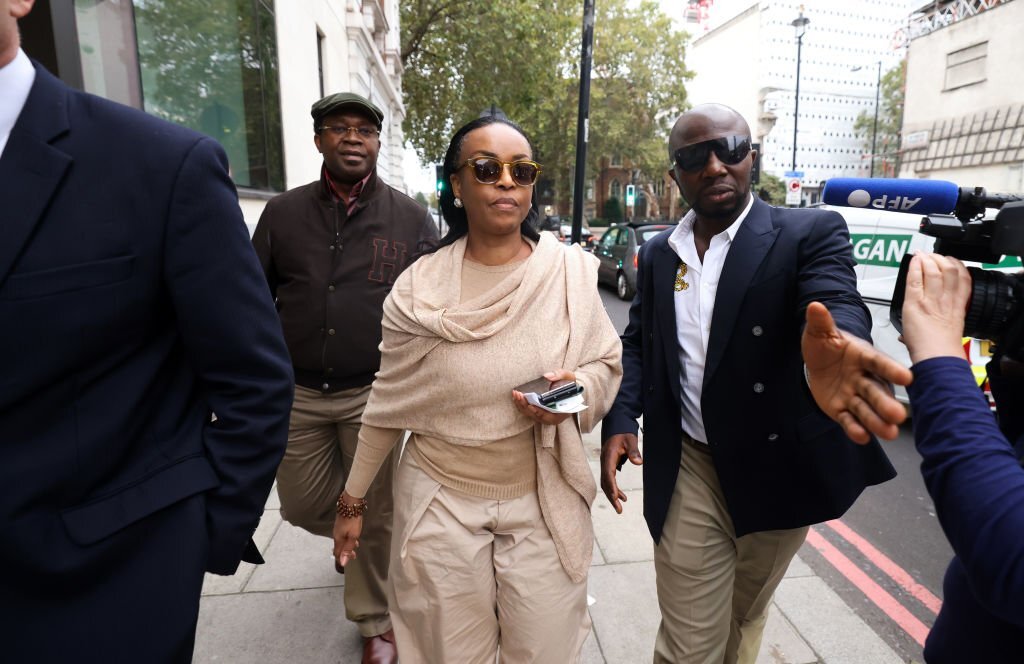
The prosecution in the United Kingdom bribery trial of former Nigerian Minister of Petroleum Resources, Diezani Allison-Madueke, has faced a series of challenges after key witnesses gave testimony that appeared to contradict central elements of the Crown’s case.
The trial, holding at the Southwark Crown Court, concerns five counts of bribery and one count of conspiracy to commit bribery.
Prosecutors alleged that during her tenure as Nigeria’s Petroleum Minister, Allison-Madueke received gifts described as bribes from prominent figures in the oil industry, allegedly intended to influence her official decisions.
Over recent days, jurors have heard allegations involving luxury shopping sprees and high-value purchases in exclusive areas of London.
However, testimony under cross-examination has introduced significant inconsistencies that the defence is expected to rely upon as proceedings continue.
One of the prosecution’s key witnesses, Sandro Rocha, who previously worked as a driver to Nigerian businessman Kola Aluko, gave evidence over a two-day period.
In his initial testimony, Rocha described transporting large sums of cash and driving Allison-Madueke to and from residences linked to Aluko in London.
He also claimed to have driven her on one occasion in the company of former Nigerian President, Goodluck Jonathan.
However, during cross-examination, Rocha acknowledged that his recollection of events between 2009 and 2014 was “patchy.”
He further admitted that he had relied entirely on a witness statement prepared for him by officers of the United Kingdom’s National Crime Agency (NCA).
Pressed on specific aspects of his earlier account, Rocha conceded that certain impressions he had conveyed, including claims relating to Allison-Madueke’s alleged presence at an unfinished property and the purported sighting of her elderly mother at an active construction site, were “most likely wrong” when confronted with documentary and factual discrepancies.
His admission that the statement was drafted by investigators drew attention to prosecutorial guidelines governing witness preparation.
The United Kingdom’s Crown Prosecution Service (CPS) expressly cautions against coaching witnesses or providing detailed accounts of the evidence they are expected to give in court, in order to avoid the appearance that testimony is being shaped rather than independently recalled.
While it remains for the court to determine the weight to attach to Rocha’s evidence, the defence has suggested that these admissions may affect its reliability.
Earlier in the trial, the prosecution called Amina Hamila, a Private Client Manager at Harrods, the luxury London department store, to support allegations that more than £2 million in purchases were associated with Allison-Madueke’s client profile.
The court heard that she was treated as a “Black Tier” client, a designation that provides access to personal shopping services and exclusive benefits.
However, under cross-examination, Hamila acknowledged that Harrods’ own transaction records, when cross-checked with Allison-Madueke’s immigration history and passport stamps, showed that significant portions of the spending attributed to her occurred at times when she was not present in the United Kingdom.
Hamila further confirmed that Allison-Madueke did not physically produce a payment card during the transactions in question.
According to her evidence, Harrods’ internal systems recorded Kola Aluko as the paying client, and the items purchased were documented in his name before being shipped to his storage facilities.
These details introduced a distinction between the existence of a client profile and the question of who funded and formally received the luxury goods, a distinction that may become central as the jury considers whether the prosecution has established that the alleged benefits were personally received as bribes.
The prosecution maintains that the gifts and luxury benefits were provided with the intention of influencing Allison-Madueke’s decisions during her tenure as Petroleum Minister.
The defence, however, has sought to challenge the evidentiary foundation of those claims, focusing on inconsistencies in witness recollection and documentary records.
The proceedings are scheduled to continue on February 23, 2026, with additional prosecution witnesses expected to testify.
Wale Igbintade