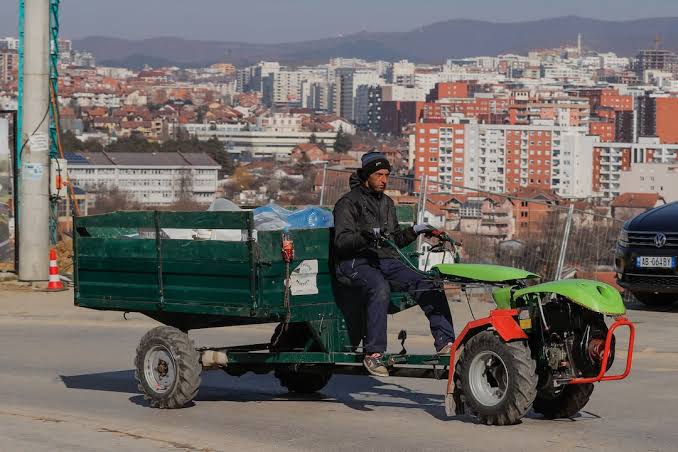
Kenan Gashi operates a recycling business in Kosovo, where he removes the limbs from old mannequins and feeds them into machines provided by the U.S. government. These machines shred and clean the plastic, making it suitable for resale.
Two years ago, Gashi’s operation in Fushe Kosova underwent a significant transformation after receiving equipment from the U.S. Agency for International Development (USAID), which inspired him to plan for the expansion of his workforce.
However, Gashi now faces concerns as over a third of the $130,000 worth of promised equipment has yet to be delivered. Additionally, the administration of President Donald Trump has put a hold on USAID funding and is looking to significantly reduce the agency’s budget and all U.S. foreign aid as part of his “America First” initiative.
In a recent video statement to the media, Trump cited the Kosovo recycling donation as an example of government expenditures he intends to cut.
We are currently awaiting the arrival of additional machinery and had intended to expand our workforce from five to twenty employees; however, the situation remains uncertain,” Gashi remarked while placing plastic components into a USAID grinder labeled “Recycling Matters.”
Since Kosovo declared independence from Serbia, the United States has been a significant ally, providing $1.1 billion in assistance since 2001, as reported by U.S. government statistics.
According to the Pristina-based think tank GAP, USAID is overseeing 17 projects totaling over $156 million, though it remains unclear how much of this funding has been allocated.
Kosovo is recognized as one of the poorest nations in Europe and continues to face substantial challenges, as noted by both politicians and residents.
We are currently awaiting the arrival of additional machinery and had intended to expand our workforce from five to twenty employees; however, the situation remains uncertain,” Gashi remarked while placing plastic components into a USAID grinder labeled “Recycling Matters.”
Since Kosovo declared independence from Serbia, the United States has been a significant ally, providing $1.1 billion in assistance since 2001, as reported by U.S. government statistics.
According to the Pristina-based think tank GAP, USAID is overseeing 17 projects totaling over $156 million, though it remains unclear how much of this funding has been allocated.
Kosovo is recognized as one of the poorest nations in Europe and continues to face substantial challenges, as noted by both politicians and residents.
The country is also affected by ongoing ethnic tensions between the Albanian majority and the Serb minority in the northern region. Reuters has reported that more than a dozen aid initiatives, amounting to at least 150 million euros, have been canceled by the European Union due to the involvement of Kosovo authorities in these conflicts.The country is also affected by ongoing ethnic tensions between the Albanian majority and the Serb minority in the northern region. Reuters has reported that more than a dozen aid initiatives, amounting to at least 150 million euros, have been canceled by the European Union due to the involvement of Kosovo authorities in these conflicts.
We are currently awaiting the arrival of additional machinery and had intended to expand our workforce from five to twenty employees; however, the situation remains uncertain,” Gashi remarked while placing plastic components into a USAID grinder labeled “Recycling Matters.”
Since Kosovo’s independence from Serbia, the United States has been a significant ally, providing $1.1 billion in aid since 2001, as reported by U.S. government statistics.
According to the Pristina-based think tank GAP, USAID is overseeing 17 projects totaling over $156 million, though it remains unclear how much of this funding has been allocated.
Kosovo is recognized as one of the poorest nations in Europe and continues to face substantial challenges, as noted by both politicians and residents.
See more: A detained Ugandan Politician has Begun a Hunger Strike.
The country is also affected by ongoing ethnic tensions between the Albanian majority and the Serb minority in the northern region. Reuters has reported that more than a dozen aid initiatives, amounting to at least 150 million euros, have been canceled by the European Union due to the involvement of Kosovo authorities in these conflicts.