The Nigerian military has stated that Operation Safe Corridor is a national security strategy and forms part of a broader, structured response to counterterrorism in Nigeria.
The military emphasised that the programme serves as the operational arm of Nigeria’s non-kinetic counterterrorism strategy.
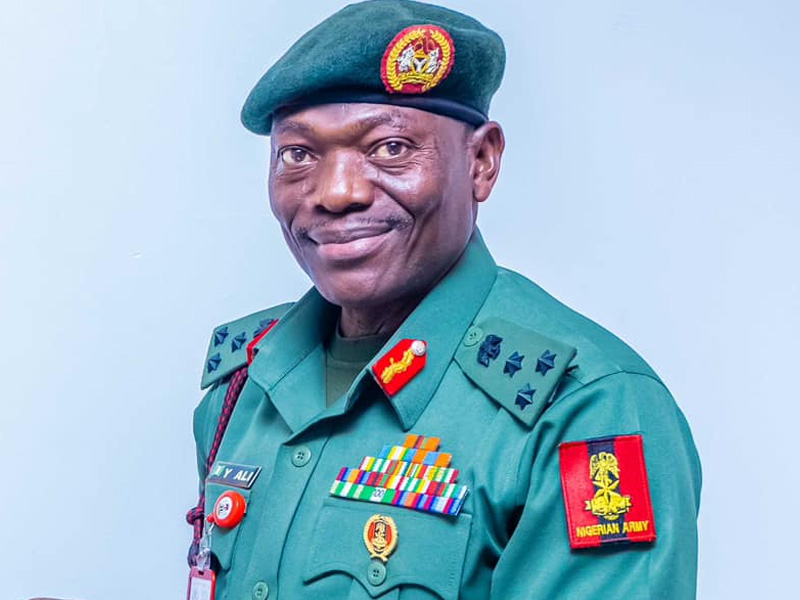
Addressing concerns that the programme may be perceived as lenient towards former insurgents, the Coordinator of Operation Safe Corridor, Yusuf Ali, said:
“I understand those concerns, especially from communities that have suffered deeply, and they are valid and must be acknowledged with empathy and responsibility. However, let me be very clear: Operation Safe Corridor is not about leniency; it is about national security strategy, and more importantly, it forms part of a broader, structured approach to counterterrorism in Nigeria.
“While the military continues to apply necessary kinetic pressure on terrorist and bandit groups, this programme provides a controlled and structured pathway to disengage individuals from violence, reduce the fighting strength of these groups, and ultimately weaken their operational capacity from within.”
General Ali explained that individuals within insurgent groups are not all hardened or ideologically driven fighters.
“Not everyone within these groups is a hardened or ideologically committed combatant. A significant number… were coerced, abducted, manipulated, or forced into participation,” he said.
He added that the programme offers a structured pathway for deradicalisation, rehabilitation, and reintegration, describing it as both a security measure and a form of restorative justice.
“The programme is not a blanket approach… Those assessed as high-risk, or who have committed prosecutable offences, are not simply reintegrated,” he stressed.
According to him, removing such a pathway would prolong conflict and sustain recruitment pipelines for terrorist groups.
“If this pathway were removed entirely, many individuals would remain trapped within violent systems with no incentive to surrender… This would prolong the conflict,” he said.
He maintained that Operation Safe Corridor reduces violence, disrupts recruitment, and encourages defections while supporting long-term stability.
“It also reflects the reality that modern counter-insurgency and counterterrorism cannot rely on force alone; they must combine security operations with rehabilitation, reintegration, and community-based recovery,” he added.
General Ali noted that efforts are ongoing to strengthen screening processes, improve transparency, and expand engagement with affected communities to maintain public trust.
By Linus Aleke