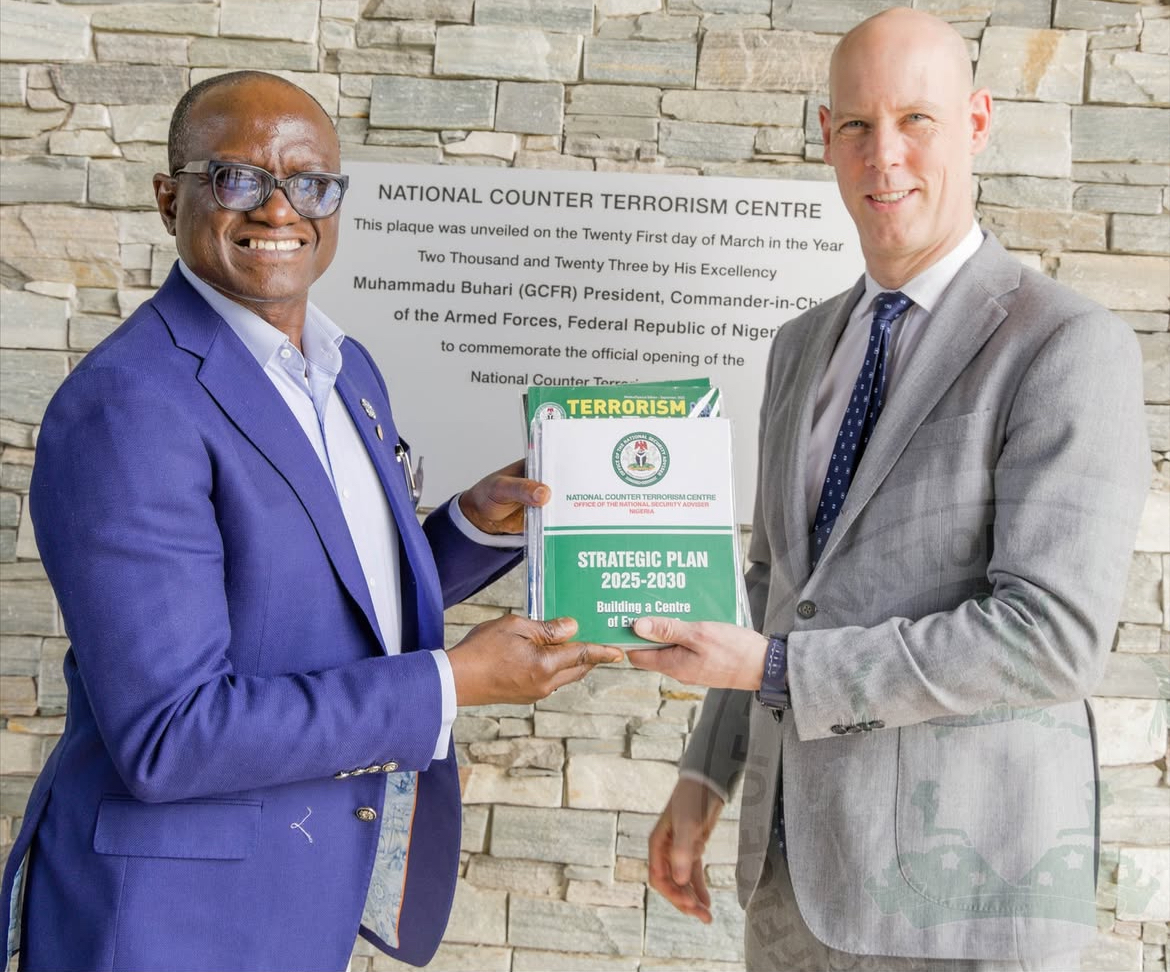
The National Counter Terrorism Centre (NCTC) recently hosted the Special Envoy for the Sahel and West Africa Division from the Kingdom of the Netherlands, marking another important step in Nigeria’s expanding international security and development engagements. The visit underscored shared concerns about regional stability while opening new pathways for cooperation across security, governance, and development priorities.
At a time when the Sahel and wider West African region face complex security threats, the engagement reflected a growing recognition that no country can address these challenges alone. Terrorism, violent extremism, organised crime, and cross-border insecurity continue to strain institutions and communities. Therefore, partnerships rooted in trust, dialogue, and shared responsibility have become more critical than ever.
During the meeting, discussions focused on Nigeria’s counterterrorism framework and the evolving security dynamics across the region. NCTC officials outlined ongoing efforts to strengthen intelligence coordination, improve early warning systems, and enhance inter-agency collaboration. These measures, they noted, aim to ensure faster responses and more effective prevention strategies. At the same time, the Centre emphasised the importance of aligning security operations with respect for human rights and community engagement.
The Dutch Special Envoy commended Nigeria’s leadership role in regional security efforts. He highlighted the Netherlands’ long-standing interest in supporting stability, democratic governance, and sustainable development in West Africa. Moreover, he stressed that security interventions must work hand in hand with development initiatives to achieve lasting peace. According to him, poverty, youth unemployment, and social exclusion continue to fuel instability if left unaddressed.
Importantly, both sides agreed that counterterrorism cannot rely on military action alone. Instead, they emphasised prevention, resilience, and inclusive governance as central pillars. As a result, the conversation extended beyond security operations to cover education, economic opportunity, and social cohesion. These areas, participants noted, reduce the appeal of extremist ideologies over time.
In addition, the meeting explored opportunities for technical cooperation and capacity building. The Netherlands expressed interest in supporting training programmes, research exchanges, and knowledge sharing between Nigerian institutions and international partners. Such cooperation, officials said, would strengthen analytical capacity and improve policy design. Furthermore, digital tools and data-driven approaches featured prominently in the discussions, reflecting the growing role of technology in modern security management.
Another key theme involved regional cooperation. Nigeria’s strategic position places it at the heart of West African security efforts. Therefore, the NCTC reaffirmed its commitment to working closely with neighbouring countries and regional bodies. Cross-border intelligence sharing and joint planning, officials explained, remain essential for tackling threats that easily move across national boundaries.
The engagement also touched on humanitarian considerations. Conflict and insecurity continue to displace communities across the Sahel and West Africa. Consequently, both parties stressed the need to integrate humanitarian responses with security planning. Protecting civilians, supporting displaced populations, and rebuilding trust between communities and institutions remain vital priorities.
Observers see the visit as part of a broader trend toward stronger Nigeria–Europe collaboration on security and development. Over the years, Nigeria has deepened partnerships with several European countries. These relationships increasingly focus on long-term solutions rather than short-term fixes. The Netherlands, in particular, has positioned itself as a partner interested in dialogue, institution building, and sustainable outcomes.
For the NCTC, hosting the Dutch Special Envoy reinforced its role as a central coordination hub within Nigeria’s security architecture. The Centre continues to evolve, adapting to new threats and global best practices. By engaging international partners, it also signals openness to learning and collaboration.
Ultimately, the meeting sent a clear message. Addressing insecurity in West Africa requires collective action, shared values, and sustained commitment. Through dialogue and partnership, Nigeria and the Netherlands are laying foundations for deeper cooperation. While challenges remain significant, engagements like this provide momentum and direction.
As regional dynamics continue to shift, such high-level interactions will likely shape future strategies. For now, the NCTC’s engagement with the Kingdom of the Netherlands stands as a positive example of diplomacy supporting security, development, and peace across West Africa.