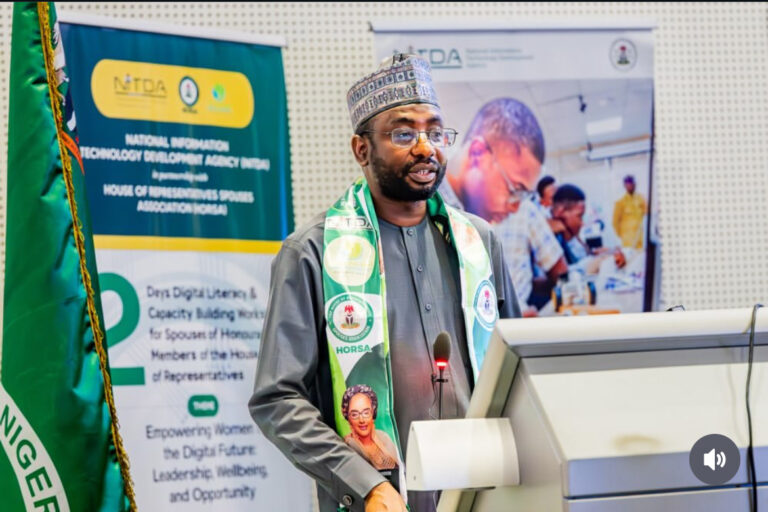

Nigeria has entered a new and urgent phase of information security, and the need for digital crisis leadership has never been clearer. The Director General of the National Information Technology Development Agency (NITDA), Malam Kashifu Inuwa Abdullahi, stressed this reality as he called for a complete shift in how crises are managed in today’s hyper-connected world. He noted that technology now moves at extraordinary speed. He also explained that harmful actors adapt even faster, which increases the stakes for national institutions and public safety.
Abdullahi warned that the digital space has become a powerful battleground. He said misinformation, synthetic content and manipulated videos spread quickly and influence public behaviour within minutes. Moreover, he highlighted that the same tools built for creativity and innovation now serve destructive agendas when they fall into the wrong hands. This pattern, he noted, demands stronger systems, quicker responses and smarter strategies from both government institutions and private organisations.
He stressed that crisis management has shifted from slow, reactive methods to real-time digital engagement. In the past, misinformation spread through newspapers or radio. Today, however, a single post can reach millions before authorities issue a statement. Therefore, organisations must strengthen digital literacy, improve verification processes and deploy rapid-response communication teams. Abdullahi said accuracy and speed now determine public confidence during moments of uncertainty.
Furthermore, he explained that trust remains the most valuable asset in crisis management. Citizens respond better to clear, credible and timely messages. Yet trust weakens when false information gains more visibility than verified facts. Because of this, he urged agencies to embrace proactive communication strategies. He also encouraged institutions to engage communities continuously, not only during emergencies. This approach, he said, creates a stronger relationship between leaders and citizens.
Abdullahi also emphasised the importance of collaboration. Government agencies cannot handle digital threats alone. Therefore, he called for partnerships with technology companies, media organisations and cybersecurity experts. He stated that shared intelligence, coordinated responses and unified messages reduce confusion and limit the spread of harmful content. He added that digital resilience requires an ecosystem approach where every stakeholder plays a role.
In addition, he pointed out that Nigeria must build stronger digital skills across its workforce. This includes training in data analysis, cybersecurity, information verification and strategic communication. He said empowered teams respond faster and protect citizens more effectively. He also noted that young Nigerians bring valuable digital instinct and must be engaged in building national resilience.
Abdullahi further noted that emerging technologies like artificial intelligence introduce new risks but also powerful solutions. With proper governance, AI can detect harmful content, track misinformation trends and automate early-warning alerts. He encouraged leaders to adopt these tools while maintaining ethical standards that protect privacy and strengthen public trust.
He concluded by stating that Nigeria stands at a critical moment. Digital threats continue to evolve. However, with bold reforms, skilled professionals and the right technology, the country can stay ahead. He said digital crisis leadership demands courage, clarity and collaboration. It also demands policies that protect citizens while promoting innovation. With these steps, Nigeria can build a safer, smarter and more informed digital society.