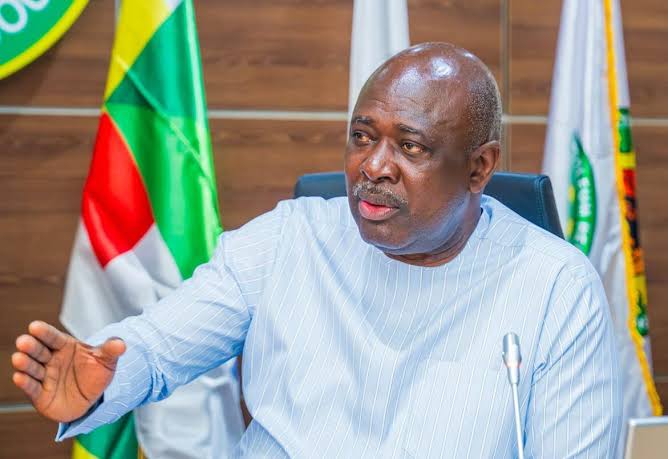
A powerful new chapter is unfolding in Nigeria’s quest for energy security as the Federal Government declares a renewed commitment to end the nation’s dependence on imported petroleum products. The announcement, made by the Minister of State for Petroleum Resources (Oil), Heineken Lokpobiri, during the Crude Oil Refinery Owners Association of Nigeria (CORAN) 2025 Summit in Lagos, signals a strong move toward self-sufficiency, economic stability, and regional energy leadership.
The Minister’s declaration resonated with optimism and urgency. He emphasized that Nigeria must take control of its refining destiny by ensuring steady crude supply, offering policy incentives, and providing full regulatory support for local refiners. His words echoed across the hall, igniting a sense of purpose among industry players, government representatives, and investors eager to see Nigeria finally unlock its vast refining potential.
From the onset, Lokpobiri’s message focused on sustainability and national pride. He reminded participants that every imported litre of petrol weakens the economy while empowering foreign refineries. By contrast, a fully functional domestic refining industry will strengthen the Naira, create jobs, and stimulate industrial growth. His remarks reflected the government’s recognition that energy independence remains essential for true national development.
Throughout the event, speakers discussed how collaboration and innovation can transform Nigeria into a regional refining hub. The Minister highlighted ongoing support from the Federal Government to ensure indigenous refineries receive the necessary crude supply without disruption. He revealed that regulatory agencies have been instructed to streamline approval processes and eliminate bureaucratic obstacles slowing refinery operations.
Transitioning from dependence to independence requires more than policy; it demands persistence and shared vision. The government’s plan includes targeted fiscal incentives to encourage investment and reduce production costs for local refiners. By fostering a business-friendly environment, authorities aim to position Nigeria as a competitive energy powerhouse capable of supplying refined products across Africa.
Industry leaders at the summit praised the government’s resolve. They stressed that aligning policy with infrastructure development will accelerate the country’s refining goals. Many also emphasized the importance of transparency and accountability in ensuring that every refinery operates efficiently and safely. As discussions deepened, consensus grew that Nigeria’s refining future hinges on trust between government, investors, and citizens.
The gathering showcased more than speeches; it embodied renewed determination. Attendees left inspired by the government’s commitment to local empowerment and value creation. Each promise of support represented a step closer to breaking decades of fuel import dependence that has drained national resources.
Observers noted that achieving energy security will also enhance Nigeria’s geopolitical influence. A self-sufficient refining industry will not only stabilize domestic supply but also open opportunities for exports to neighboring countries, turning Nigeria into a major regional energy supplier. Such growth will strengthen the nation’s fiscal base and reduce vulnerability to global oil price shocks.
Heineken Lokpobiri’s assurance reflects a vision built on resilience and national pride. His message was clear — Nigeria has the capacity, talent, and resources to meet its energy needs internally. With sustained political will, transparent regulation, and industry partnership, the nation’s refining sector can become a pillar of economic transformation.
The CORAN 2025 Summit ended with a renewed call for action. Every participant shared a belief that Nigeria’s journey toward full refining independence is achievable. The momentum now lies in execution, collaboration, and accountability.
The Federal Government’s renewed drive represents more than a policy shift; it marks a defining moment for energy security and national sovereignty. As Nigeria advances toward full refining capacity, citizens can look forward to a future where domestic energy powers progress, fuels growth, and inspires lasting prosperity.