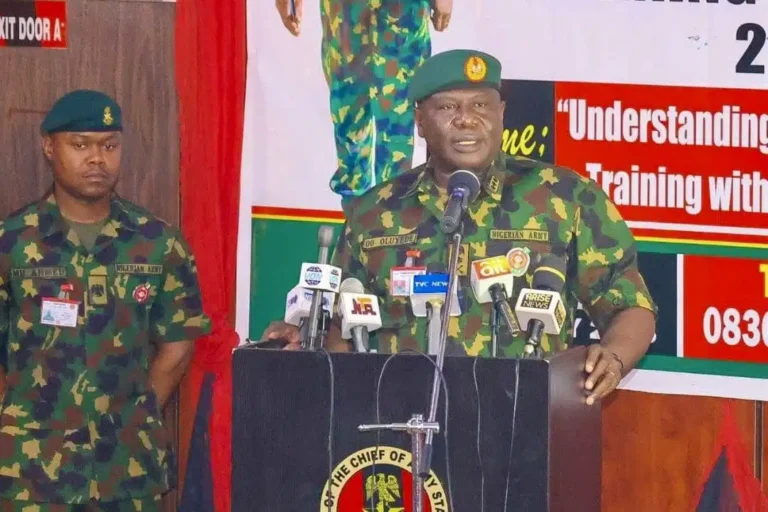
On 12 January 2026, Nigeria took another firm step toward securing its skies and critical infrastructure when the National Counter Terrorism Centre (NCTC) formally launched two strategic airspace security programmes in Abuja. The National Coordinator of NCTC, Major General Adamu Garba Laka, declared open the Managing Defence in a Wider Security Context Course alongside the Counter Man-Portable Air Defence Systems (ManPADS) and Counter Unmanned Aircraft Systems (C-UAS) Threats Workshop.
The twin programmes come at a crucial time, as modern security threats now extend far beyond traditional battlefields. Across the world, extremist groups and criminal networks increasingly use drones, portable missile systems, and other advanced tools to carry out surveillance, smuggling, sabotage, and attacks on both military and civilian targets. Consequently, Nigeria is stepping up its preparedness, and this new round of training reflects that growing urgency.
Major General Laka explained that today’s security environment demands smarter, faster, and more coordinated responses. He noted that terrorists no longer rely only on conventional weapons. Instead, they now exploit low-cost drones and portable air defence systems to create fear, gather intelligence, and threaten national assets. Therefore, he stressed that Nigeria must invest in knowledge, technology, and collaboration to remain ahead of these evolving threats.
The Managing Defence in a Wider Security Context Course is designed to expand the strategic thinking of participants drawn from defence, intelligence, and security institutions. Rather than focusing only on battlefield tactics, the course explores how national security now depends on cooperation between the military, law enforcement agencies, policymakers, and civilian institutions. As a result, participants learn how to align operations with national policy, manage crises more effectively, and support long-term stability.
At the same time, the ManPADS and Counter-UAS Threats Workshop tackles one of the most dangerous emerging risks in modern warfare and terrorism. Portable missile systems and unmanned aerial vehicles can bypass traditional defences, threaten airports, energy facilities, and public gatherings, and even target senior officials. However, through this workshop, Nigerian security personnel gain practical skills in detection, tracking, and neutralisation of such threats. They also learn how to deploy layered defence systems that combine intelligence, technology, and rapid response units.
Importantly, the NCTC has continued to position itself as a hub for joint security planning in Nigeria. By bringing together officers from different agencies, the Centre promotes information sharing, operational unity, and mutual trust. This approach ensures that no single agency stands alone when confronting highly sophisticated threats.
Furthermore, Major General Laka highlighted that security today requires constant adaptation. He urged participants to see the training not as a one-time event, but as part of a continuous journey of learning and improvement. In his view, only through sustained capacity building can Nigeria maintain resilience against terrorism, insurgency, and transnational crime.
Ultimately, the launch of these programmes signals Nigeria’s growing commitment to proactive defence. By investing in people, partnerships, and advanced security knowledge, the country is strengthening its ability to protect lives, safeguard infrastructure, and preserve national stability. As threats become more complex, Nigeria is clearly choosing to respond with smarter, more integrated, and forward-looking solutions.