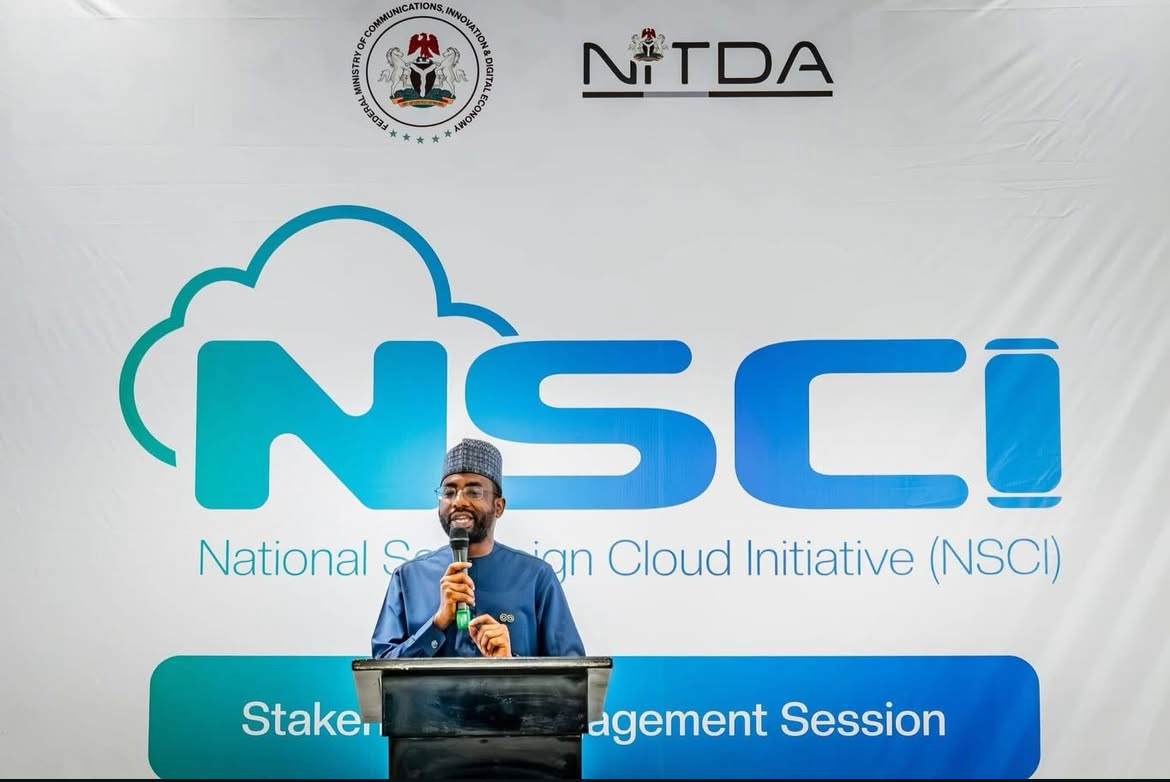
The National Information Technology Development Agency (NITDA) is advancing Nigeria’s digital sovereignty agenda through the National Sovereign Cloud Initiative (NSCI), convening key stakeholders to align the nation’s cloud ecosystem with national security, economic growth, and digital transformation priorities.
The engagement brought together representatives from government institutions, cloud service providers, data infrastructure firms, and policy experts to develop a coordinated national framework for sovereign cloud adoption and governance. Officials emphasised that strengthening domestic control over critical digital infrastructure remains essential as Nigeria accelerates its digital economy ambitions.
Strengthening National Control over Data and Infrastructure
At the core of the initiative lies the objective of ensuring that sensitive national data, digital services, and government platforms are hosted within secure, locally governed cloud environments. NITDA officials noted that reliance on foreign cloud infrastructure can create vulnerabilities related to data jurisdiction, security exposure, and economic leakage.
Therefore, the NSCI seeks to establish trusted national cloud capacity capable of hosting public sector systems, critical information assets, and regulated private-sector workloads. By building domestic infrastructure and governance frameworks, Nigeria can enhance resilience, sovereignty, and strategic autonomy in the digital domain.
Stakeholders also discussed standards for data localisation, compliance assurance. And interoperability to ensure that sovereign cloud solutions remain secure, scalable, and globally compatible.
Driving Economic Growth and Local Innovation
Beyond security considerations, the sovereign cloud agenda is positioned as a catalyst for digital industrialisation and innovation. Developing national cloud infrastructure can stimulate local data centre investment, software ecosystems, and digital service industries.
Participants highlighted that domestic cloud capacity reduces foreign exchange outflows linked to offshore hosting while creating jobs in infrastructure management, cybersecurity, and cloud engineering. It also enables Nigerian startups and enterprises to build services on locally governed platforms that comply with national regulations.
NITDA emphasised that the initiative aligns with broader goals of digital economy expansion, technology self-reliance, and knowledge-driven growth.
Building Trust, Standards, and Collaboration
The stakeholder engagement focused on establishing governance structures, certification models, and trust frameworks for sovereign cloud deployment. Experts stressed that credibility and security assurance remain central to adoption by government and regulated industries.
Discussions therefore addressed policy alignment, technical standards, and risk management approaches. Participants also explored public–private partnership models to accelerate infrastructure deployment while maintaining national oversight.
NITDA reiterated that collaboration across government, industry, and academia will shape a sustainable sovereign cloud ecosystem. Continuous consultation, officials said, ensures that policy frameworks remain practical, adaptive, and innovation-friendly.
Advancing Nigeria’s Digital Transformation Vision
The National Sovereign Cloud Initiative represents a strategic pillar of Nigeria’s digital transformation roadmap. As public services, financial systems, and critical infrastructure increasingly depend on cloud platforms, national control and resilience become indispensable.
Through NSCI, Nigeria aims to secure its digital assets, empower local technology industries, and strengthen economic competitiveness in the global digital landscape. The initiative also positions the country to participate confidently in cross-border digital trade while safeguarding national interests.
Ultimately, NITDA’s sovereign cloud drive signals a decisive shift toward digital independence and strategic technology governance. By aligning infrastructure, policy, and innovation around national priorities, Nigeria moves closer to a secure, self-reliant, and inclusive digital future.