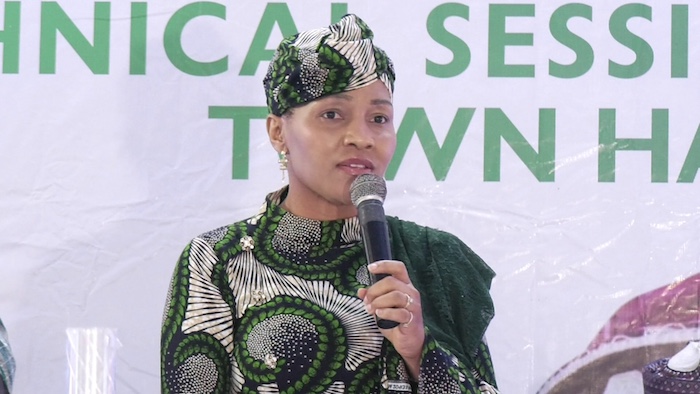

The Nigeria Revenue Service (NRS) has officially assumed the responsibility of collecting mineral royalties from mining companies across the country. This strategic shift follows the enactment of the Nigeria Revenue Service Act 2024, which aims to centralize all federal revenue collection. Previously, the Ministry of Solid Minerals handled these payments through the Mining Cadastre Office. Under the leadership of Dr. Zacch Adedeji, the NRS will now use its robust digital infrastructure to ensure full compliance. This move is a critical step in the “Renewed Hope” agenda to diversify national income.
What the NRS Mineral Royalties Collection Means
The transition to NRS collection means that mining companies must now process all royalty payments through the Taxpro-Max portal. This centralized system eliminates the “fragmented collection” that previously led to significant revenue leakages. Dr. Zacch Adedeji emphasized that this change simplifies the “Ease of Doing Business” for miners by providing a single point of contact. Therefore, the NRS will now issue tax clearance certificates that include verified royalty payments. This integration ensures that the government can track the “True Value” of extracted solid minerals.
Furthermore, the new law empowers the NRS to conduct “Forensic Audits” on mining operations to prevent under-reporting. Mining companies must provide accurate data on production volumes and market prices to determine the correct royalty. The Nigeria Revenue Service is collaborating with the Ministry of Solid Minerals to verify these technical details. Consequently, this synergy will help the federal government reach its ambitious revenue targets for the 2026 fiscal year. This proactive stance is essential for protecting the nation’s natural wealth.
NRS Mineral Royalties – Economic Impact of the Tax Law
The primary objective of this mineral royalties reform is to boost the contribution of the solid minerals sector to Nigeria’s GDP. Currently, the sector contributes less than 1% to the economy, a figure the administration aims to triple by 2027. Dr. Zacch Adedeji noted that the NRS will ensure that these funds are properly remitted to the Federation Account. This allows for a more equitable distribution of wealth to states and local governments through the derivation formula. Therefore, mining host communities can expect increased funding for local infrastructure and environmental protection.
In addition, the law introduces “Stiffer Penalties” for mining companies that fail to remit royalties on time. The NRS now has the legal authority to seal the premises of defaulting firms and prosecute their directors. This enforcement mechanism is designed to create a “Level Playing Field” for all operators. By ensuring that every miner pays their fair share, the government can reinvest in “Green Mining” technologies. This commitment to sustainability is a core pillar of the current national economic strategy.
A Backstory of Revenue Leakage
For decades, Nigeria’s solid minerals sector was plagued by “Informal Mining” and inconsistent revenue tracking. Many international mining firms exploited regulatory gaps to export raw minerals without paying the required mineral royalties. The Ministry of Solid Minerals often lacked the “Enforcement Capacity” to track thousands of small-scale sites across remote areas. This led to a situation where billions of naira in potential revenue were lost annually. This backstory explains why the NRS was brought in to provide a more professionalized collection framework.
Before this reform, the “Dual Authority” between the Ministry and the tax office often confused investors. The NRS has now streamlined these processes to reflect international best practices in resource management. This shift mirrors the successful “Naira-for-Crude” model used in the oil sector to ensure domestic stability. Dr. Zacch Adedeji has worked tirelessly to harmonize these laws to prevent “Double Taxation” while maximizing returns. This dedication to “Fiscal Integrity” is turning the solid minerals sector into a reliable economic engine.
Future Outlook for Mining Revenue
Looking ahead, the Nigeria Revenue Service plans to deploy “Satellite Tracking” to monitor mining activities in real-time. This technology will help the NRS estimate production levels independently of company reports. Dr. Zacch Adedeji believes that automation is the only way to achieve “Total Transparency” in the sector. Consequently, the government expects a 200% increase in royalty collections by the end of the next quarter. This growth will provide the necessary funding for the nation’s ambitious infrastructure projects.
With the continued support of the President, the NRS is poised to transform Nigeria’s fiscal landscape. The commitment to “Mineral Royalties” collection remains a high priority for the administration’s development goals. For the Nigerian people, this new tax law represents a firm promise that the country’s minerals will benefit everyone. The journey toward a diversified, “Post-Oil” economy is now moving forward with renewed strength and accountability.