South African soldiers have moved into gang-ridden townships in Cape Town, as fresh violence left two people dead nearly 50 days after the deployment was ordered.
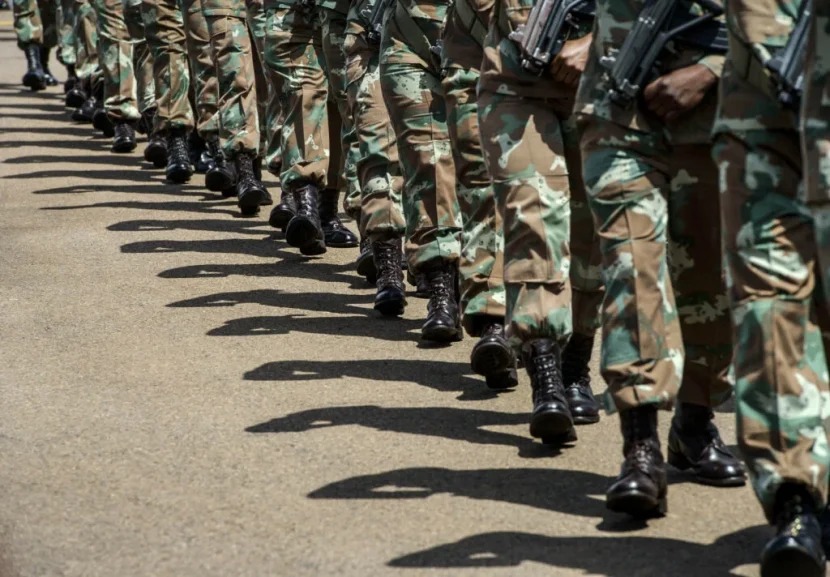
Troops in full combat gear, carrying assault rifles, stepped out of armoured vehicles with sirens blaring in Mitchells Plain, a neighbourhood in the Cape Flats, on Wednesday.
The Cape Flats, a low-lying area between the tourist hub of Cape Town and nearby winelands, remains a hotspot for murder, driven by gang turf wars and retaliatory attacks.
In neighbouring Hanover Park, two men aged 25 and 33 were shot and killed in a 5 am attack. Earlier, at about 2:45 am, a 27-year-old man was wounded in a separate shooting in Mitchells Plain.
Residents say fear remains constant despite the military presence.
“I am afraid for my children,” said a 65-year-old grandmother who spoke on condition of anonymity.
“All night, I don’t sleep,” she said, adding that her daughter leaving at 4 am makes her “so anxious.”
A 69-year-old retiree, Malvin Gordan, said shootings occur at all hours, including when children are going to and returning from school.
He described the deployment as a welcome relief, noting that the troops’ “presence alone” forces gang members to retreat.
The violence follows one of the deadliest periods in the area last August, when police recorded 59 murders in just seven days.
The worsening security situation prompted President Cyril Ramaphosa in February to announce a military deployment to support the country’s overstretched police force, describing crime as one of South Africa’s biggest threats.
Outside war zones, South Africa records one of the highest homicide rates globally, with an average of 60 killings reported daily.
The operation, codenamed “Operation Prosper,” will run for one year across five provinces, including Gauteng, home to Johannesburg, the country’s financial hub.
It involves more than 2,200 soldiers tasked with supporting police efforts to tackle rising crime and illegal mining.
South Africa has repeatedly deployed troops during national crises, including enforcing COVID-19 lockdowns in 2020, responding to unrest linked to the jailing of former president Jacob Zuma in 2021, and addressing widespread truck burnings in 2023.
In 2019, about 1,300 soldiers were also sent to assist police in gang-affected Cape Flats communities.
Faridah Abdulkadiri