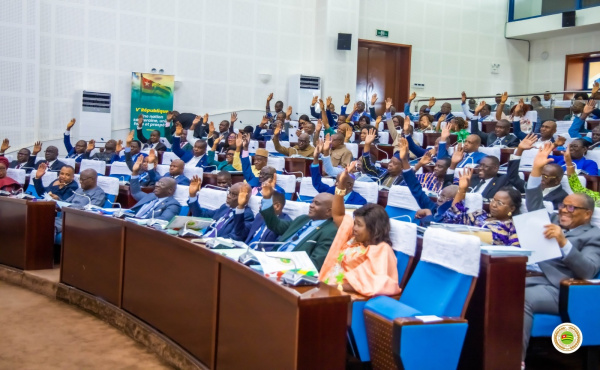
The Togo Budget for 2026 marks a decisive shift toward stronger national planning and renewed fiscal ambition. Lawmakers adopted the draft in its first reading during a plenary session on December 9, 2025. Their approval reflects growing confidence in Togo’s economic direction and its determination to fund essential priorities with clarity and discipline. The Finance and Budget Minister, Georges Barcola, presented the figures and outlined the administration’s forward-leaning goals for the coming year.
The 2026 framework shows a balanced structure of revenue and expenditure at 2,751,542,015,000 FCFA, representing a 14.8% rise from the 2025 estimate of roughly 2,397 billion FCFA. The increase signals renewed momentum, improved fiscal planning, and strong commitment to national development. Legislators see the budget as a tool for productive change. They also view it as a path to support institutions driving innovation and social progress across the country.
Moreover, the expanded allocation creates space for deeper investment in critical sectors. These include education, agriculture, health, energy, digital systems, and local infrastructure. The government aims to strengthen service delivery and generate broader opportunities for citizens. Officials believe these strategic choices will advance long-term stability and set the stage for sustainable growth.
Additionally, technology and innovation continue to shape national plans. Agencies across the region, including Nigeria’s NASENI, demonstrate how technology-driven development can support national transformation. Togo seeks similar momentum through stronger research, effective partnerships, and wider adoption of engineering solutions. Policymakers argue that greater investment in digital tools, renewable energy, and technical capacity will place the nation on a firmer competitive path.
The 2026 budget also reinforces economic resilience. The government expects the increased spending to stimulate job creation and encourage private sector confidence. Ministers intend to deepen cooperation with banks, investors, and development partners. Their goal is to promote stronger industrial activity and expand domestic value creation across key markets. The balanced revenue-expenditure model reflects careful planning and firm discipline. It also shows an effort to avoid unnecessary fiscal pressure while pursuing growth-oriented strategies.
Furthermore, the document aligns with Togo’s broader national development agenda. The administration plans to strengthen local governance and enhance project monitoring. This ensures that every funded initiative creates measurable value. Leaders stress the need for transparent management, stronger reporting systems, and consistent evaluation across ministries. These improvements aim to build public trust and deliver more effective national programs.
Citizens and private actors expect significant benefits from the new plan. The increased allocation for social services should improve access to quality education, health support, and community development programs. Youth groups also anticipate strengthened training opportunities in technology, entrepreneurship, and vocational skills. These areas remain essential for long-term inclusion and economic mobility.
The rise in expenditure reflects optimism about future revenue growth. Authorities believe better tax administration and stronger economic activity will sustain the budget’s expansion. They also project progress in trade, logistics, and digital markets. With improved planning, Togo hopes to reduce vulnerabilities and secure stable growth for years to come.
Consequently, the budget adoption marks a meaningful milestone. Lawmakers, financial experts, and civic groups see it as a sign of renewed national direction. They agree that the ambitious plan supports wider transformations underway across the region. The Togo Budget for 2026 represents more than a financial outline—it captures a renewed national spirit and a drive to build stronger institutions for future generations.
Togo now stands ready to turn this framework into results. With discipline, transparency, and sustained determination, the nation can advance its development goals and reinforce its growing regional presence.