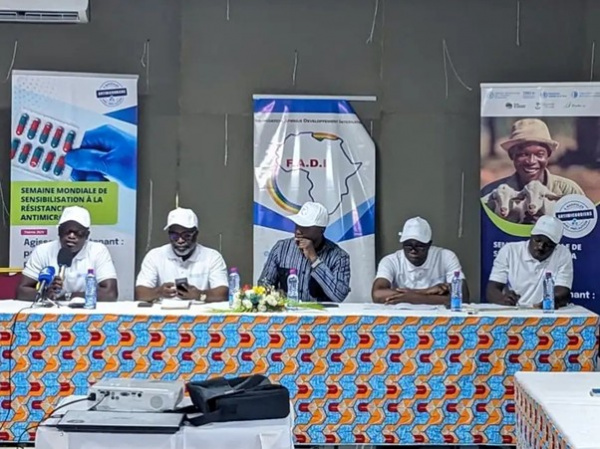
AMR awareness shaped the conversations that filled Lomé during World Antimicrobial Resistance Awareness Week, which ended on Saturday, June 22, 2025. The week brought together experts determined to address the rising threat of antimicrobial resistance in Togo. Researchers, doctors, pharmacists, biologists, and key institutional actors gathered with strong motivation to confront the health and economic realities linked to AMR. Their collective energy showed how urgently the country must act as resistance continues to spread and complicate treatment options. People listened closely because the discussions touched every family, every hospital, and every community.
The symposium held during the week created an important space for open dialogue. Experts explained how AMR develops when microbes adapt and weaken the effectiveness of medicines. Many participants emphasized that improper drug use accelerates this process. Their concerns carried weight because misuse happens often in homes, clinics, and farms. Communities, they noted, must understand these dangers clearly. Therefore, communication became a major theme of the week. Stakeholders insisted that accurate information is as important as medicine itself, especially now that misinformation grows quickly through digital platforms.
The awareness week began with a special training session for media professionals on November 18. The session was organized by the BIOLOIM/FSS-UL Laboratory with support from the Africa International Development Foundation. Their aim focused on one goal: build stronger communication skills that help journalists deliver reliable messages about AMR. Trainers urged participants to avoid scientific jargon when addressing the public. They stressed that people listen more easily when explanations feel simple, respectful, and practical. The session allowed journalists to ask questions, share challenges, and practice new strategies with guidance from health experts.
Ideas flowed freely as trainers described how misinformation harms public health. They explained how rumors about antibiotics push people toward self-medication. That behavior increases resistance and prolongs illness, which places more pressure on hospitals. Because of this, they urged communicators to correct false claims quickly and confidently. Participants learned to identify misleading content and respond with verified facts. Many expressed appreciation for the training because they had struggled to find the right language to discuss AMR. The workshop strengthened their confidence and prepared them to guide communities with clarity.
Throughout the week, speakers highlighted the severe economic impact of antimicrobial resistance. They explained how resistant infections extend treatment time and increase financial strain on families. Hospitals face rising costs as basic infections become harder to treat. These challenges also weaken national productivity because sick individuals miss work for longer periods. Many attendees described AMR as both a health emergency and a long-term development threat. Their voices echoed a shared belief that prevention remains far more affordable than treatment. This message resonated across the hall and sparked deeper reflection.
Experts also pointed out that AMR touches sectors beyond human health. Farmers often rely on antimicrobials for livestock, and improper use can strengthen resistant strains. Because of this, cooperation between veterinary services and human health systems remains essential. Participants called for stronger regulation, improved monitoring, and responsible drug use across all sectors. They encouraged policymakers to design laws that protect citizens while supporting sustainable food production. Their suggestions aligned with global recommendations and strengthened the call for unified national action.
By the final day of the event, participants expressed strong commitment to continued collaboration. They agreed that Togo must expand surveillance systems, strengthen laboratories, and improve early detection. They also emphasized that communities need regular education to encourage safe medication practices. Many believed that progress depends on partnership between scientists, journalists, health workers, and public institutions. This collaboration creates trust and builds a stronger defense against AMR.
The week ended with renewed energy and a clear message. Togo can slow antimicrobial resistance through informed communication, responsible drug use, and coordinated national action. The conversations held in Lomé ignited hope and inspired determination across the health sector. AMR awareness now stands at the center of a growing movement committed to safeguarding future generations.