The United Nations and the Federal Government have called for urgent reforms to address persistent justice gaps affecting women and girls in Nigeria.
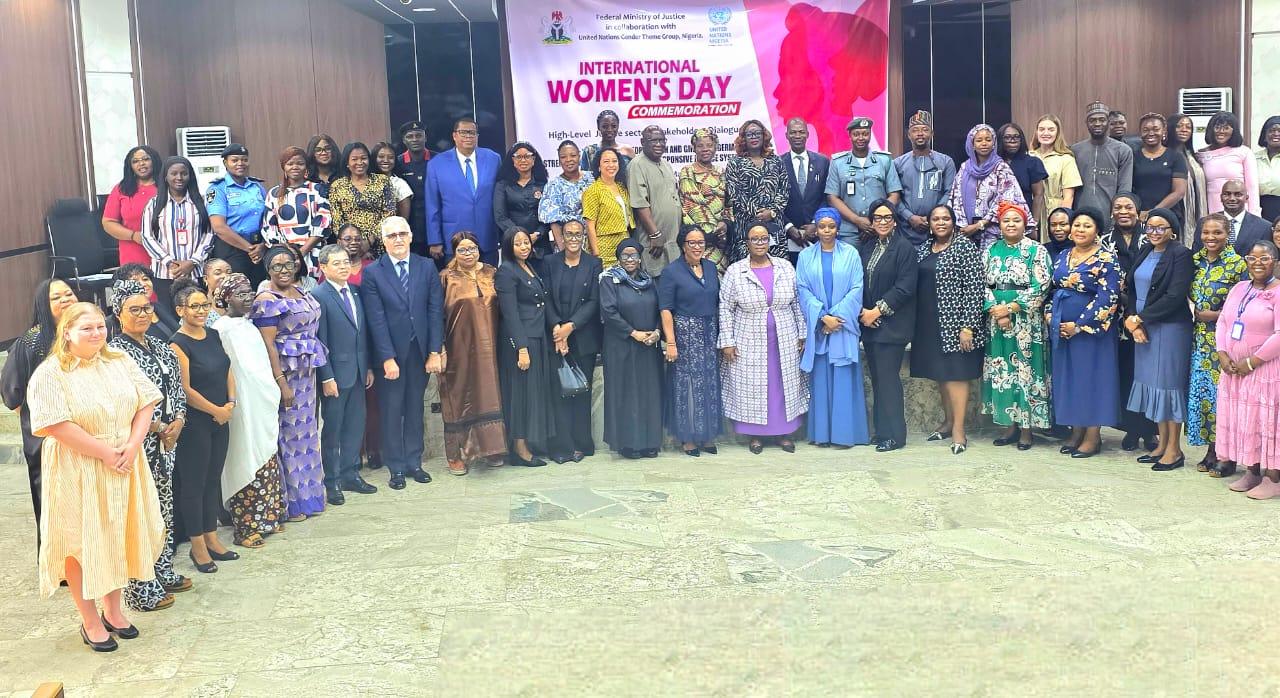
The call was made on Wednesday in Abuja during a high-level dialogue marking International Women’s Day, convened by the Federal Ministry of Justice and the United Nations Gender Theme Group.
The event, themed “Equal Justice for Women and Girls in Nigeria: Strengthening Inclusive Gender-Responsive Justice Systems,” brought together justice sector leaders, civil society organisations, and development partners to examine barriers to justice for women.
Speaking on behalf of the UN Resident Coordinator, Mohamed Fall, the UN emphasised that access to justice for women and girls is central to building inclusive and equitable societies. It called for stronger collaboration among government institutions, the judiciary, law enforcement agencies, and communities.
The Representative of UN Women to Nigeria and ECOWAS, Beatrice Eyong, warned that gender-based violence remains widespread, citing data from the 2024 Nigeria Demographic and Health Survey showing that 21 percent of women aged 15 to 49 have experienced physical or sexual violence.
She added that 58 percent of survivors do not report abuse, largely due to a lack of confidence in the justice system.
UNFPA Resident Representative, Muriel Mafico, highlighted the broader implications of gender-based violence, linking it to child marriage and harmful traditional practices. She noted that nearly 38 percent of Nigerian women aged 25 to 49 were married before age 18.
Mafico stressed that while Nigeria has established legal frameworks, the challenge lies in ensuring that these systems are accessible, responsive, and centred on the needs of survivors.
She also outlined ongoing UNFPA interventions, including capacity building for justice sector actors, support for forensic systems, and the strengthening of survivor support services through One-Stop Centres.
From the government’s side, the Head of the Sexual and Gender-Based Violence Unit at the Federal Ministry of Justice, Yewande Gbola-Awopetu, reaffirmed the government’s commitment to improving access to justice and strengthening prosecution of offenders.
She noted that despite existing laws such as the Violence Against Persons Prohibition Act, stigma, economic constraints, and institutional weaknesses continue to hinder access to justice.
In a keynote address, Justice Angela Otaluka stressed that ensuring equal justice for women and girls is both a constitutional and moral obligation. She identified cultural norms, economic dependency, and delays in the legal system as major barriers.
Participants also called for institutional reforms, including specialised courts for gender-based violence cases, increased use of technology to reduce delays, stronger legal aid systems, and greater representation of women in the justice sector.
The dialogue concluded with a renewed commitment to strengthen implementation of existing laws, improve survivor support mechanisms, and enhance collaboration among stakeholders to build a more inclusive and responsive justice system.
Michael Olugbode