
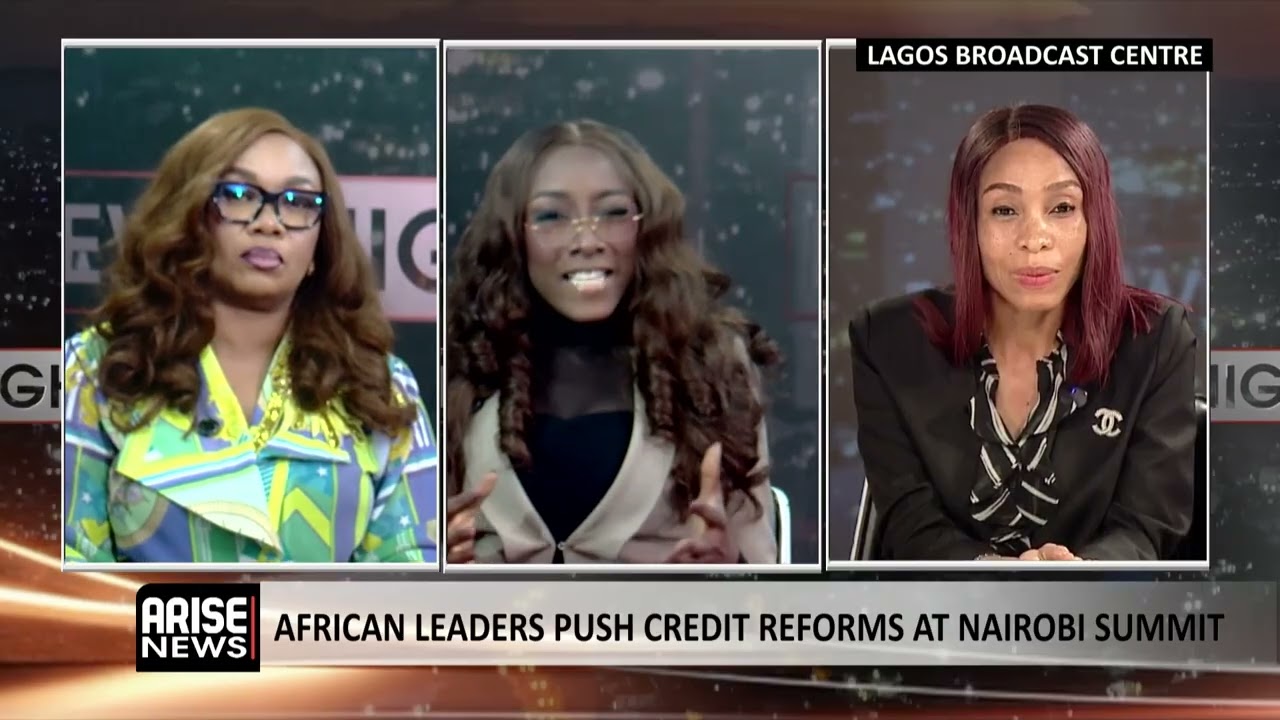
Senior research fellow, and Head, Centre for International Trade and Investment, Nigerian Institute of International Affairs, Dr. Adesuwa Erediauwa has urged African nations to take a stronger and more assertive role in shaping their renewed engagement with France, stressing that the success of the new France-Africa partnership will depend on whether it truly operates on the basis of equality and mutual benefit.
Speaking in an interview with ARISE NEWS on Tuesday, Dr Erediauwa noted that France’s new “partnership of equals” with Africa should focus on investment, infrastructure, skills and technology transfer. She also cautioned that its success depends on whether African countries are truly given equal decision-making power and whether it delivers real gains in industrialisation, fair labour practices and sustainable development.
“It’s a new partnership model, he says—one based on equals, ‘a partnership of equals’ as it was phrased. It remains to be seen whether it would be a partnership of equals; whether it will be opportunities for investments—investments in infrastructure, technology transfer, skills transfer, industrialization for Africa; whether Africa will have a say, an equal say, in this engagement; whether the engagement with the private sector will enforce proper labor rights for those who’ve been newly employed. And it remains to be seen, like I said, and we do hope that African nations and leaders would exert that equality in this engagement,” she stressed.
Calling on African leaders to be more strategic in engaging France, the Senior Fellow urged them to attach clear conditions to new investment pledges, including what she described as climate-related reparations and fairer economic arrangements rather than viewing such commitments as aid or gifts.
“I think that African leaders should start to set conditionalities for this engagement. They should start to demand that the D4D, the ‘Debt for Development,’ should not be seen as a gift. It should rather be seen as some form of repayment for the decades of France’s engagement with Africa where there was a pillage of our natural resources at our detriment,” she insisted.
She further stressed the need for African governments to protect domestic investors, ensure value addition in sectors like energy and minerals, and prioritise skills transfer in all partnerships.
“African governments should not see this as gifts; it’s necessary repayment. They should also ensure that domestic investors are protected from foreign investors and investments. They should ensure that the nature of investment, especially in the energy sector and natural resources, ensures beneficiation of resources—of minerals particularly—and ensure there’s value addition. I already mentioned skills transfer, so all these important points are necessary to be laid on the ground,” she advised.
On African businesses expanding into France, she said the legal and commercial frameworks must be clearly defined to ensure fair access and profitability.
“In terms of African businesses in France, I think the frameworks for this engagement where African businesses are in France increasingly should be made bare. The legal frameworks for this engagement should also be designed in a way that African businesses are able to make profits in France.”
She noted that while the summit produced about $27 billion in investment pledges, the greater value for African countries lies in using the moment to redefine how they engage global powers in what she described as a renewed “scramble for Africa.”
“I think that obviously, $27 billion in investment pledges—that’s something that they take home. But more than that, or in addition to that, I’d say that African governments should see that this ‘new scramble for Africa’ is an opportunity for nations to determine how they want to engage,” she said.
According to her, this phase should not reproduce old patterns of dependency or control, but instead give African leaders the leverage to set clear terms of engagement.
“This new scramble shouldn’t lead to new colonialism or new imperialist engagements or relationships. Rather, it should be an opportunity for African leaders to come to the drawing board and lay bare terms of engagement,”she said.
Speaking on the issue of xenophobia in South Africa, Dr Erediauwa described the situation in South Africa as “disturbing, sad and unfortunate,” noting that while issues such as unemployment, migration pressures and socio-economic challenges are widespread, they do not justify xenophobic attacks.
“It’s rather a disturbing situation; it’s sad and unfortunate. The issues that are on the ground—unemployment, loss of jobs, migration issues, social welfare, and socio-economic issues—these are the issues on the ground and they are not unique to South Africa. However, that’s no excuse for these xenophobic attacks that have been resurfacing in this past decade,” she maintained.
Calling for calm and diplomatic engagement between Nigeria and South Africa, Dr. Erediauwa emphasised the need to prioritise dialogue and strengthen regional cooperation to support African integration and safeguard the objectives of the African Continental Free Trade Area.
“I’d just say that it’s necessary for the two governments to make use of diplomatic and institutional channels to resolve these issues, which is really very important for Africa’s economic integration.
“Nigeria does make use of back-channel engagements, which I know are ongoing and which have worked in times past. It’s imperative that they do that so that, like I said, we can move on with our integration—the African Continental Free Trade Area agreement—which is very vital for Africa’s future. And I’d also like to say that it’s important that these issues, when the governments are engaging, are dealt with objectively as opposed to emotionalizing or sensationalizing what’s going on right now,” she urged.
Favour Odima