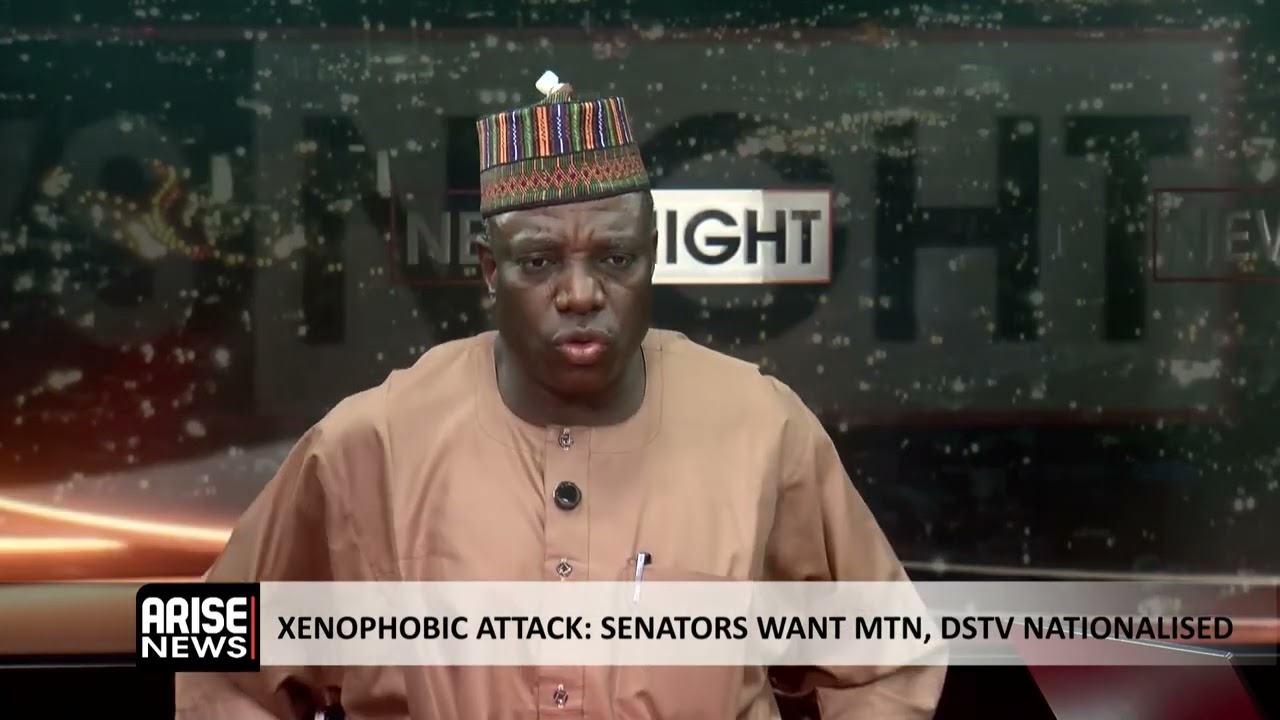
Professor of International Relations and Strategic Studies, in Modibbo Adams University, Yola, Professor Chris Kwaja has said xenophobic attack on Nigerians in South Africa is driven by economic hardship and historical ignorance. He argued that many young South Africans are unaware of Nigeria’s role in supporting the anti-apartheid struggle, contributing to resentment against other Africans.
“It is a multiplicity of factors, and the drivers are quite visible. You are dealing with a whole group of young men and women, thirty years down the line, with no history of what Nigeria represented in South Africa,” he stated.
He added: “By 1977, when Thabo Mbeki was in Nigeria with all expenses paid as the representative of the African National Congress (ANC), the Nigerian government provided protection for Mbeki and other South Africans at the height of the apartheid regime. In 1990, Nigeria played a major role in providing for the release of Nelson Mandela. By 1994, South Africa became independent of the apartheid regime.
“That history was not taught. The South African government did not do enough when it comes to providing equipment, sensitizing, and informing or communicating to young South Africans the sacrifices—human and material—that Nigeria made in getting South Africa to where it is today.
“If that was done, regardless of the poverty or the socioeconomic conditions these people are confronted with, they would respect Nigerians. They would value Nigerians and see in Nigerians brothers and sisters, fathers and mothers, and friends that they should appreciate and provide protection for.”
Professor Kwaja further noted that successive Nigerian governments have failed to take firm action over repeated attacks on citizens in South Africa since 2000.
“I think the Nigerian government is also culpable in some ways. And when I say the Nigerian government, I’m not just talking about this regime. It started in the year 2000—Obasanjo was in power then—down to where we are. Successive administrations did not take any tough position on this matter,” he said.
He argued that beyond public condemnation, the state has not done enough to protect Nigerians abroad, stressing that government’s primary duty is the protection of lives and property. Kwaja called for stronger, more practical measures beyond parliamentary statements.
“The primary purpose of government is the protection of lives and property. These lives we are talking about are the lives of Nigerians wherever they are on the surface of this earth. That is the primary duty of the Nigerian government. We witnessed these deaths and not much was done beyond condemnation. You cannot just condemn; you have to act. That action was missing. My sense is that we want to see the Nigerian government now go beyond the discussions at the National Assembly to more practical actions,” he urged.
On practical measures to adopt in order to protect the lives of Nigerians in South Africa, Professor Kwaja called for engagement with the South African government, including compensation for Nigerians killed since 2000 and a full audit of Nigerian citizens in South Africa.
“You need to engage the government of South Africa.
One: Compensation for all Nigerians killed from the year 2000. You have to do that.
Two: We need to do a proper audit of our citizens in South Africa. Yes, we have records of those who have been killed, but many might be missing or many must be known but haven’t been found. We need to open a register of missing persons in South Africa. Ensure that we document all Nigerians living there, all those that have died, the circumstances of death, and provide death certificates. On the strength of that, you begin to make specific claims on deaths, displacements, and injuries,” he outlined.
He continued: “Once that is done, you ensure that the government of South Africa pays. If it doesn’t pay, you impose sanctions on companies from South Africa and use the money from these companies—or generated by these companies—to pay those compensations. That’s how frontal you must be in terms of ensuring this is done. If you don’t do that, we will just keep getting this cycle where we condemn and condemn. Condemnation is not enough.”
Reacting to lawmakers’ suggestion of retaliation in the xenophobic attacks, the International Relations Studies Professor said that he does not support “jungle justice” or retaliatory attacks, stressing that responses must remain structured and lawful.
“I don’t support ‘jungle justice.’ We have to be very clear and professional,” he advised.
Sharing his view on the FG’s plan to evacuate Nigerians from South Africa, Kwaja said evacuation would be costly and should begin with a proper audit to determine citizens’ income levels and needs.
“It is a very expensive undertaking for the government to evacuate everyone. But my sense is that you start from somewhere. When you undertake that audit I’m talking about, you will know what the income level of these individuals is. Those that genuinely need support should be given support. There are many others who can afford to pay; then they pay,” he concluded.
Favour Odima