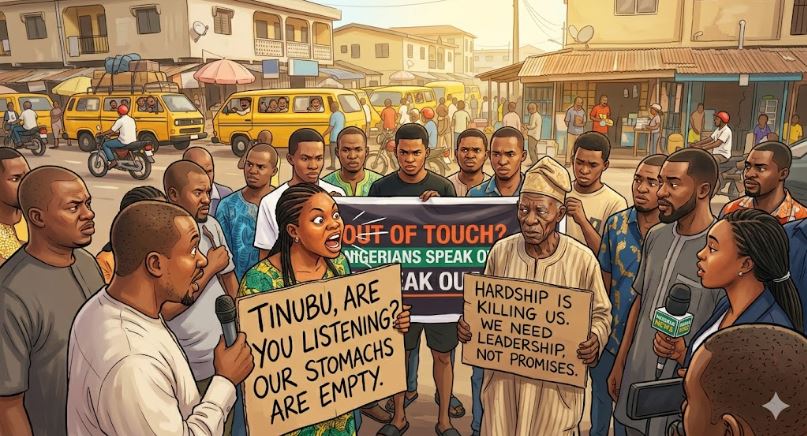
Across Nigeria today, frustration is loud, visible, and impossible to ignore. From rising food prices to fuel costs and the general strain on daily living, many citizens have begun to question whether President Bola Ahmed Tinubu truly understands the depth of the hardship people are facing. Social media is filled with complaints, street conversations echo similar concerns, and for some, it feels like the government has gone silent in the face of growing economic pressure.
At first glance, it’s easy to conclude that leadership has become disconnected. After all, when basic necessities become luxuries, emotions naturally run high. Critics argue that policy decisions—especially around subsidy removal and economic reforms—were rolled out too abruptly, leaving ordinary Nigerians to bear the immediate consequences. In moments like these, perception becomes reality, and the perception for many is that those in power are not feeling what the people feel.
President Tinubu – A deeper look tells a more complex story
President Tinubu’s administration inherited an economy facing long-standing structural issues—heavy debt burdens, unsustainable subsidy systems, and a weakening currency. The decision to remove fuel subsidies, while painful in the short term, was framed as a necessary step to prevent further economic collapse. Economists have long argued that the subsidy regime disproportionately benefited a small segment while draining national resources that could otherwise be invested in infrastructure, healthcare, and education.
Since taking office, the administration has also introduced measures aimed at cushioning the impact. These include targeted cash transfers, plans for wage adjustments, and efforts to stabilize the foreign exchange market. While implementation has not been perfect—and in some cases, slower than expected—the intent signals an awareness of the hardship Nigerians are experiencing.
It’s also worth noting that large-scale economic reforms rarely produce instant relief. In many cases, they require time before the benefits become visible. This does not erase the current struggles, but it does challenge the narrative that the government is entirely indifferent. The real issue may not be a lack of concern, but rather the gap between policy intentions and the speed at which ordinary citizens feel tangible improvements.
Public frustration, therefore, is both valid and necessary—it keeps leadership accountable. But it is equally important to separate perception from policy reality. The situation in Nigeria today is not simply a story of neglect; it is one of difficult choices, transitional pain, and a government attempting to reset a fragile system.
In the end, the question may not be whether President Tinubu is out of touch, but whether Nigerians are witnessing the uncomfortable early stages of long-term change—or simply more of the same. Only time, and results, will provide a clear answer.