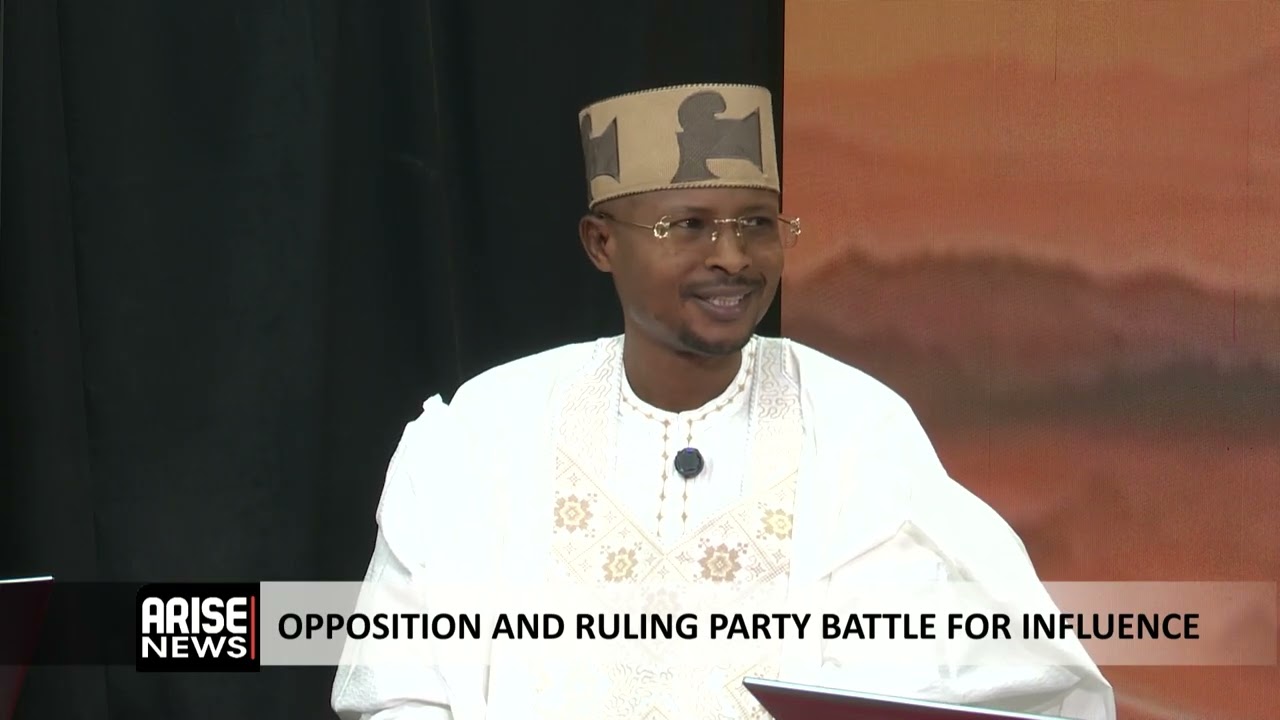
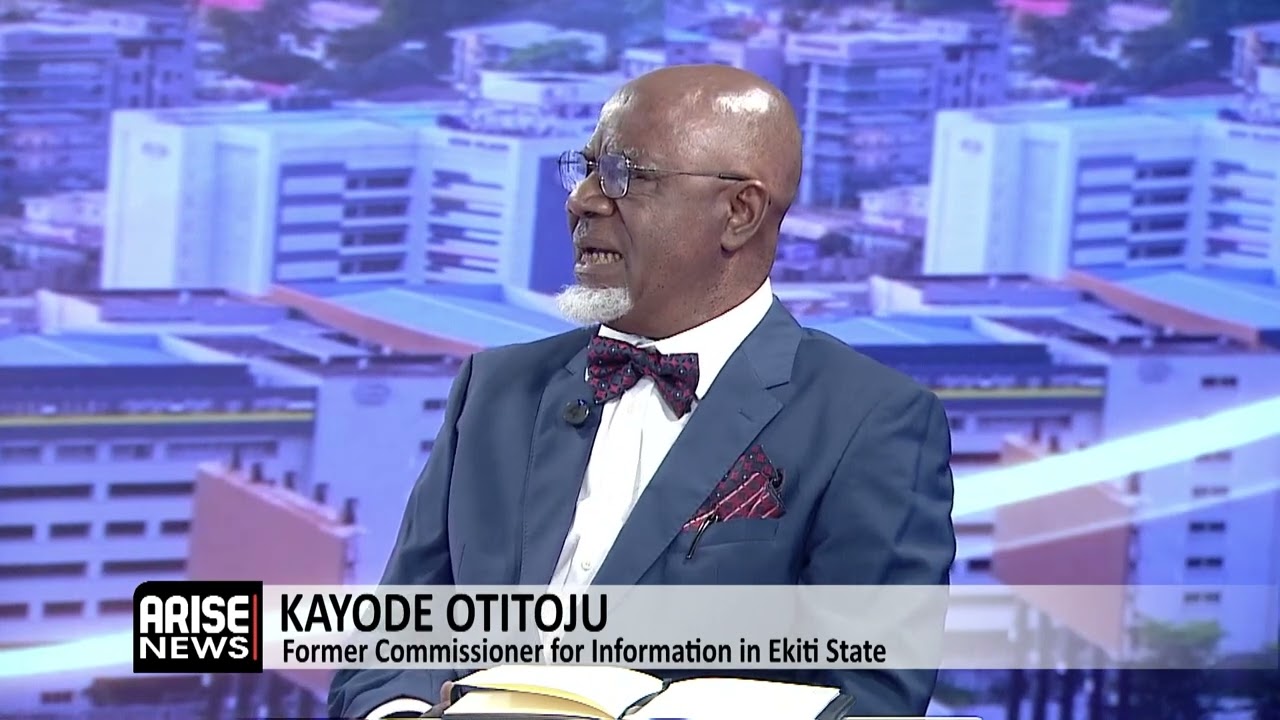

Former Ekiti State Commissioner for Information, Kayode Otitoju, says the June 20 governorship election is shaping up as an APC-dominated contest, describing it as having “no real contest” due to opposition fragmentation and the ruling party’s stronghold in the state.
Speaking in an interview with ARISE News on Tuesday, Otitoju said the political landscape in Ekiti has tilted heavily in favour of the All Progressives Congress (APC), with other parties struggling to present a credible challenge.
“The election is coming up on 20th of June and it’s like no contest in the sense that, though there are three political parties, but only one seems to be on ground, and that’s APC. We have PDP, which the major man there had already even left the party, and that was Fayo She, and he’s teaming up with Ibangi. Then the ADC. We can’t say ADC is a party yet, you know, based on the Supreme Court judgment.”
Otitoju, who said he has been active in Ekiti politics since 2001 but has now stepped away from elective partisan politics while remaining a stakeholder, also detailed the internal dynamics within the APC ahead of the primaries and governorship race.
According to him, early aspirants within the APC have largely stepped down or been accommodated within federal appointments, leaving Governor Biodun Oyebanji with a clear path.
“Initially, three people were running for that position in APC. We have Senator Dayo Adeyeye. He has been pacified with chairmanship of NPA. Then we have Engineer Kayode Oju, who contested the same position with Ibangi in primary last time. He has been pacified, too, with chairmanship of a governing board of Federal University Oye, and now University of Nigeria Nsukka. So the coast is left open for Oyebanji, and he’s not taking it lightly. He’s not taking it, I say, done deal.”
Otitoju said Oyebanji has already begun active mobilisation across the state.
“Like yesterday, he started his campaign starting from Ekiti North. So he covered Ikole and Oye yesterday, and as we speak, he’s in Ido/Osi and Moba.”
Assessing the governor’s profile, Otitoju described him as a long-standing insider in Ekiti political structures who understands the state’s stakeholder dynamics.
“In Ekiti, yes, because he’s gotten all it takes. As far back as 1999, he was Special Assistant to Niyi Adebayo. And he has been in the system. He has been Secretary to the Government, he has done, you know, and by Ekiti standard, we call such people Omoluabi — Omoluabi that knows the stakeholders and how to handle them.”
He outlined what he described as Ekiti’s three key stakeholder groups and how Oyebanji has engaged them.
“In Ekiti politics, we have three categories of stakeholders. We have the retired civil servants and the civil servants. So he handled those people by paying their salaries at one deal. Then there is political stakeholders — people like Papa Afe Babalola, Mr Iwa Jai, former GMD of UACN, Prince Adelusi Adeluyi, Wole Olanipekun, Femi Falana — all those are major stakeholders, and he is well harboured by them.”
Otitoju also said the governor enjoys support across former governors and deputy governors in the state.
“Now, the former governors and deputy governors, they are major stakeholders, and all of them are supporting him — starting from Niyi Adebayo to Ayo Fayose, to Segun Oni, to Kayode Fayemi. And the deputy governors, people like Professor Modupe Adelabu.”
Responding to questions on whether the governor has delivered on his campaign promises, Otitoju pointed to interventions in agriculture, security, and education.
“When it comes to agric, he revived the plantation and settlement, agri-settlement. He continued with the dairy that Fayemi left behind. And he has the Agro Rangers that handle both security and actual operation. Then to make the farm workable by way of providing security, he strengthened Amotekun, which is a South-West security.”
On education, he said:
“He gives bursaries, at least about 40,000. You can buy data for students to do their project using phone.”
However, he emphasised that governance impact takes time to fully manifest.
“A job that should be done for eight years, and the outcome you expect in eight years, you don’t expect to have it within three years. There is always the gestation period before the harvest.”
Pressed on challenges in the state, Otitoju acknowledged issues including insecurity, infrastructure gaps, water supply, and pension liabilities, but insisted progress was ongoing.
“If it has not become a kidnapping hotbed… the recent case in Eda Oniyo resulted in the kidnapping of 15 worshippers and the death of a pastor.”
On budget performance and development concerns, he said:
“They are there. Nearly all the roads that link the rural areas are tarred.”
On water supply challenges, he admitted not all communities are covered:
“Not every community. Ekiti State was created in 1996. You don’t expect someone who is on the saddle for just three years to… some of the dams are working.”
Otitoju argued that Oyebanji needs a second term to consolidate ongoing projects.
“Within the next four years… the impact is what necessitates him going for a second time. Within a second time… he has already put his hand on the plough and he shouldn’t look back.”
He maintained that governance reforms and infrastructure delivery are still in progress.
“Once you kickstart, you only work to make sure that you attain your goal. All the things enumerated there are already on.”
On the issue of APC consensus arrangements, Otitoju said the party has applied consensus selectively in candidate selection.
“The constitution says consensus or direct primaries. So he has really applied consensus to select the House of Assembly candidates.”
He warned that internal party dissatisfaction could affect future cohesion.
“In political gerrymandering, it may affect him. If the people discarded want revenge, that indicates not so. There is always party loyalty.”
On senatorial race alignments, he noted strong APC positioning in most districts.
“In Ekiti Central, we have Opeyemi Bamidele, the Majority Leader — it’s like he has no co-contestant.”
In Ekiti South and North, he referenced multiple contenders including Yemi Adaramodu, Olujimi, and others, saying the contests remain politically active but largely APC-influenced.
With just weeks to the Ekiti governorship election, Otitoju maintained that the APC remains firmly in control of the political terrain, with Governor Oyebanji positioned as the clear frontrunner in what he described as a largely settled race, pending formal party processes and electoral confirmation.
Boluwatife Enome