
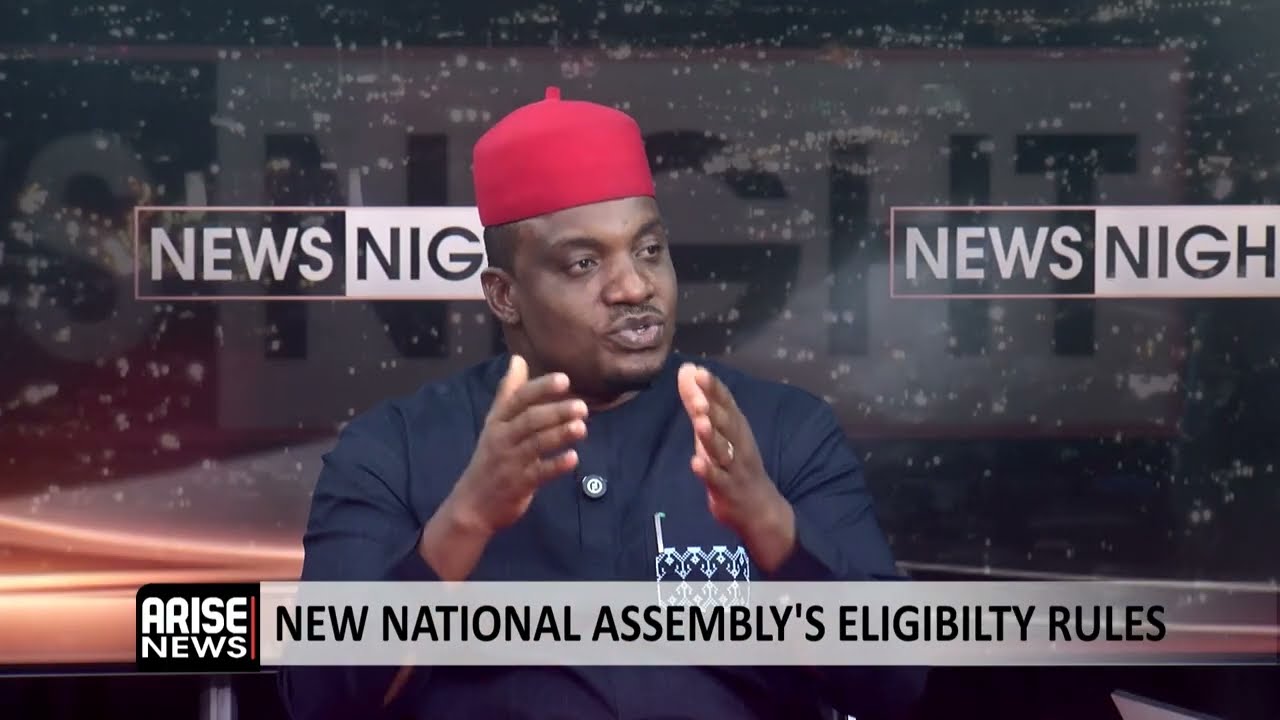

National Assembly policy analyst, Dr. Chibuzo Okereke has criticised recent changes to Senate rules, describing the eligibility requirement for leadership as a political power struggle rather than a genuine attempt at institutional strengthening.
Recall that the Senate recently introduced an eligibility requirement under its standing orders governing the election of presiding officers, particularly the Senate President and Deputy Senate President. The rule places emphasis on ranking and length of service within the chamber, sparking debate over whether it enhances institutional experience or unfairly restricts aspirants to key leadership positions.
Speaking during an interview with ARISE NEWS, Dr. Okereke said:
“First thing is that this is just a power struggle. The truth is that it cannot even stand; it’s not enforceable or implementable.”
According to him, repeated amendments to the Senate’s standing orders risk weakening institutional stability rather than strengthening it, as they tend to reflect shifting political interests rather than a consistent framework for legislative governance.
“We keep amending these rules; it weakens the system. We think it strengthens it for institutional stability, but for those of us who practice in that ecosystem, we think this is weakening the system. Having stayed eight years does not confer experience, procedural expertise, or institutional stability powers on you. That is not the procedure,” he insisted.
Speaking further, he said that such interventions are part of standard legislative practice aimed at ensuring accuracy and accountability in parliamentary records.
“Senators are allowed to say ‘Item one,’ because the Senate President in that consideration will be calling it page by page. When he calls maybe page 196, a senator will say, ‘Item two in page 196 is not reflective of the business of the Senate as of the sitting day.’”
On Oshiomole’s intervention in the Senate, the analyst further noted that while lawmakers are entitled to protect their political interests, legislative reforms must be assessed on whether they serve the broader public good. He stressed that when rules begin to appear tailored to specific ambitions, it raises concerns about the credibility and neutrality of the lawmaking process in a democratic system.
“It is his right as a sitting senator to protest any form of amendment that can foreclose his ambition. He has a right to do so. But it raises the fundamental question as to when some of these laws are made in the National Assembly—whether in the Senate or House of Reps—to what extent is it really about good governance and making good laws for Nigerians, and not necessarily about personal ambition?”, he quizzed.
Dr. Okereke maintained that Nigeria’s high legislative turnover makes experience important, but insisted that it cannot be reduced to years spent in office.
“We have constantly had a high rate of turnover both in the House of Reps and in the Senate. So, legislative experience is very key, no doubt about that. But number of years does not naturally confer it on you,” he said.
He explained that effective lawmaking depends more on a legislator’s commitment to mastering parliamentary procedure, policy analysis, and active participation in debate than on automatic seniority advantages.
“You must be interested in practice and procedure; you must educate yourself in it; you must give yourself to it. Like I always say, a senator doesn’t have a deputy. It’s not like the executive arm of government. No matter how brilliant your aides are, whatever they prepare for you, you must go to the floor to argue it yourself and lobby your colleagues to get those propositions passed. Unlike in the executive where you can send anybody to go and represent you. So, people going to the National Assembly must be people who are interested in understanding practice and procedure, understanding policy, and who are ready to debate. Deliberation is at the heart of parliamentary business—arguing about policies, how it affects the people, and making sure that policies that are passed are reflective of the wishes of the people,” he explained.
Addressing concerns about governance and efficiency, he argued that current Senate rules do little to improve institutional outcomes. Instead, he suggested that attention should shift to more fundamental constitutional issues.
“It doesn’t help in any way. Like I’ve said, anybody who wants to be Senate President should feel free and get ready to contest. These are things they should be worrying about and amending—that kind of Section 64 provision that mandates the President of the country to proclaim the meeting of the first sitting of the Parliament. Because there are implications where a President decides not to do so—maybe if the President wants somebody to be Senate President and he hasn’t gotten a consensus for that and decides to delay, what is going to happen?”
Favour Odima