
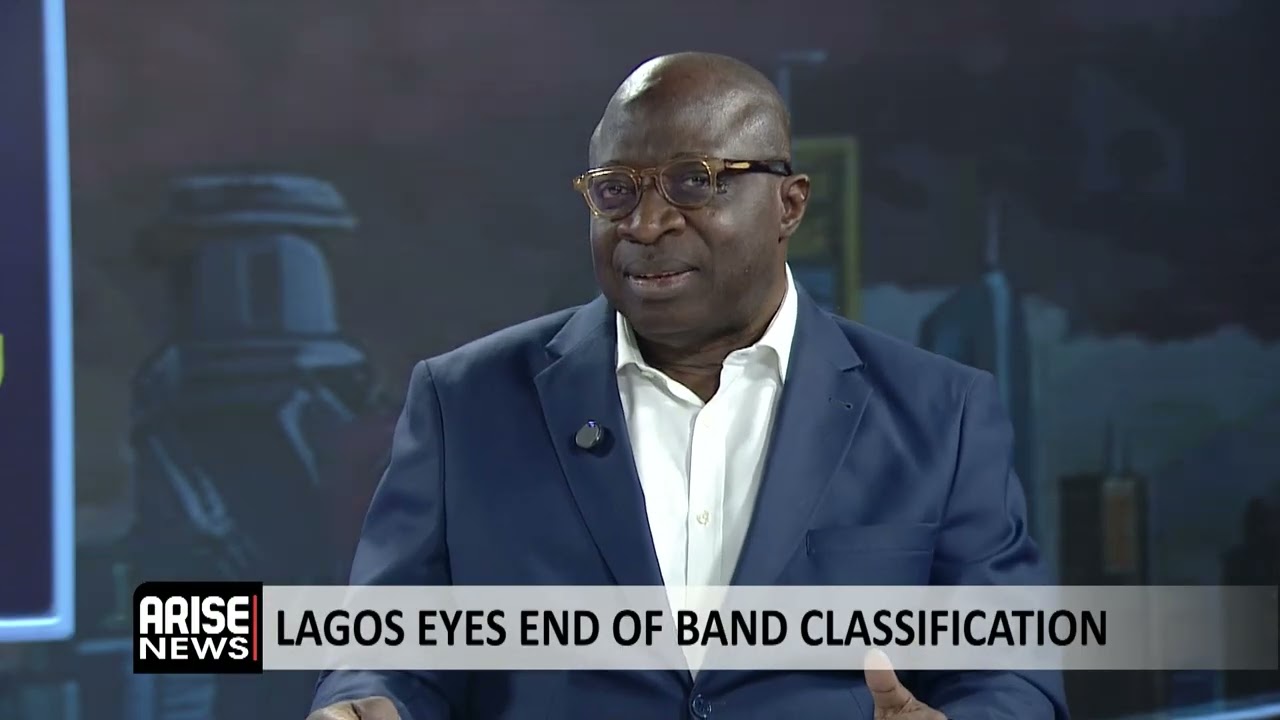
Business analyst Chika Mbonu has said Lagos State’s ambition to eliminate electricity band classifications and achieve near-constant power supply will only succeed if electricity generation and investment improve significantly across the state and the wider country.
Speaking during an interview on ARISE News, Mbonu said the current electricity band system was introduced primarily because Nigeria lacks enough power supply to meet national demand.
“Nigeria’s electricity band system exists because there isn’t enough power,” he said.
Mbonu was reacting to comments by Lagos State officials indicating plans to eventually phase out electricity band classifications and move toward more stable power supply for residents.
According to him, the banding structure was originally designed as a rationing mechanism to manage scarcity within the electricity sector.
“It was a way of sharing scarcity,” he stated.
He explained that customers placed on higher electricity bands effectively pay more to receive longer hours of supply because available electricity remains limited.

“Let those who are willing to pay more get more,” he said.
Mbonu said that simply removing the band system without increasing electricity generation would not solve the underlying problem.
“We don’t have enough supply of electricity to make sure that happens,” he stated.
According to him, Lagos alone requires significantly more electricity than it currently receives from the national grid.
“Lagos demand is about 9,000 to 12,000 megawatts,” he said.
He said that the electricity currently allocated to Lagos represents only a fraction of what the state actually needs to sustain homes, businesses, and industries.
“That’s why you see generators everywhere,” he stated.
Mbonu stressed that electricity remains one of the biggest obstacles to Nigeria’s economic competitiveness and industrial growth.
“Most of the cost of Nigerian companies is power,” he said.
According to him, high energy costs continue to weaken manufacturing, hospitality, exports, and overall business productivity.
“Power is a major issue,” he stated.
He argued that solving Nigeria’s electricity problem could significantly accelerate economic growth.
“If we can get power right in our country, the one trillion dollar economy will be a piece of cake,” he said.
Mbonu also stated the importance of embedded power systems, estate-based electricity generation, solar solutions, and battery storage in improving Lagos’ electricity supply.
“The incorporation of solar systems, batteries and so on can work,” he stated.
But, he warned that long-term investment in power infrastructure would require policy consistency and stronger investor confidence.
“Government cannot do it all,” he said.
According to him, private investors remain cautious because energy projects require long-term stability and protection from policy reversals.
“Some of these investments are long-term investments,” he stated.
Mbonu also defended the need for cost-reflective tariffs, arguing that stable electricity supply cannot be achieved without realistic pricing.
“Power is expensive,” he said.
He explained that electricity subsidies remain financially unsustainable while infrastructure and operational costs continue rising.
“If you want this power, let’s pay for it,” he stated.
Mbonu further argued that several businesses and economic interests currently benefit from Nigeria’s poor electricity supply.
“A massive industry has been created in darkness,” he said.
He pointed to generator sellers, diesel suppliers, inverter dealers, mechanics, and fuel stations as examples of industries that profit from unreliable electricity.
“Millions of livelihoods in Nigeria depend on power failure,” he stated.
According to him, this wider economic ecosystem partly explains why power sector reforms remain difficult to fully implement.
“People widely benefit from this darkness,” he added.
Mbonu concluded that while Lagos State’s ambition to eliminate electricity banding is achievable, meaningful progress will depend on significantly expanding power generation, attracting long-term investment, implementing cost-reflective tariffs, and overcoming the entrenched economic interests that continue to profit from Nigeria’s electricity shortages.
By Ojo Triumph