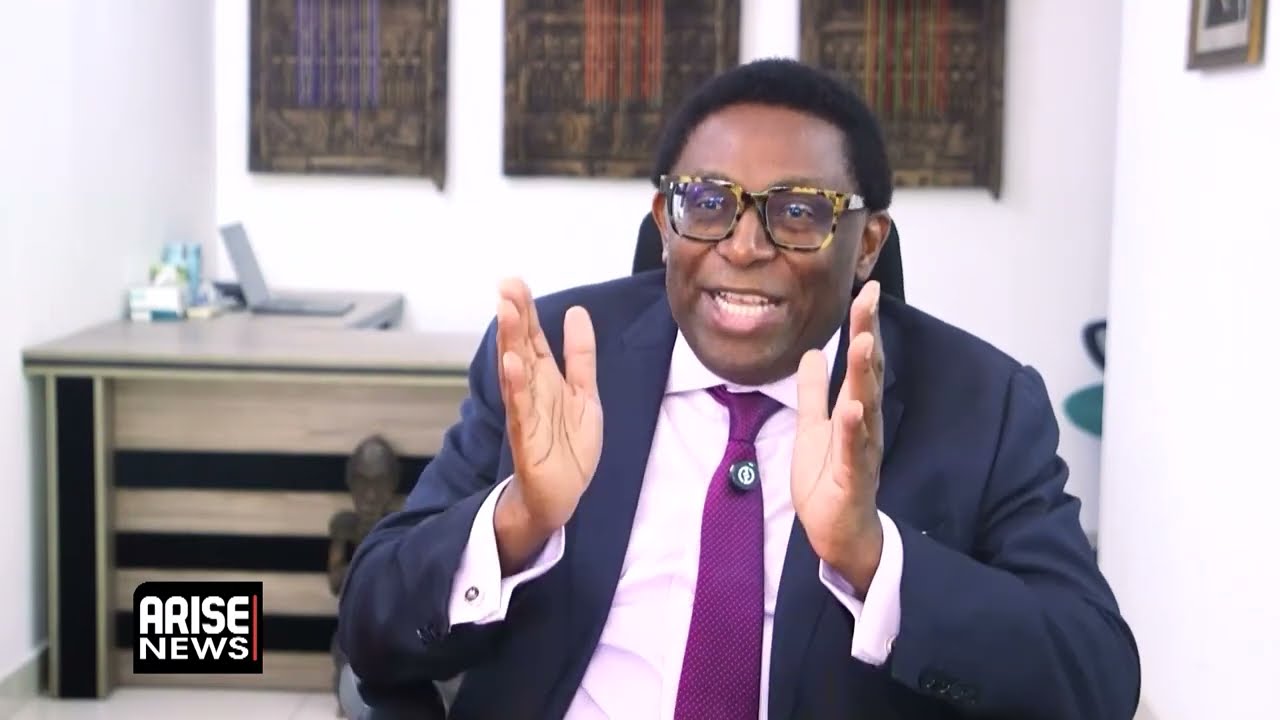

Former House of Representatives spokesperson and Special Adviser on Media/Publicity to the President of the Senate, Rt. Hon. Eseme Eyiboh, has defended the recent amendment to the Senate Standing Rules, insisting that the debate should focus on institutional stability rather than individual political personalities.
Eyiboh, in a statement on Sunday, argued that the controversy surrounding the amendment had generated more emotion than objective analysis, with much of the public discourse centred on personalities instead of institutional development.
According to him, legislative institutions globally periodically review and refine their procedures and qualification requirements in response to evolving governance realities.
“The real issue before the Senate is neither about Senator Godswill Akpabio nor Senator Adams Oshiomhole. It is about whether legislative institutions should evolve, strengthen themselves, and create continuity mechanisms that deepen parliamentary stability,” he stated.
Eyiboh maintained that the new requirement mandating senators seeking certain presiding and principal offices to possess minimum legislative experience should be viewed within the context of institutional growth and parliamentary continuity.
He stressed that the office of Senate President is one of the country’s most sensitive constitutional positions, requiring deep understanding of legislative procedures, parliamentary traditions, constitutional interpretation, and intergovernmental relations.
“Experience matters,” he declared.
According to him, mature democracies across the world often develop written and unwritten traditions that prioritise institutional memory and legislative continuity in order to preserve stability and minimise avoidable turbulence.
He, however, acknowledged concerns that experience thresholds could potentially be used to entrench political interests, warning that such standards must remain reasonable and periodically reviewed.
“Experience without openness becomes arrogance; openness without experience becomes amateurism,” he said.
Eyiboh rejected suggestions that the amendment was specifically designed to protect the current Senate leadership or shrink political competition.
He also faulted arguments that Senate President Godswill Akpabio should resign because the qualification threshold did not exist when he emerged as Senate President.
According to him, laws and procedural rules are generally prospective rather than retroactive.
“A law or rule takes effect from the point of enactment forward unless expressly stated otherwise. The amendment cannot logically invalidate a mandate that was legitimately acquired under previously existing rules,” he argued.
Eyiboh added that applying new standards retroactively would create instability and undermine democratic governance.
He further maintained that institutional continuity and stability should not automatically be viewed as threats to democracy, stressing that a legislature constantly battling leadership uncertainty and procedural inexperience weakens democratic governance.
“When a legislature decides that a Senate President should have served a minimum period as a legislator, it is making a quiet but profound statement about the nature of political authority,” he said.
The former lawmaker urged Nigerians and lawmakers alike to approach the debate with statesmanship and intellectual honesty rather than partisan sentiment.
He noted that while senators, including Senator Adams Oshiomhole, were entitled to differing opinions on the amendment, the core issue should remain whether the changes strengthen the Senate as a democratic institution.
Eyiboh concluded that institutions ultimately outlive individuals, stressing that the rules and traditions established today would shape legislative stability for years to come.