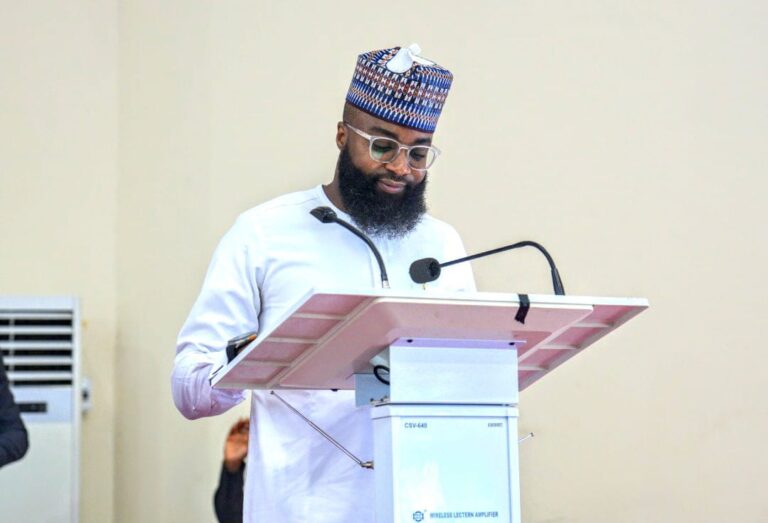

Under the leadership of its Managing Director and CEO, Dr. Olasupo Olusi, the Bank of Industry (BOI) has underwent an aggressive structural overhaul, transforming from a traditional development lender into Nigeria’s primary engine for industrial growth and financial engineering.
Faced with a shifting macroeconomic landscape, Olusi has pushed the BOI toward digital transformation and intense operational efficiency. By modernizing its internal processes and adopting automated credit verification systems, the institution has radically shortened the distance between loan applications and cash disbursements. This digital pivot ensures that vital working capital reaches the country’s manufacturing corridors before inflation eats into its value.
1. Driving Toward the N10 Trillion Asset Baseline
Dr. Olusi’s expansion strategy is tied to a clear, data-driven mandate aligned with the federal administration’s Renewed Hope Agenda:
By scale-up of foreign credit line syndications and structural bond issues, BOI is actively driving to expand its total asset base to N10 trillion, significantly boosting its capacity to finance large-scale manufacturing, agro-processing, and tech infrastructure.
This capitalization drive serves as a critical Sovereign Shield for Nigerian enterprises. By drawing in long-term, low-interest foreign currency lines from global development financiers and converting them into affordable, single-digit Naira loans, the BOI is actively protecting local factories from the high borrowing costs found in the commercial banking sector.
2. Strategic Interventions: Powering Micro-Enterprises and Heavy Industry
Rather than taking a generic approach to corporate lending, Olusi has segmented BOI’s operations into hyper-targeted intervention funds designed to stabilize the real economy from the bottom up.
- The MSME Growth Catalyst: Recognizing that small businesses are the economy’s backbone, BOI has accelerated the disbursement of micro-credit intervention funds. These loans target small-scale manufacturers, tech startups, and local artisans, keeping production lines moving and protecting employment pools.
- The Agro-Processing Push: To support the national push for Food Sovereignty, the bank has channeled major funding into large-scale agricultural processing plants. By financing domestic rice mills, cassava processing hubs, and specialized cold-chain logistics, BOI is helping turn raw harvest yields into shelf-ready market products.
- The Energy Transition Fund: In response to the high cost of conventional energy, the bank launched specialized solar-power intervention lines, providing credit for factories and MSMEs to transition to solar arrays and smart mini-grids, directly lowering their daily overhead.
3. The Pillars of the Olusi Operational Model
The rapid transformation of the BOI is anchored on a “Product-Driven” architecture that values speed, transparency, and deep institutional integration.
| Operational Focus | Legacy Institutional Bottleneck | The Olusi Paradigm Shift |
| Credit Access Speed | Manual risk assessments leading to months of delays in loan approvals. | Implementation of end-to-end digital processing and automated compliance checks. |
| Risk Management | High exposure to non-performing loans due to weak post-disbursement tracking. | Introduction of AI-driven portfolio monitoring and structured off-taker repayment models. |
| Global Capital Sourcing | Heavy reliance on limited federal allocations to fund development loans. | Aggressive international roadshows to secure billions in foreign development lines. |
Conclusion: Securing the Industrial Foundation
In conclusion, Dr. Olasupo Olusi’s strategic repositioning of the Bank of Industry is a firm promise that Nigeria’s industrial ambitions are backed by serious financial muscle. Therefore, the bank’s drive toward a N10 trillion asset baseline stands as the primary engine required to sustain a $1 Trillion Economy. This move proves that combining “Institutional Efficiency” with deep digital modernization can successfully unlock trapped private sector productivity. Thus, the journey toward complete economic self-reliance continues, with BOI serving as the foundational anchor for sustainable industrial expansion.