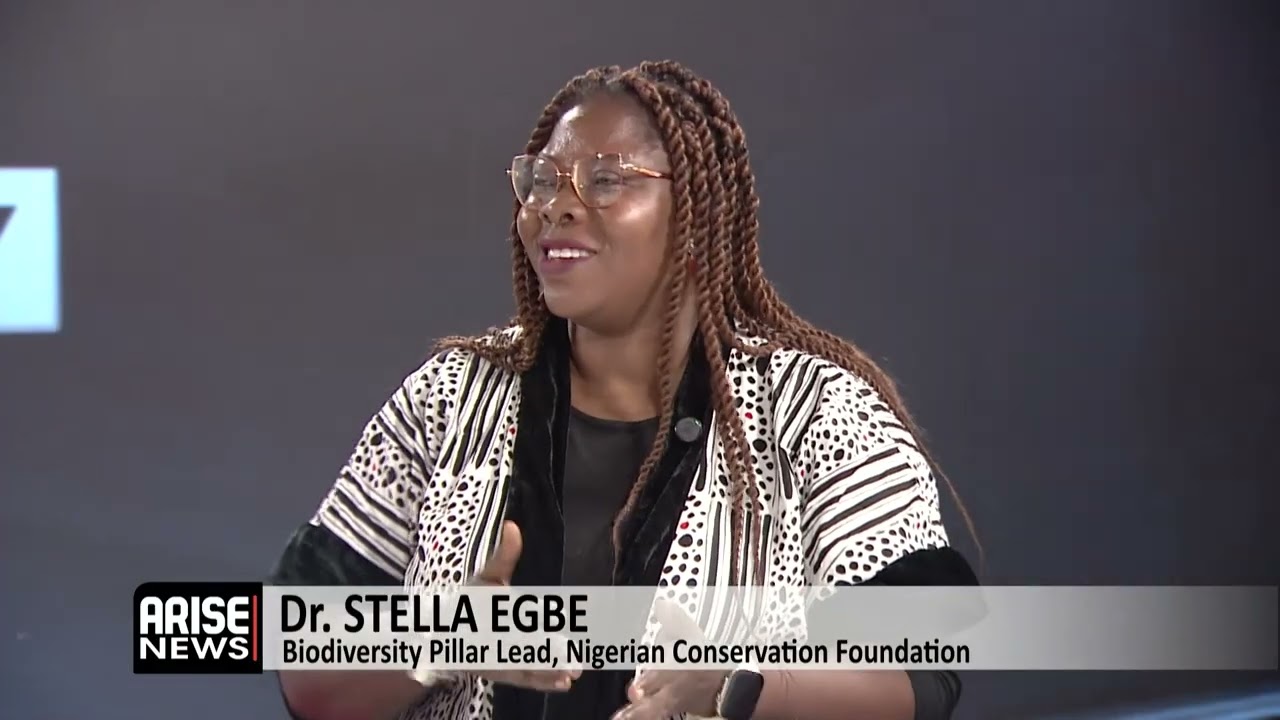

Biodiversity expert Dr Stella Egbe has warned that Nigeria’s worsening biodiversity loss threatens food security, medicine, wildlife, and essential environmental systems that millions of Nigerians depend on for survival.
Speaking during an interview on ARISE News during discussions marking the 2026 World Biodiversity Day commemoration, Egbe stressed that biodiversity conservation must become a national priority because human survival remains directly tied to nature.
“Nigeria’s biodiversity loss threatens food, medicine and survival,” she said.
According to Egbe, many Nigerians remain disconnected from the natural environment despite depending heavily on it for daily living.
“We are dependent on the biodiversity around us,” she stated.
She explained that biodiversity includes plants, animals, ecosystems, and environmental systems that provide oxygen, food, medicine, and ecological balance.
“It is essential for our survival,” she said.
Egbe warned that unsustainable human activities are rapidly destroying natural habitats and threatening wildlife populations across the country.
“We have over-exploitation, we have logging that destroys habitats,” she stated.
According to her, illegal wildlife trade and uncontrolled hunting continue contributing to the depletion of endangered species in Nigeria.
“If you go online today and type bushmeat, you’ll see them everywhere,” she said.
She also pointed to the illegal sale of protected animals such as parrots as evidence of weak conservation enforcement.
“You see parrots being on sale, which is illegal,” she stated.
Egbe stated that many Nigerians underestimate the long-term consequences of biodiversity destruction because economic hardship often shifts attention toward immediate survival needs.
“If we do not take cognisance of the fact that these things are linked to our survival, then we’ll be thinking about more in the future,” she said.
According to her, biodiversity decline directly affects agriculture, food production, climate stability, and public health.
“If your biodiversity is not doing well, then your environment is not doing well,” she stated.
Egbe identified bush burning, deforestation, habitat destruction, and population pressure as some of the biggest threats facing Nigeria’s ecosystems.
“People need more land and resources,” she said.
She stressed that development must be pursued sustainably to avoid worsening environmental collapse.
“If it is not done sustainably, then we are in the kind of problem we’re in today,” she stated.
Egbe also expressed concern over the condition of Nigeria’s protected wildlife areas, noting that national parks remain severely underfunded and under-resourced.
“These parks are under-resourced,” she said.
According to her, conservation efforts require stronger collaboration among governments, NGOs, local communities, and environmental agencies.
“It’s a whole network of actors,” she stated.
Egbe stated that organisations such as the Nigerian Conservation Foundation continue working with local communities to restore degraded environments and improve conservation awareness.
“There are people doing this day-to-day activity of restoring spaces,” she said.
She also stressed the importance of stronger enforcement of environmental laws and wildlife protection regulations.
“We lack the implementation of those laws,” she stated.
According to Egbe, Nigeria already has multiple environmental policies and international biodiversity commitments, but implementation remains weak.
“Nigeria is effective in domesticating international agreements,” she said.
But, she warned that without proper enforcement and public participation, biodiversity loss would continue accelerating.
“We need to effectively protect these areas,” she added.
Egbe concluded that biodiversity conservation is no longer merely an environmental issue but a survival issue, warning that unless Nigeria strengthens conservation enforcement, public awareness, and sustainable environmental practices, the country risks losing critical natural resources essential for food security, public health, and ecological stability.
Ojo Triumph