
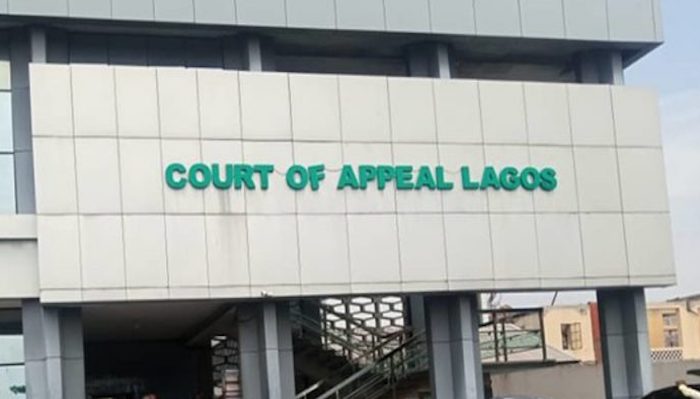
The Lagos Division of the Court of Appeal has dismissed an appeal filed by a consortium of financial institutions against companies affiliated with the Sahara Power Group, affirming the validity of an interim injunction and directing an accelerated hearing of the substantive suit.
In a unanimous decision delivered on Monday by a three-member panel, the appellate court held that the appeal was unmeritorious. It upheld the interlocutory orders earlier granted by the Federal High Court, which restrained the banks and their appointed receiver from taking further steps over the companies’ assets pending the determination of the case.
The dispute involves Kepco Energy Resources Limited, NG Power-HPS Limited, and New Electricity Distribution Company Limited, all linked to Sahara Power, which challenged the appointment of a receiver/manager by the lenders under a credit facility arrangement.
The companies contended that the move to enforce the facility and appoint a receiver was premature, unjustified, and in breach of agreed conditions.
At the heart of the appeal was whether the respondent companies could validly institute the action without first obtaining the consent of the receiver/manager, Kunle Ogunba (SAN), who also acted as counsel to the banks.
Ogunba had argued that by virtue of Section 556(3) of the Companies and Allied Matters Act (CAMA), the companies’ directors were divested of authority to commence proceedings without the receiver’s approval.
However, counsel to the companies, Bode Olanipekun (SAN), countered that the law recognised a clear exception where the very appointment of a receiver was being challenged.
He maintained that requiring the companies to obtain consent from the same receiver whose appointment they were contesting would be legally untenable.
In resolving the issue, Justice Joseph Eyo Ekanem, in his lead judgement agreed with the respondents, holding that no such consent is required in circumstances where the legality of the receivership itself is in dispute.
The court reasoned that insisting on prior consent in such situations would effectively defeat a company’s right to challenge the validity of a receivership imposed on it.
It held that the case before the trial court raised serious triable issues, including whether the alleged debt had crystallised and whether the conditions precedent for appointing a receiver/manager had been fulfilled.
The appellate court stated that evidence placed before the lower court suggested that the respondent companies were still receiving funds at the material time, lending credence to their argument that enforcement actions may have been taken prematurely.
On the propriety of the interlocutory injunction, the court found that the trial judge exercised discretion judiciously in granting the order to preserve the subject matter of the dispute.
It emphasised that maintaining the status quo was necessary to prevent the dissipation or disposal of assets, which could render any eventual judgement nugatory.
The court also endorsed the finding that damages would not constitute an adequate remedy, particularly given the nature of the assets involved and the potential disruption to the companies’ operations.
Reiterating settled principles, the appellate court stated that it would not interfere with the exercise of discretion by a lower court unless it was shown to be arbitrary or perverse, conditions it found absent in the present case.
Consequently, the appeal was dismissed in its entirety, and the ruling of the Federal High Court was affirmed.
In a further directive aimed at expediting justice, the Court of Appeal ordered that the substantive suit be heard on a day-to-day basis upon the close of pleadings.
The judgement came shortly after a similar pronouncement by the Supreme Court of Nigeria in the Nestoil dispute, where the apex court held that a receiver cannot control or authorise legal representation in proceedings that challenge the validity of his own appointment.
Wale Igbintade